
CRM And ERP Systems For Landscaping Companies for Predictable Green-Industry Growth
CRM and ERP systems for landscaping companies should connect the first enquiry, estimate, schedule, crew work, invoice, and renewal from one owned record. The best use is to fix one costly handoff, define who owns each stage, and configure the system around the way work is actually sold and delivered. It improves leads, efficiency, and revenue by protecting follow-up, reducing repeated administration, and giving management usable job data.
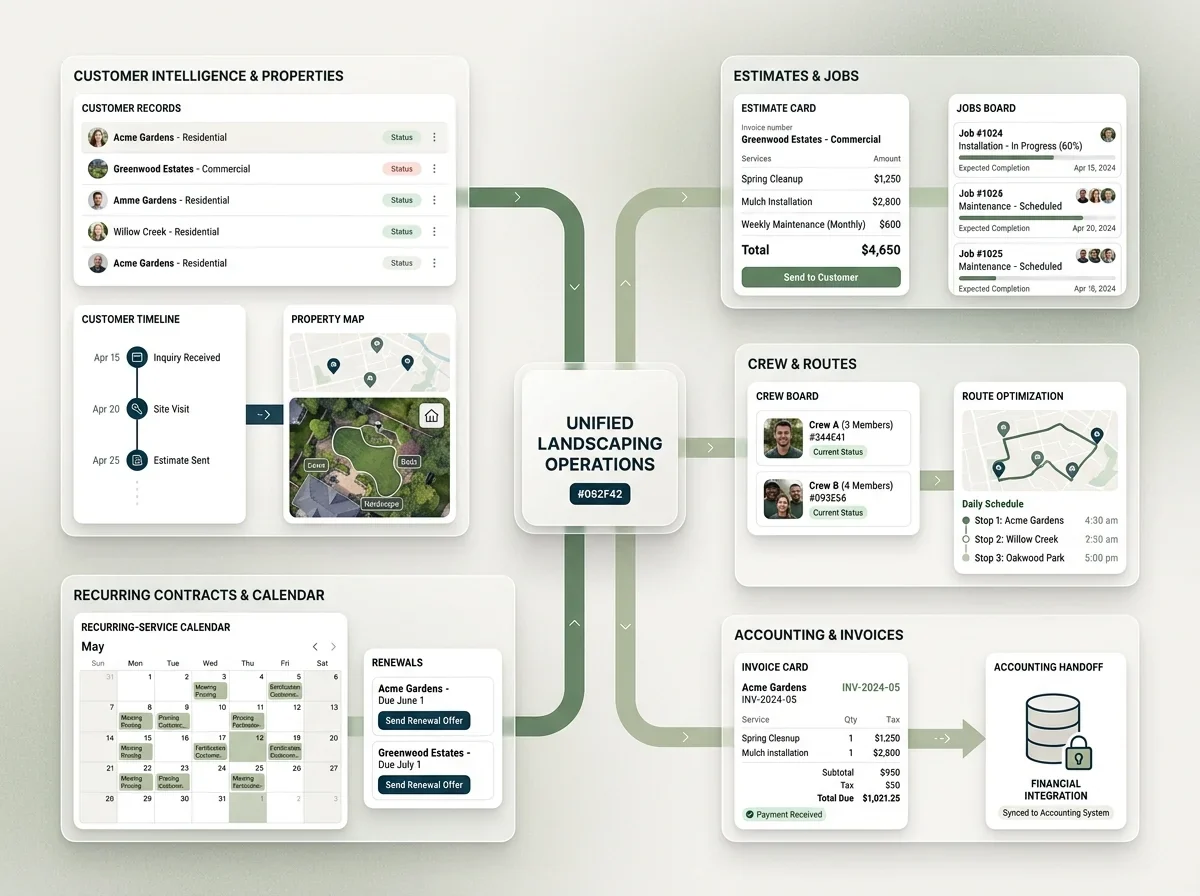
CRM and ERP Systems for Landscapers With Repeated Data Entry
This fits operators where sales, production, finance, and customer records disagree, or another branch has made control difficult.
Commercial Maintenance
Connect opportunities, site records, contracts, work tickets, renewals, and branch reporting without rebuilding the process in spreadsheets
See the fitLawn Care
Keep recurring customers, treatment schedules, route changes, technician notes, invoices, and service reminders under one owned record
See the fitLandscaping CRM and ERP Systems Cover Twenty Operating Decisions
CRM and ERP systems services for landscapers cover selection, implementation, migration, training, platform setup, and adoption.
CRM implementation
Set up and adopted.
View serviceAspire implementation
Enterprise landscape operations.
View serviceJobber setup & optimization
Fast start for small crews.
View serviceService Autopilot consulting
Recurring routes and billing.
View serviceArborgold implementation
Tree care and chemical tracking.
View serviceRealGreen consulting
Lawn care at franchise scale.
View serviceServiceTitan implementation
Large multi-trade operations.
View serviceFieldRoutes consulting
Route based service businesses.
View serviceHubSpot implementation
Marketing and sales together.
View serviceSalesforce consulting
Enterprise CRM configured properly.
View serviceZoho implementation
Affordable full business suite.
View serviceMicrosoft Dynamics 365
Microsoft stack integration.
View serviceERP consulting
One system, whole business.
View serviceERP implementation
Rolled out without disruption.
View serviceCustom ERP development
When nothing off shelf fits.
View serviceNetSuite consulting
Cloud ERP for scale.
View serviceSAP Business One consulting
Enterprise finance and operations.
View serviceCRM migration & data cleanup
Move records without loss.
View serviceCRM training & adoption
Software your team uses.
View serviceLandscaping software selection
Independent, vendor neutral advice.
View serviceWhat CRM and ERP Systems for Landscaping Business Teams Include
Managed CRM and ERP systems for landscaping companies turn a software decision into a tested migration, named ownership, and adoption plan.
We define the operating failure, users, stages, records, permissions, reporting, integrations, and measure. The scope starts with the work the system must support, not a vendor feature list, before configuration begins.
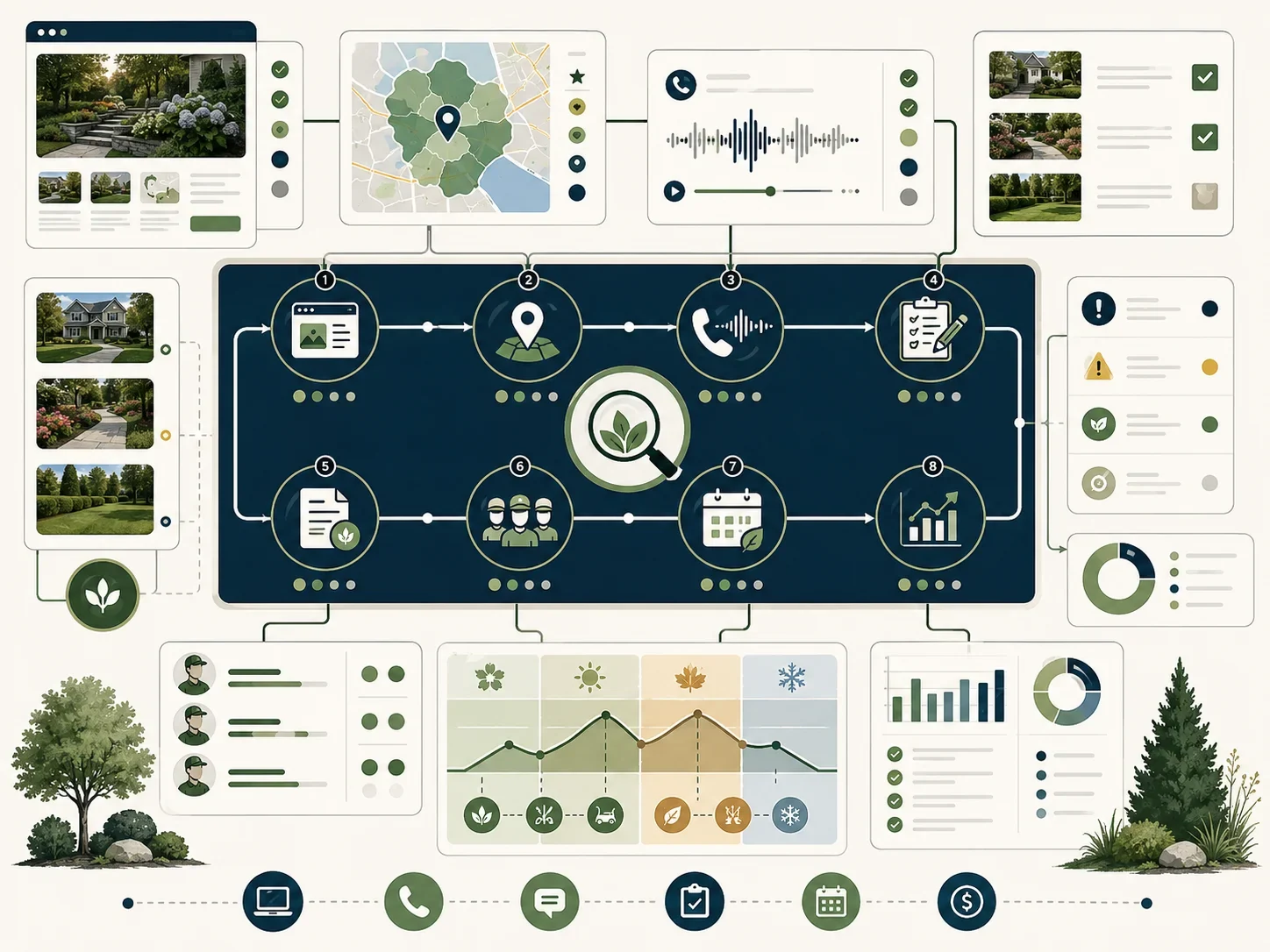
The plan separates discovery, configuration, cleanup, migration, testing, training, and launch. January through March is safer for major changes than the April rush, when estimates, schedules, and crew communication already carry peak pressure.
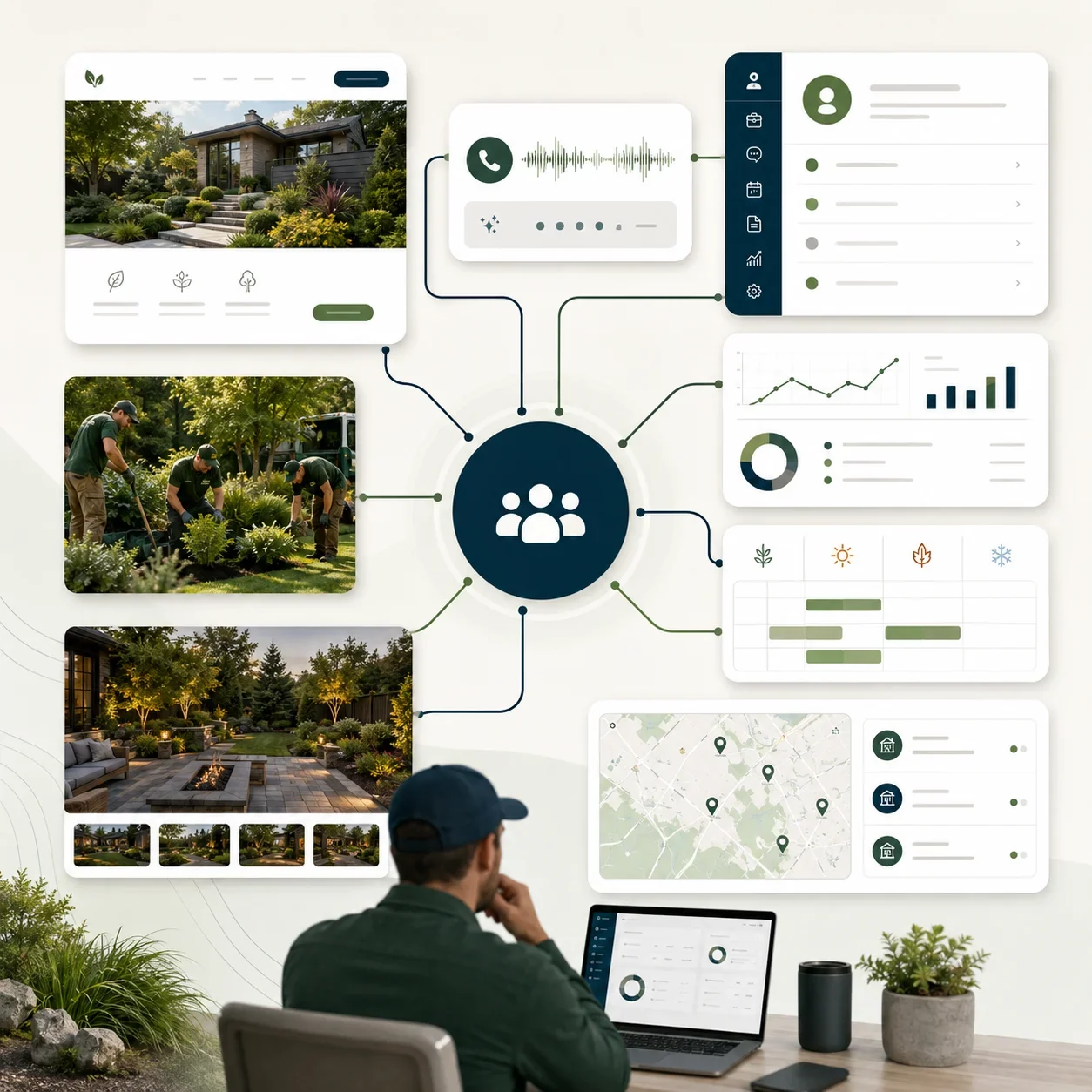
You provide process owners, access, sample records, stages, service codes, pricing rules, accounting requirements, permissions, and test users. Missing data or conflicting ownership stays documented rather than guessed before the build.
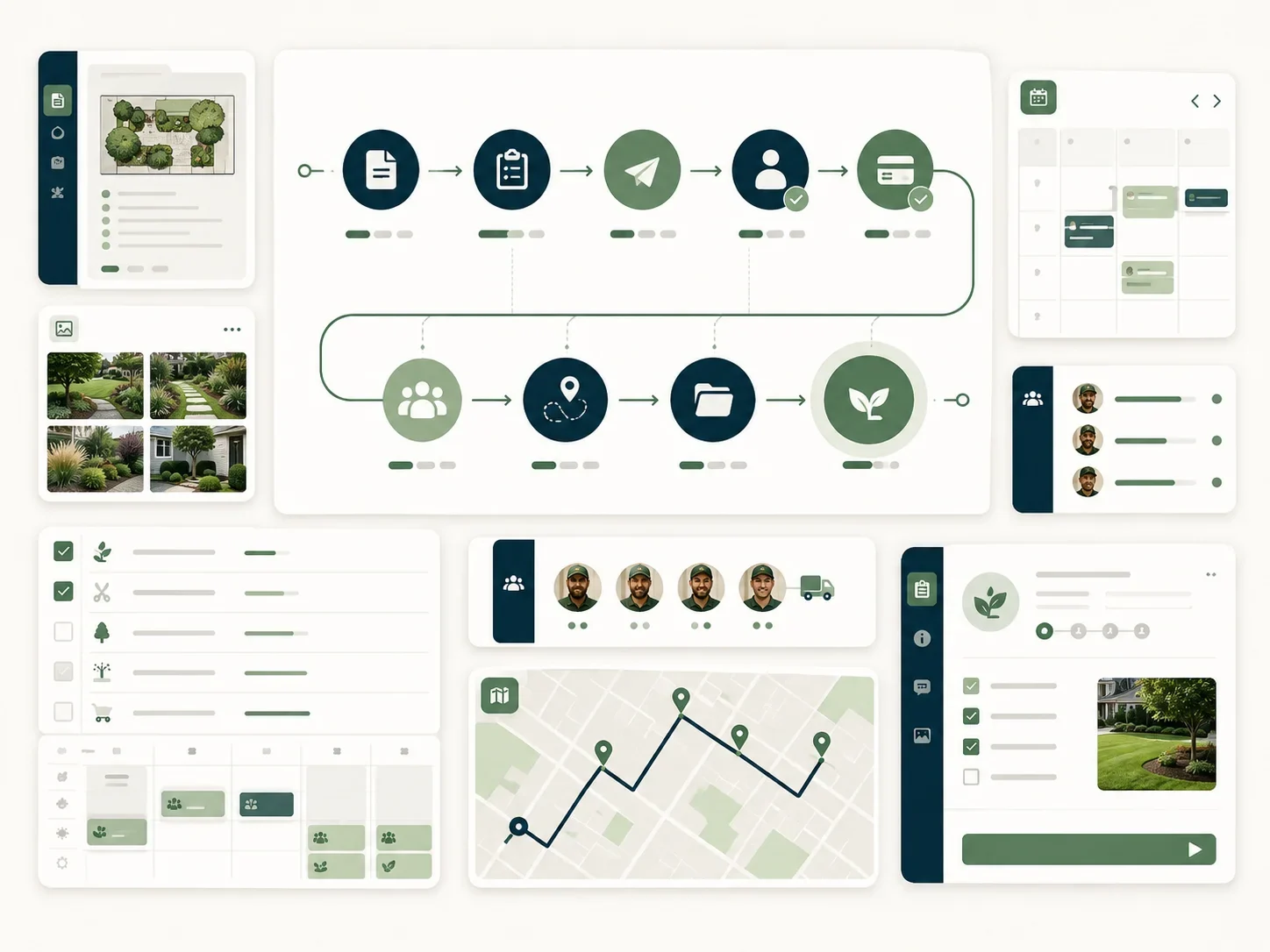
We provide requirements, configuration, data maps, tests, training material, launch checks, documentation, and monthly priorities through every rollout and review stage. Your company keeps its contracts, accounts, records, and approval authority.
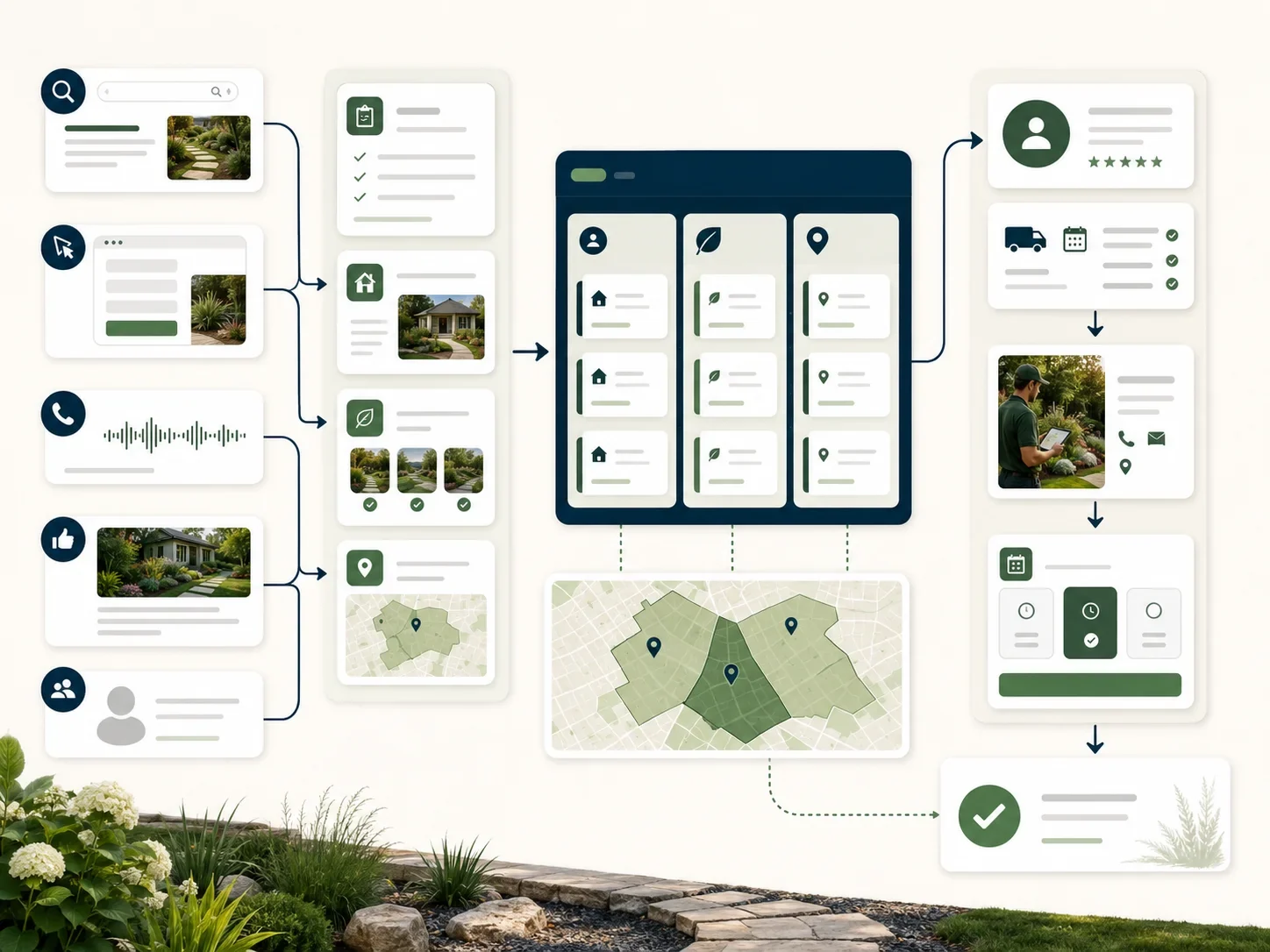
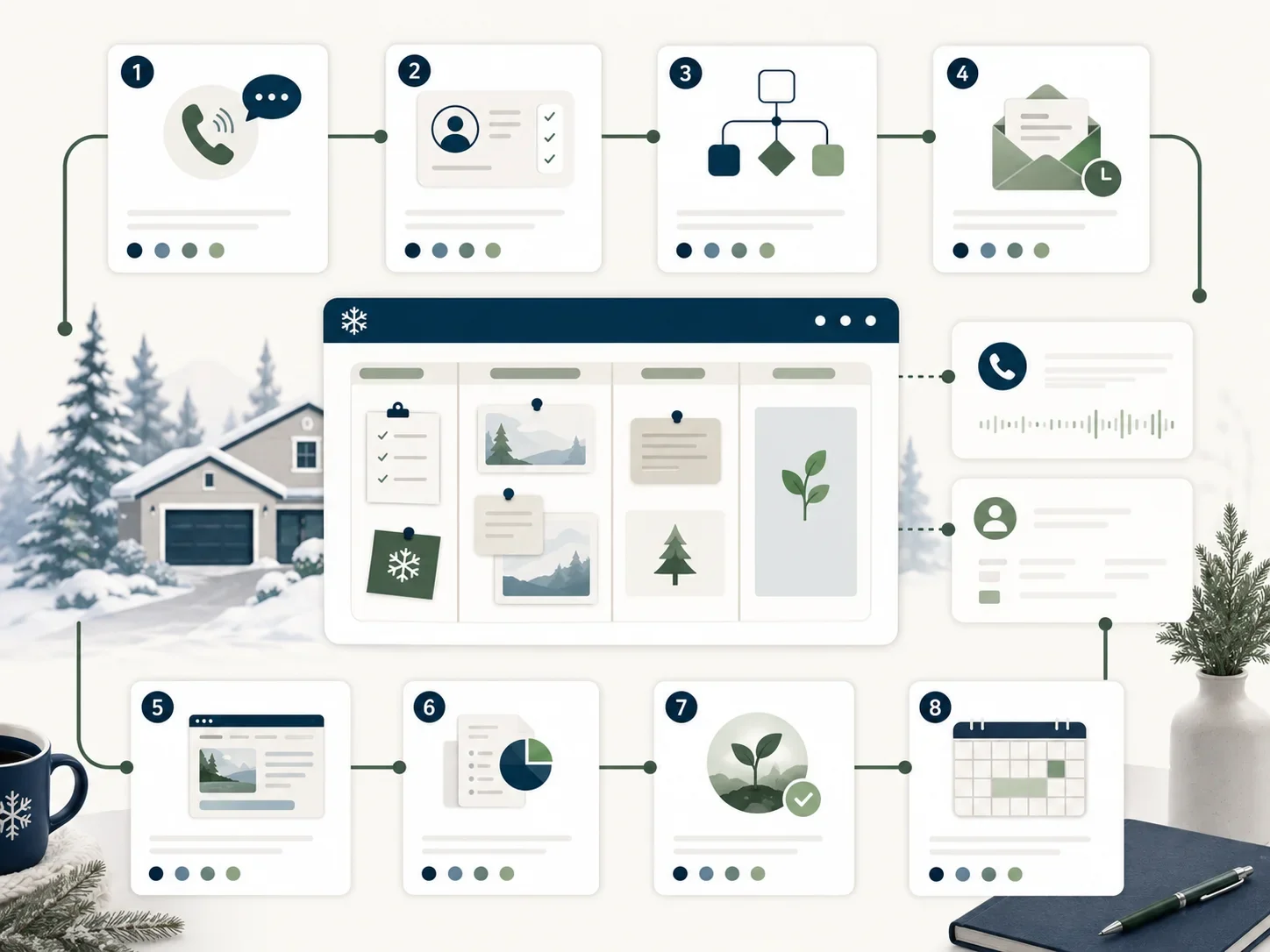
How System Work Moves From Process Map to Daily Adoption
Outsourcing CRM and ERP systems for landscape contractors works when every field, automation, permission, and report supports a named operating decision.
Map the process, find the repeated handoff
We trace enquiries, estimates, jobs, schedules, crew notes, invoices, and renewals to find repeated entry, missing ownership, unreliable records, and reports managers cannot use each week.
- Process owners stay named
- Repeated entry gets ranked
- Baseline faults are documented
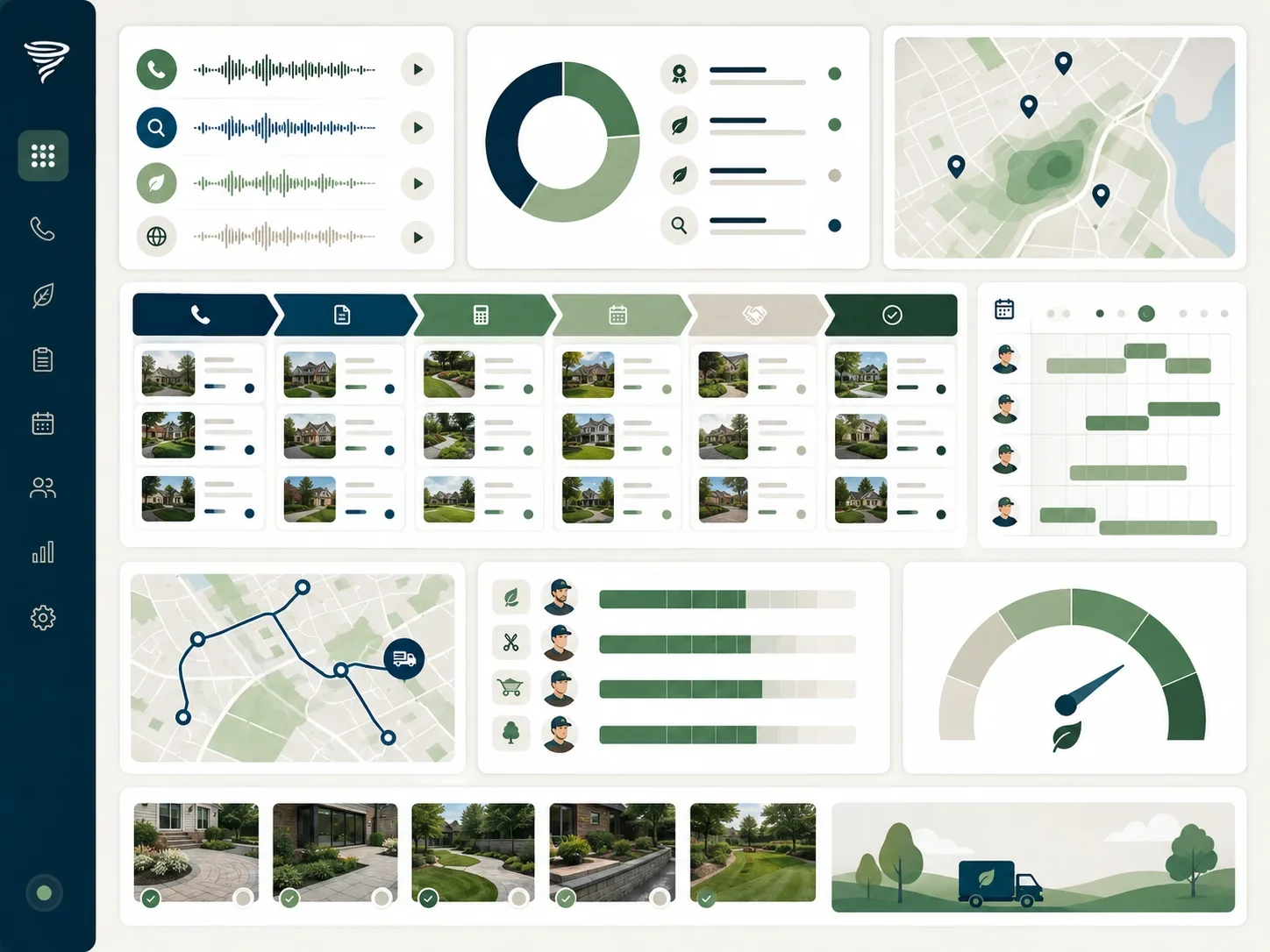
Define requirements, before selecting the platform
The requirement lists users, stages, data, permissions, integrations, reporting, mobile needs, and accounting controls. Vendor demonstrations are scored against operating work, not feature volume alone.
- Operating needs come first
- Required controls stay explicit
- Costs remain visible early
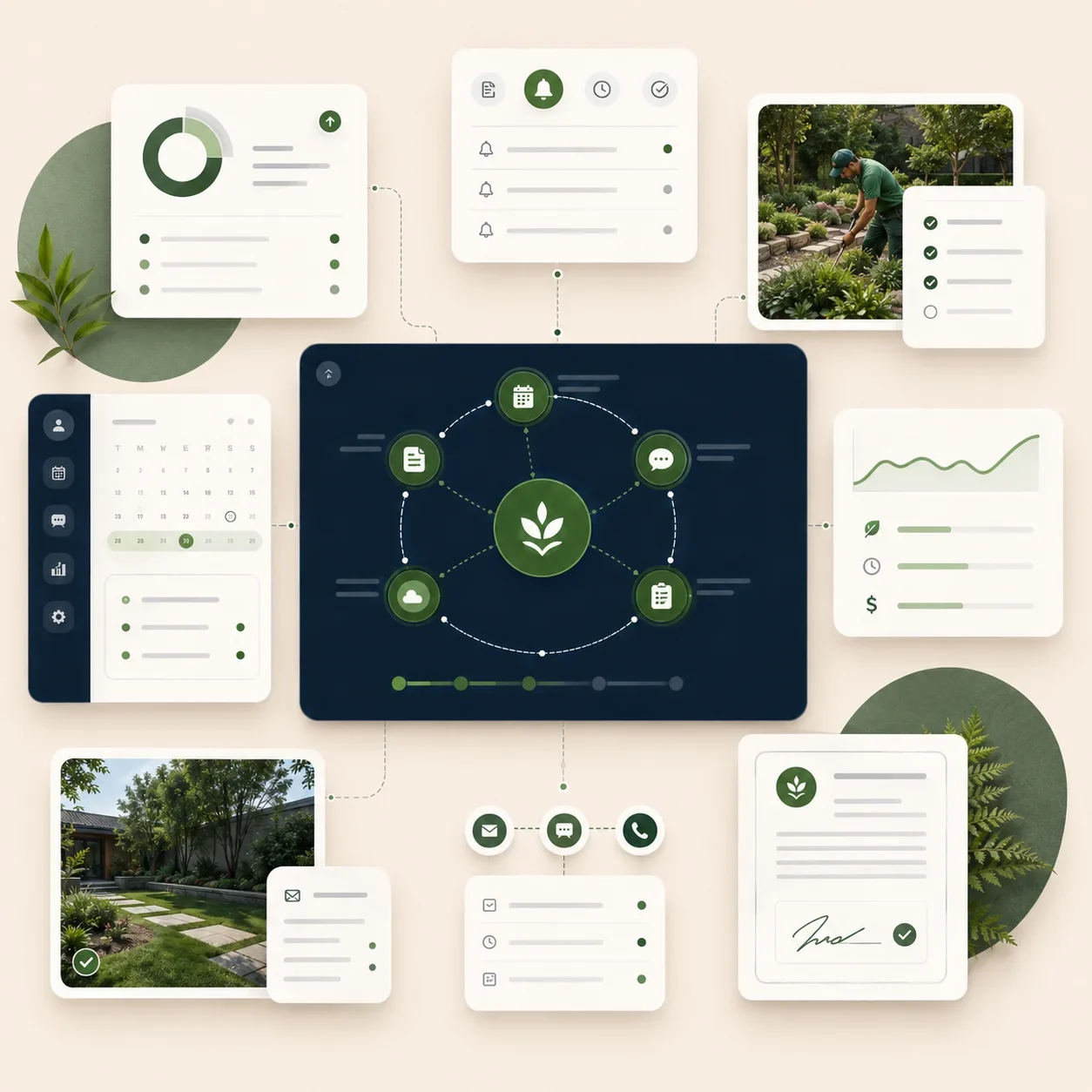
Configure and migrate, keep data ownership clear
We build approved fields, workflows, templates, permissions, imports, and integrations. Duplicate customers, incomplete addresses, old estimates, and inconsistent service codes receive cleanup rules before migration.
- Test records stay separate
- Client data remains owned
- Cleanup rules get approved
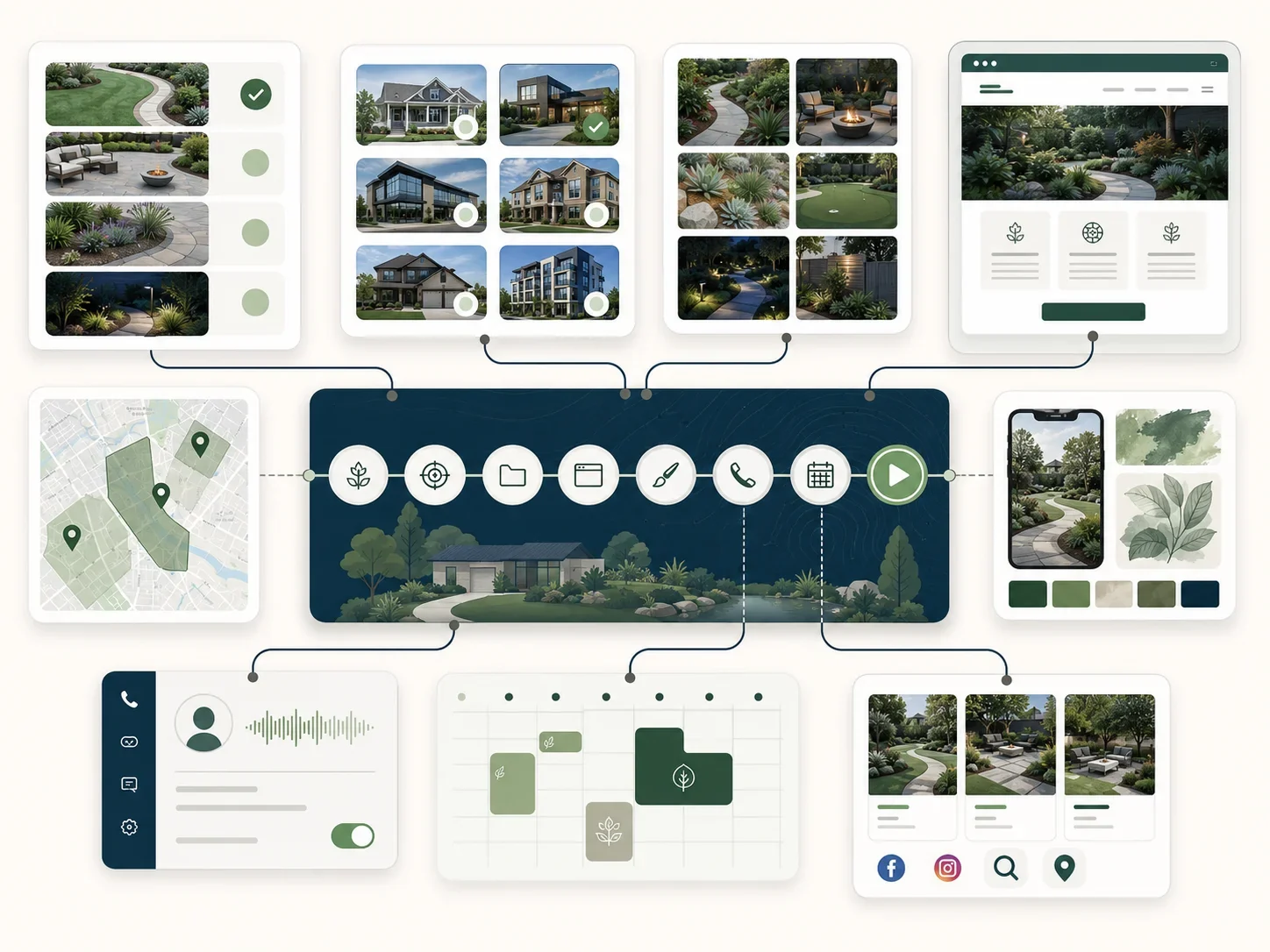
Test and train, use real seasonal scenarios
Testing covers spring estimate volume, weather rescheduling, route changes, commercial renewals, failed payments, branch transfers, and permissions before the system becomes the daily operating record.
- Real users complete testing
- Failed cases receive owners
- Launch approval is recorded
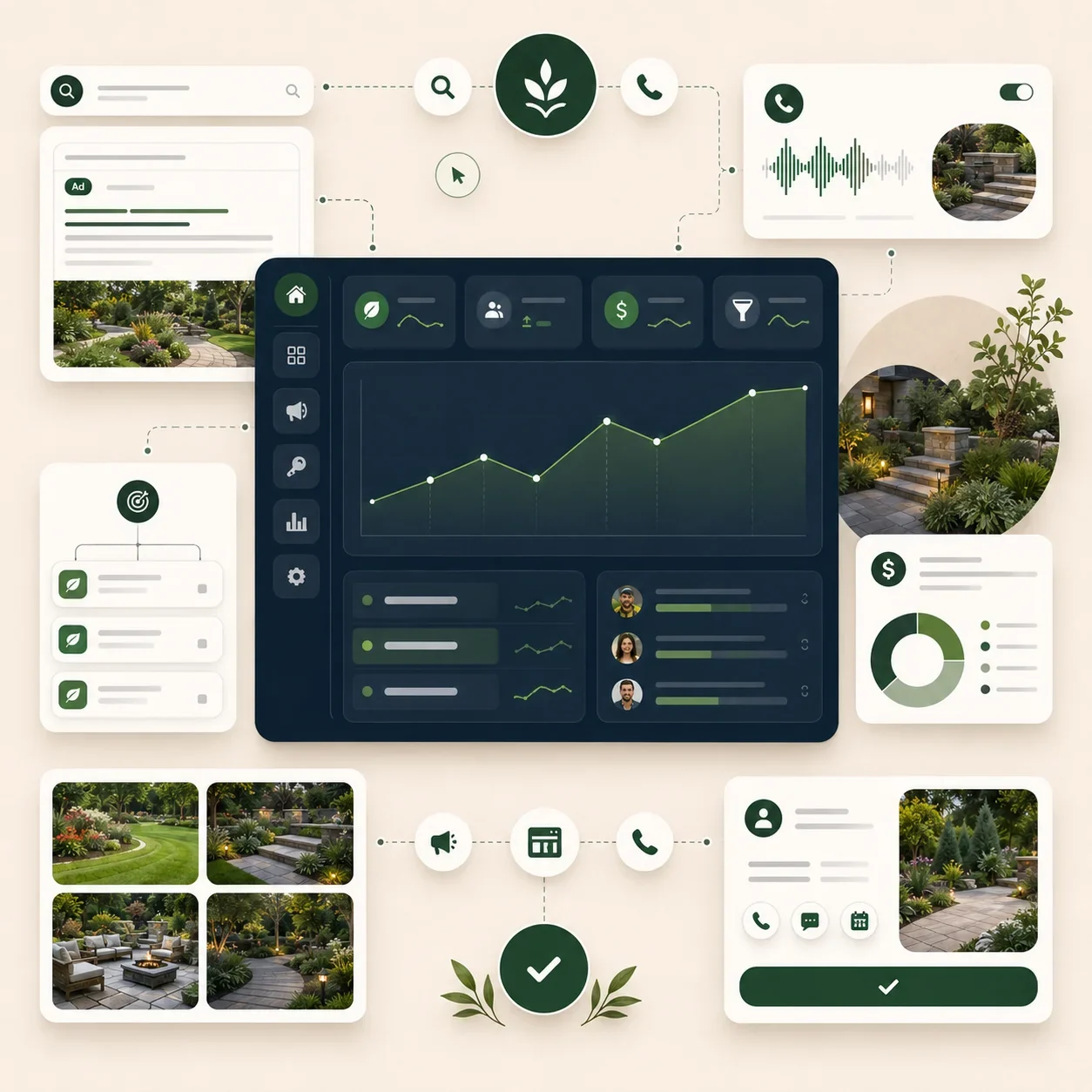
Review adoption, fix the next operating constraint
Monthly reviews cover record completion, stage movement, estimate speed, schedule accuracy, billing handoffs, adoption, and reporting. The next change follows operating evidence, not a vendor release.
- Outcomes replace login counts
- Adoption issues receive owners
- Seasonal changes start early
CRM and ERP Systems Is One Part of It. We Run the Whole Thing.
System work sits inside one team running marketing, AI, website, technology, and reporting. The audit sets the active workstreams, responsibilities, and package before you sign.
One market, one service line, and focused execution for dependable growth.
See what's includedMulti-service growth with broader campaigns, website work, and stronger follow-up.
See what's includedMulti-branch execution with AI, automation, deeper reporting, and faster cadence.
See what's includedFranchise systems, complex integrations, and governance across markets and teams.
See what's includedFree CRM & ERP Systems Audit
Proof Without Invented System Results
We do not have two approved testimonials for this category yet. Here is how we run and measure it.
“We stopped guessing which work paid. The cRM & ERP Systems for landscaping companies programme gave us one baseline, and the monthly review finally matched what the crews actually booked.”
“Everything sits in accounts we own, and every change is written down before it ships. That alone was worth the switch.”
more qualified enquiries in the first two quarters, measured against the pre-engagement baseline.
Every quote above is published with the client’s written approval, full name, role and company on file.
CRM and ERP Systems for Lawn Care Companies: Buying Questions
How does CRM and ERP systems help a landscaping company grow?
CRM and ERP systems help growth by keeping enquiries, estimates, jobs, schedules, invoices, and renewals under clear ownership. They reduce repeated administration and expose stalled work. The platform does not create demand. Start with CRM implementation when the current process breaks between sales and operations.
What does CRM and ERP systems include for landscaping businesses?
CRM and ERP systems include selection, process mapping, configuration, migration, cleanup, integrations, permissions, testing, training, reporting, and adoption support. The category covers landscape platforms, general CRM platforms, and financial ERP systems during implementation. Review Aspire implementation for larger landscape operations.
How much does CRM and ERP systems cost for a landscaping company?
CRM and ERP systems pricing for landscaping businesses starts inside Foundation at $2,000 monthly, Growth at $3,000, Scale at $5,000, or custom Enterprise pricing. Licences, migration, cleanup, integrations, and activation may be separate. Ad spend is excluded. Compare growth package pricing before requesting the free growth audit.
When should a landscaping company invest in CRM and ERP systems?
Invest when records are entered twice, estimates lose ownership, schedules and customer promises disagree, billing waits on field information, or branch reports cannot be trusted. Major migration is safer during the January quiet than the April rush. Begin with the free growth audit before purchasing another platform.
Can CRM and ERP systems support seasonal landscaping demand?
Yes. CRM and ERP systems can prepare spring estimates, summer scheduling, recurring routes, fall cleanup, commercial renewals, and snow workflows before demand shifts. Configuration should reflect crew capacity, pesticide licensing, weather rescheduling, branch ownership, and the field software staff already use.
How is performance measured for CRM and ERP systems?
Performance is measured through record completion, estimate speed, stage movement, schedule accuracy, billing handoffs, duplicate reduction, adoption, unresolved exceptions, and reporting timeliness. A managed system programme should connect customer and job records to qualified leads, booked work, renewals, and service outcomes where reliable data exists.
Fix the Process Before Replacing the Platform
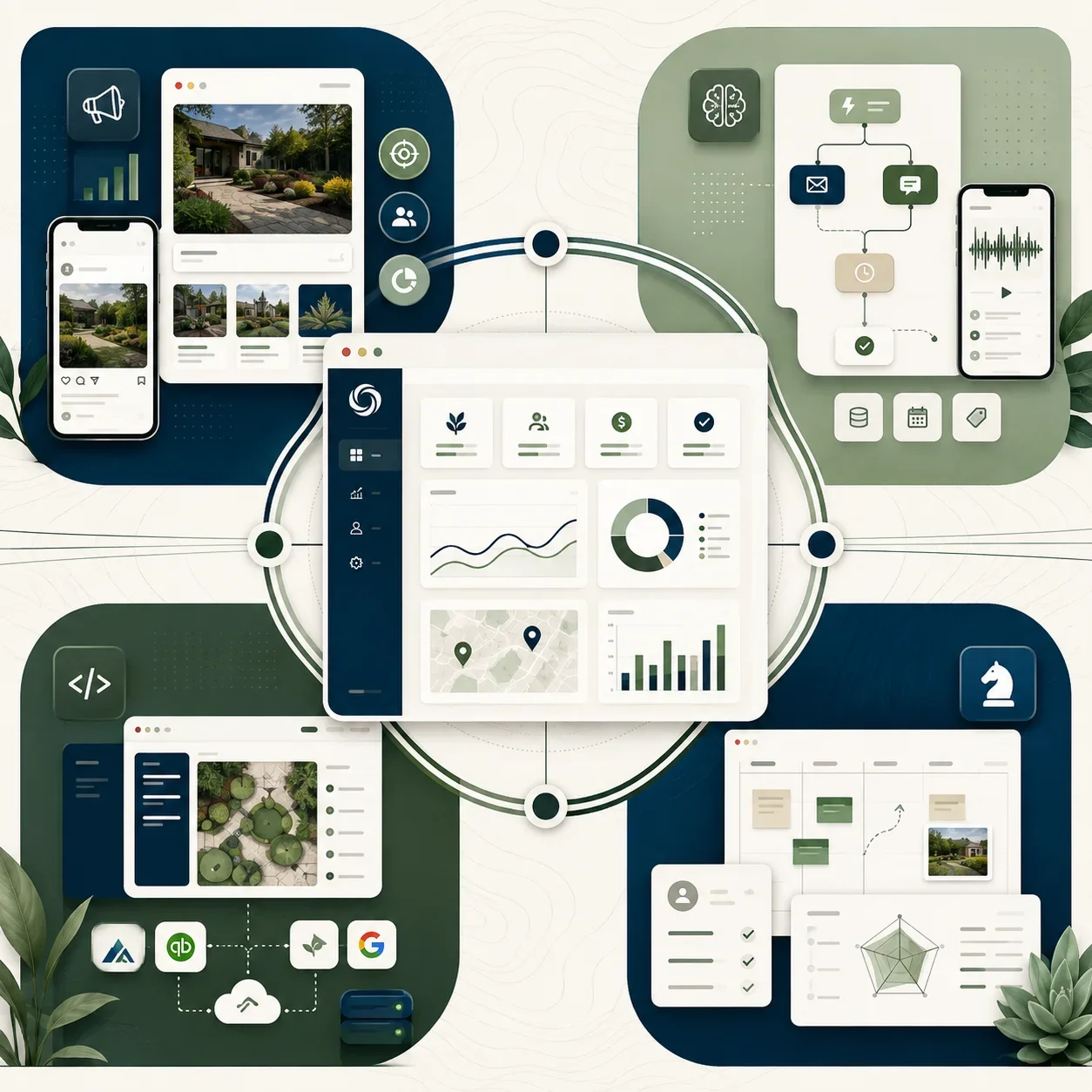
Your CRM sits at the centre of the stack. These categories read from it and write back to it.