
Custom Software And Integrations For Landscaping Companies for Predictable Green-Industry Growth
Custom software and integrations for landscaping companies should remove a costly operating constraint that configured software cannot handle. The best use is to define one measurable job, such as connecting an estimate to production or replacing a spreadsheet used across branches, before writing code. It improves leads, efficiency, and revenue by reducing missed handoffs, repeated entry, pricing delays, and records that never reach the person responsible.
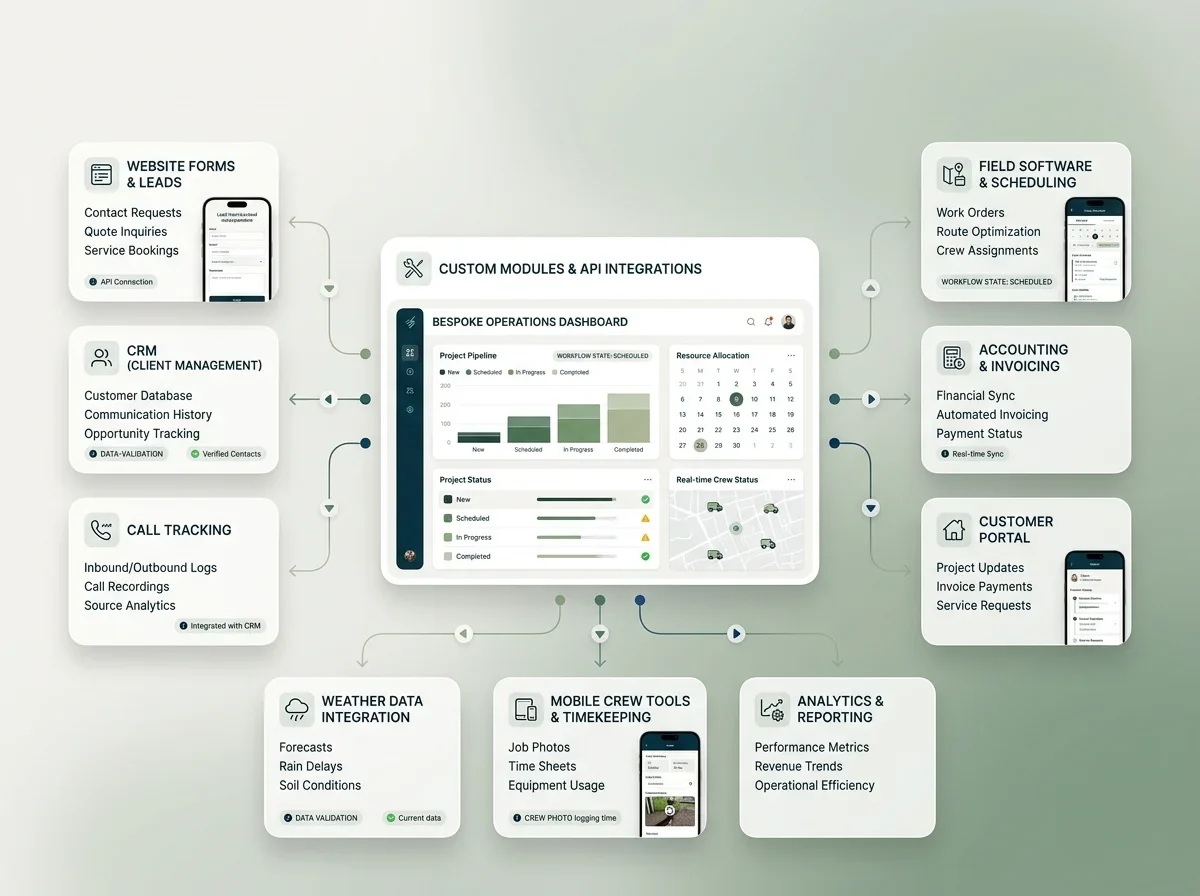
Custom Software and Integrations for Landscapers With Workarounds That Became Operations
This category fits established operators where spreadsheets, duplicate entry, disconnected tools, or manual approvals now control sales, production, finance, or customer service.
Commercial Maintenance
Connect walk-throughs, contract records, site issues, renewals, work tickets, and branch reporting without forcing managers into another daily system
See the fitLawn Care
Link recurring customers, routes, treatment records, weather changes, payments, and technician updates around the existing field platform
See the fitLandscaping Custom Software and Integrations Covers Fifteen Build Paths
Custom software and integrations services for landscapers cover customer tools, field workflows, estimating, measurement, modernisation, and connections between systems.
Custom software development
Built around your operation.
View serviceWeb application development
Browser based business tools.
View serviceMobile app development
iOS and Android builds.
View serviceiOS & Android development
Native performance both platforms.
View serviceCustomer portal development
Clients self serve online.
View serviceCrew & field app development
Tools built for trucks.
View serviceEstimating & quoting software
Accurate pricing, faster quotes.
View serviceOnline booking systems
Customers book themselves.
View serviceInstant quote calculators
Price before they call.
View serviceProperty measurement tools
Measure from aerial imagery.
View serviceApplication modernization
Old systems made current.
View serviceSoftware integration services
Make your systems talk.
View serviceQuickBooks integration
Accounting synced automatically.
View servicePayment & financing integration
Take payment on site.
View serviceCalendar & scheduling integration
One shared schedule.
View serviceWhat Custom Software and Integrations for Landscaping Business Teams Includes
Managed custom software and integrations for landscaping companies turns an operating problem into a written requirement, controlled build, tested release, and named support plan.
We define the user, failed handoff, required result, source systems, data owner, permissions, exceptions, and operating measure. The build must remove handling, protect revenue, or improve control before it enters the roadmap.
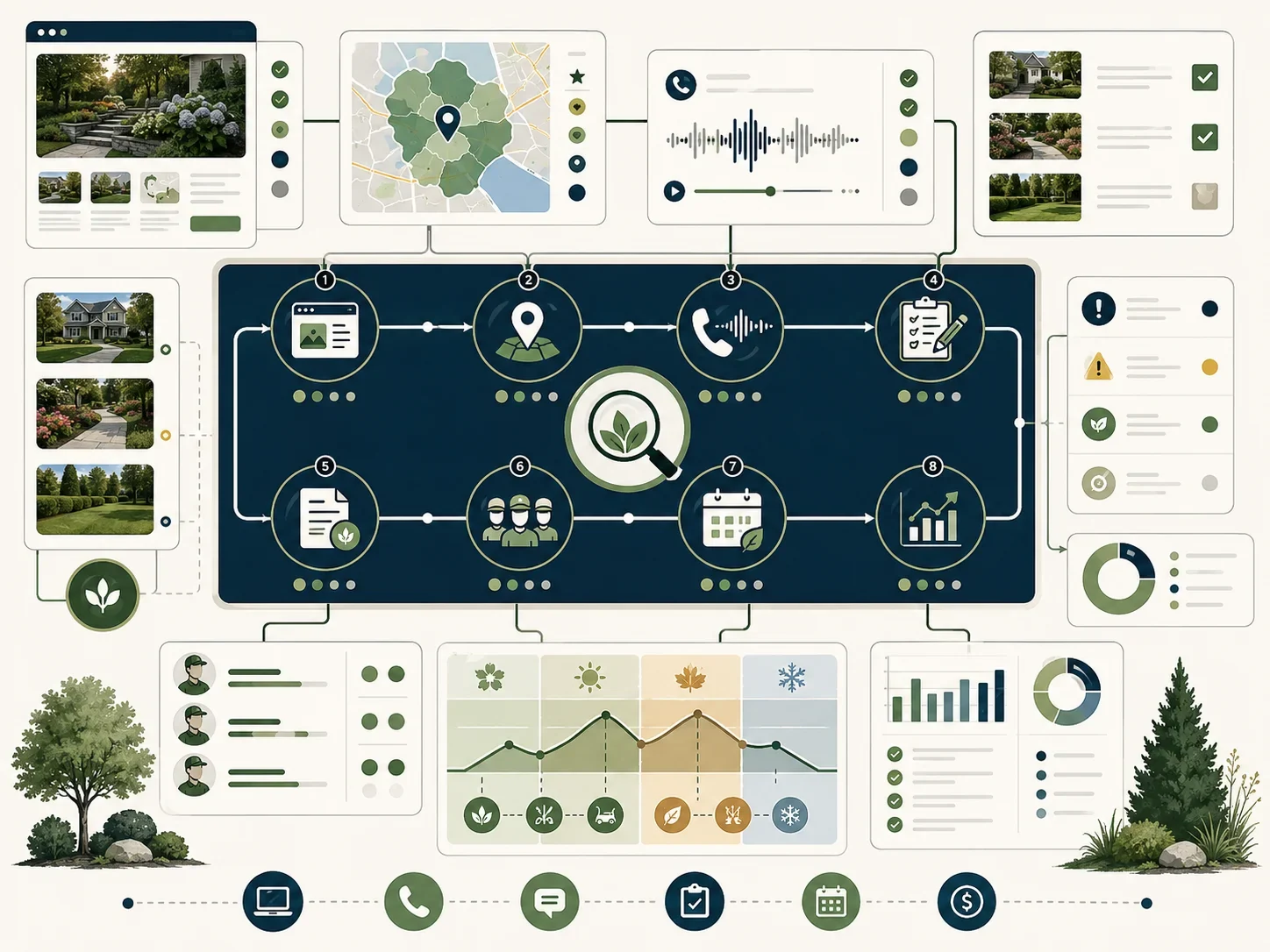
The plan separates discovery, design, build, integration, testing, launch, and observation. Timing depends on stable requirements, usable data, available APIs, named reviewers, and timely access to existing systems throughout delivery.
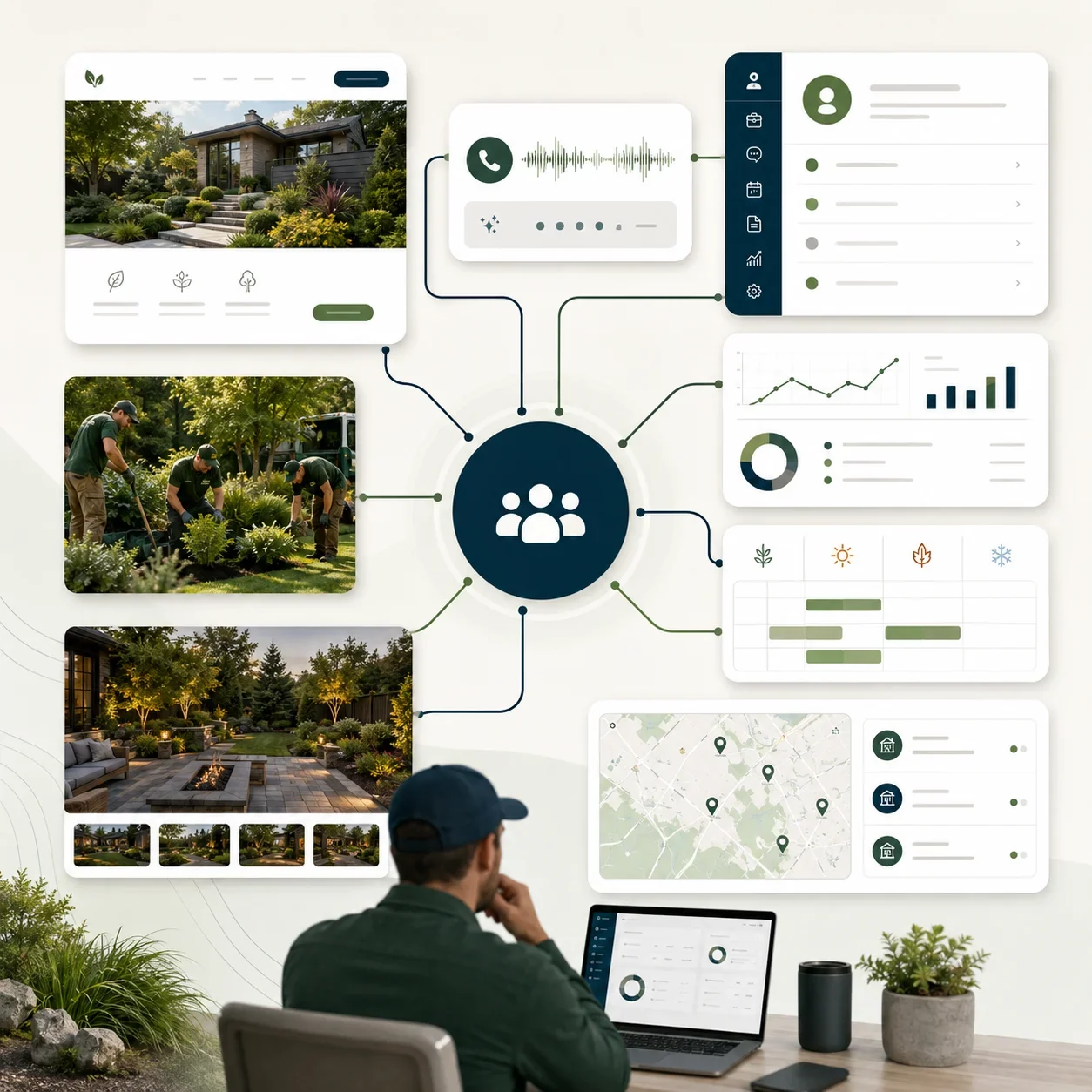
You provide process owners, sample records, account access, approval rules, exception contacts, security requirements, and test users. Missing data or conflicting rules stays documented rather than being guessed into production.
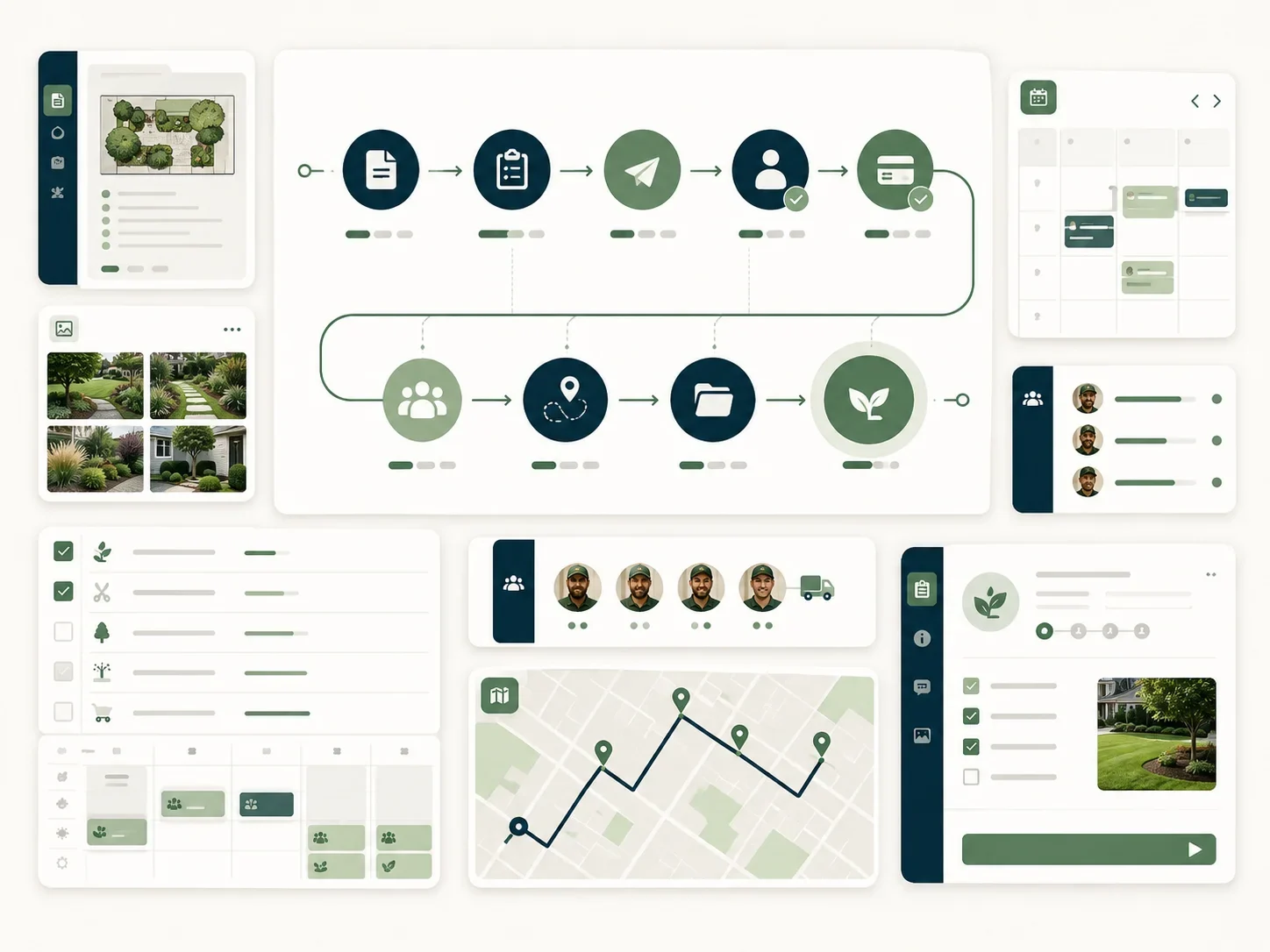
We provide requirements, interface plans, development, integrations, test cases, documentation, launch checks, failure alerts, and agreed support. Your company keeps its data, accounts, source access, and final approval authority after launch.
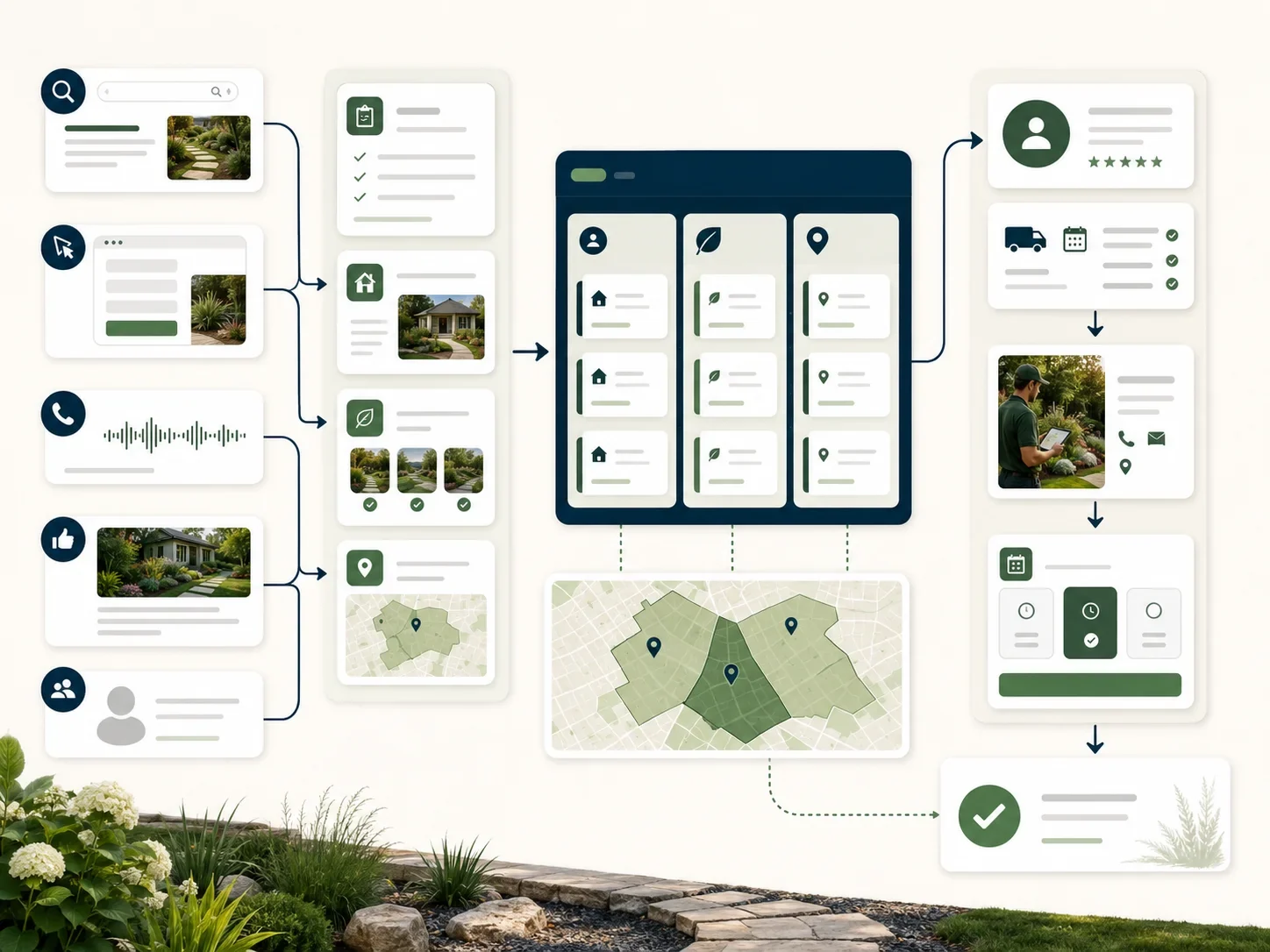
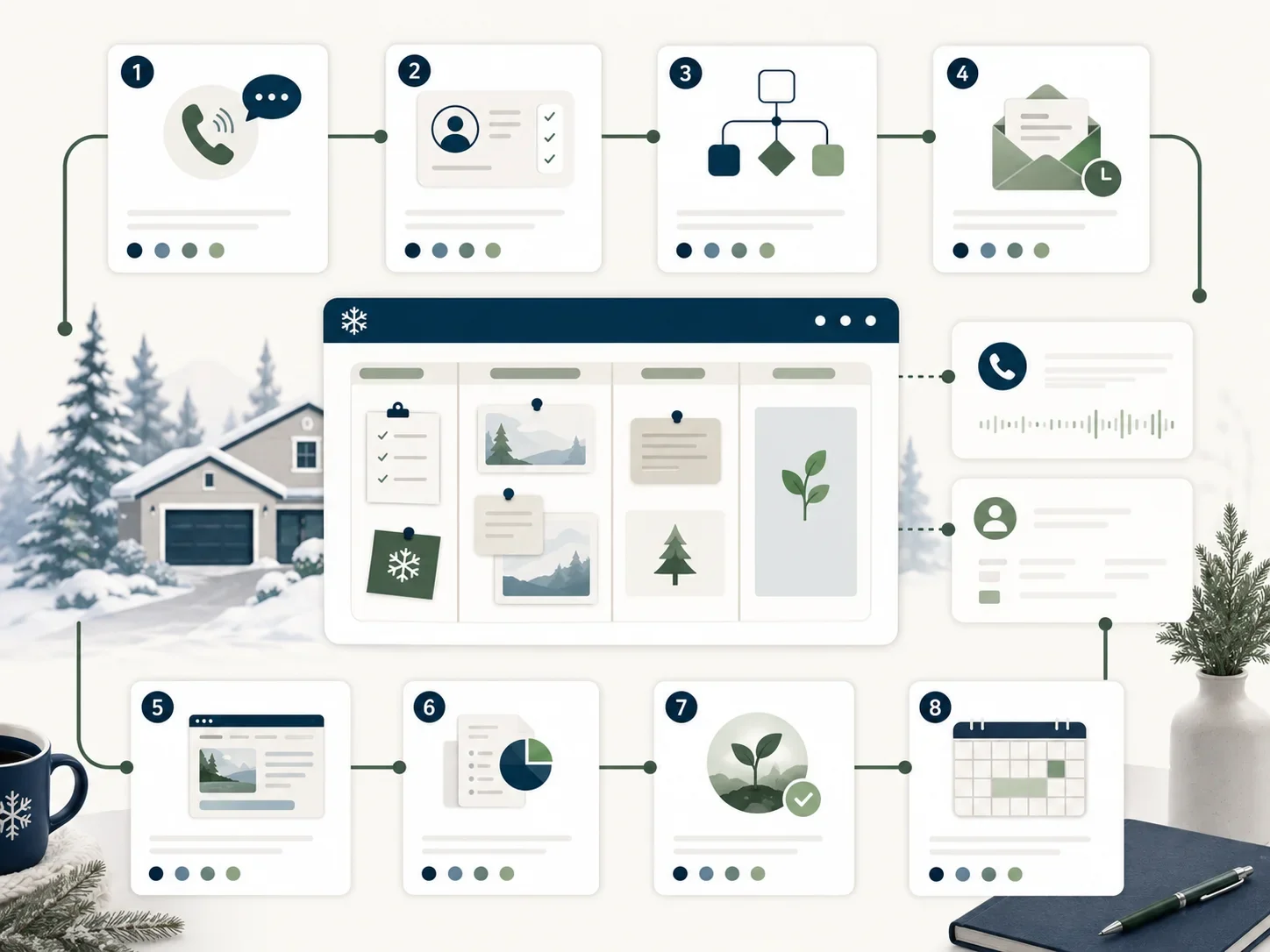
How Custom Software Moves From Workaround to Controlled Release
Outsourcing custom software and integrations for landscape contractors works when the operating rule, data owner, exception path, and success measure are settled before development begins.
Map the workaround, name the costly failure
We trace the spreadsheet, inbox, form, field app, CRM, accounting record, and report to find where information stops, gets entered twice, or reaches the wrong owner.
- Repeated handling gets documented
- Revenue failures receive priority
- Current owners stay visible
Write the requirement, keep the first release narrow
The requirement names users, records, permissions, integrations, edge cases, and acceptance tests. The first release handles the highest-value job instead of recreating every request collected during discovery.
- One operating job comes first
- Exceptions have named owners
- Acceptance tests stay explicit
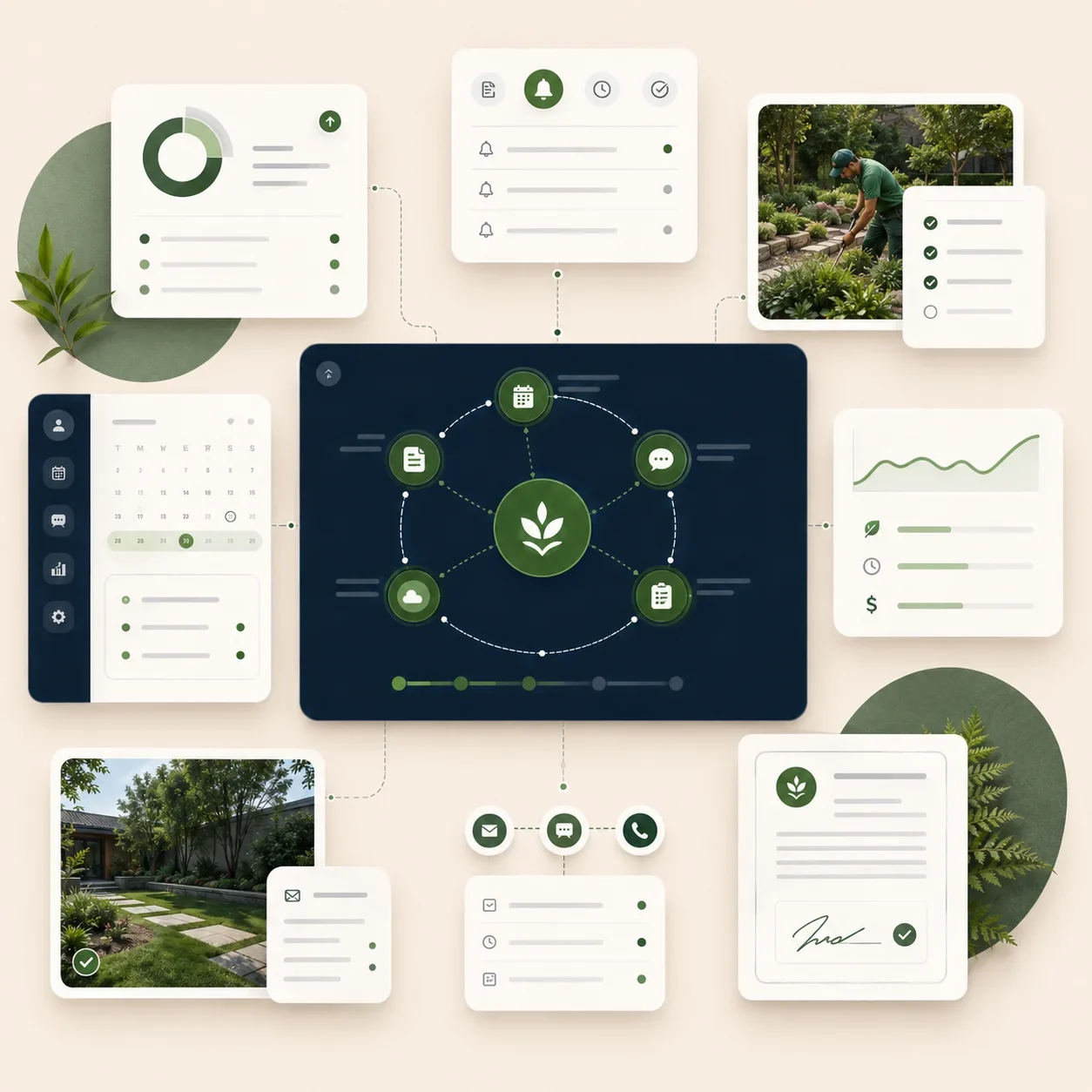
Design and build, protect live system access
We create approved interfaces, data flows, integrations, and application logic around Aspire, Jobber, LMN, Service Autopilot, QuickBooks, or the current stack without moving production records casually.
- Permissions stay narrowly scoped
- Test data remains separate
- Client credentials stay controlled
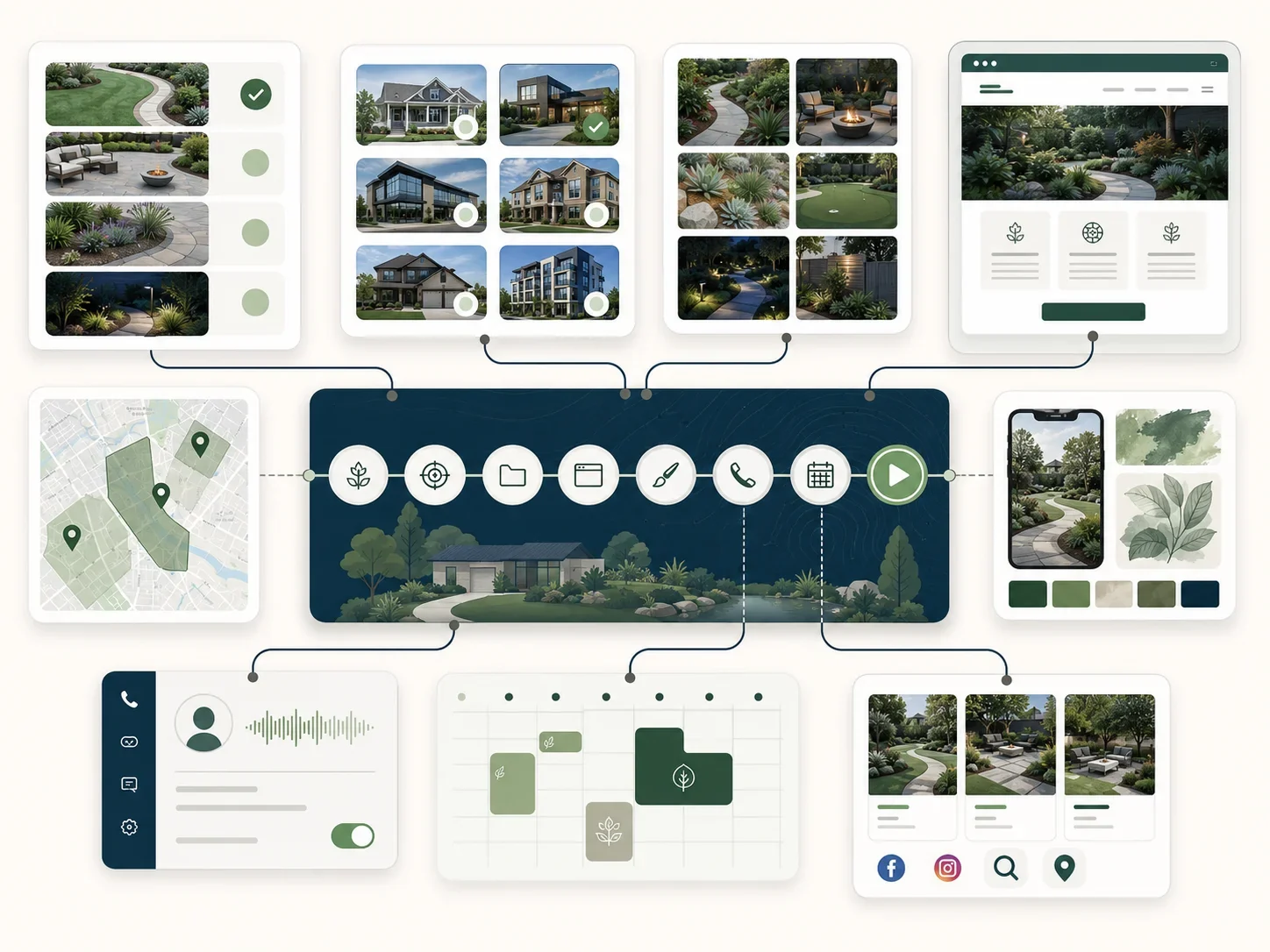
Test field conditions, not only clean examples
Testing covers weak mobile signal, duplicate customers, incomplete estimates, weather rescheduling, branch transfers, failed payments, full calendars, and records needing a manager before they move.
- Failed paths create alerts
- Field users complete testing
- Launch approval is recorded
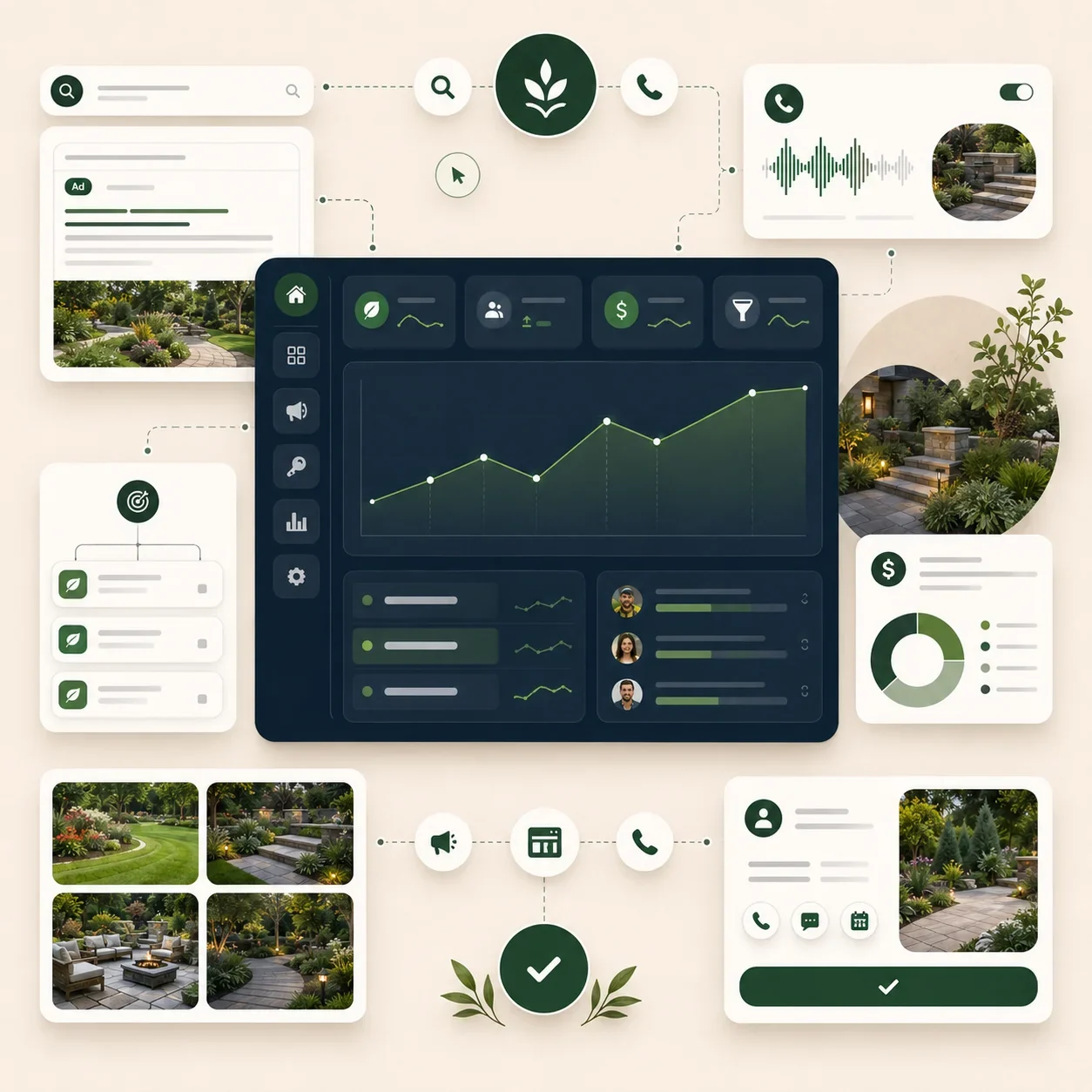
Release and review, fix the next constraint
Monthly reviews cover completed handoffs, failures, manual exceptions, adoption, response time, staff handling removed, and booked-work outcomes. The roadmap changes when services, branches, crews, or seasons change.
- Outcomes replace feature counts
- Failures receive named action
- Seasonal changes start early
Custom Software Is One Part of It. We Run the Whole Thing.
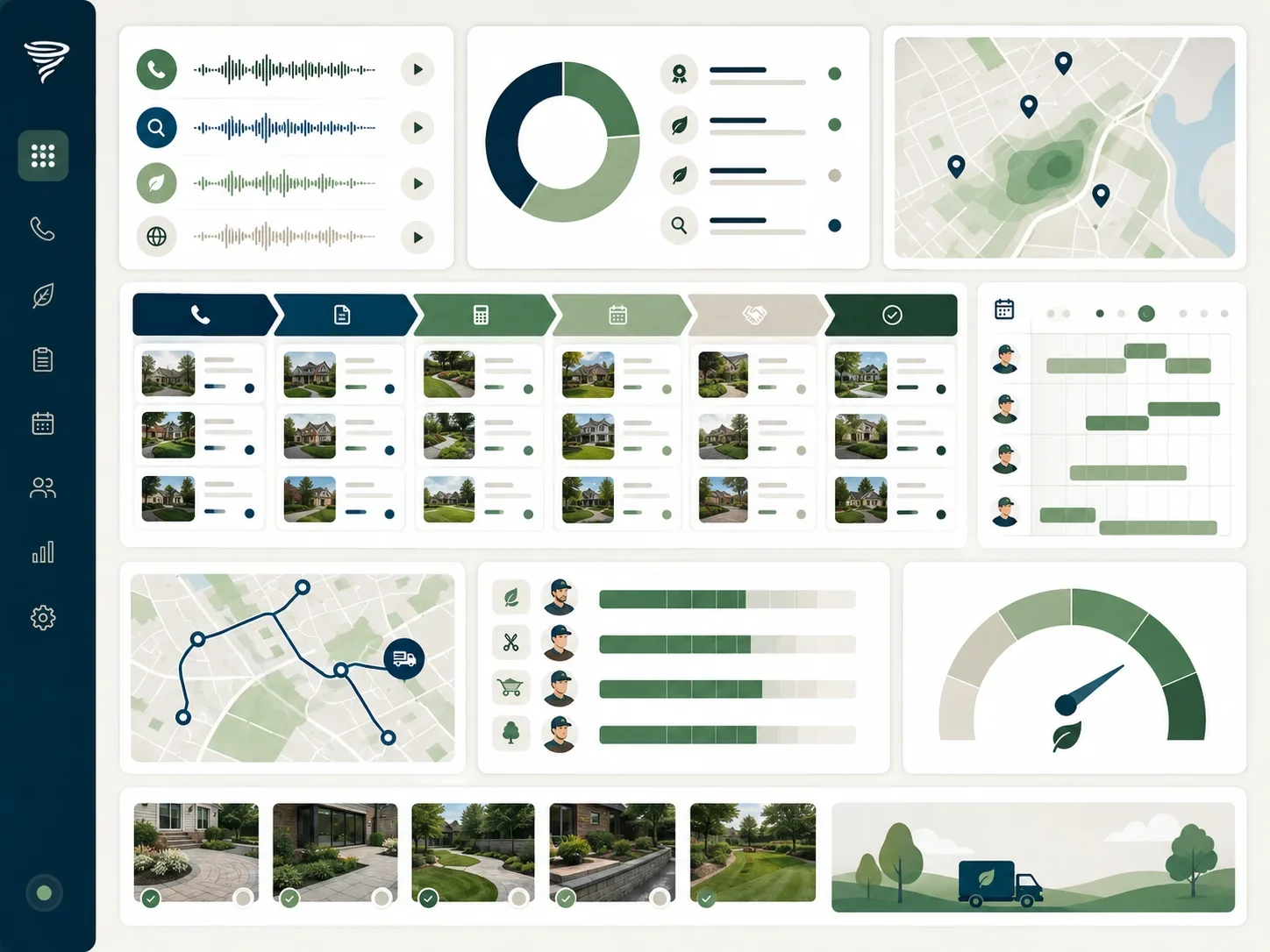
Software work sits inside one team running marketing, AI, website, technology, and reporting. The audit sets the active workstreams, responsibilities, and package before you sign.
One market, one service line, and focused execution for dependable growth.
See what's includedMulti-service growth with broader campaigns, website work, and stronger follow-up.
See what's includedMulti-branch execution with AI, automation, deeper reporting, and faster cadence.
See what's includedFranchise systems, complex integrations, and governance across markets and teams.
See what's includedFree Custom Software & Integrations Audit
Proof Without Invented Software Results
We do not have two approved testimonials for this category yet. Here is exactly how we run the work, and here is what we measure.
“We stopped guessing which work paid. The custom Software & Integrations for landscaping companies programme gave us one baseline, and the monthly review finally matched what the crews actually booked.”
“Everything sits in accounts we own, and every change is written down before it ships. That alone was worth the switch.”
more qualified enquiries in the first two quarters, measured against the pre-engagement baseline.
Every quote above is published with the client’s written approval, full name, role and company on file.
Custom Software and Integrations for Lawn Care Companies: Buying Questions
How does custom software and integrations help a landscaping company grow?
Custom software and integrations help growth by removing operating delays that lose enquiries, estimates, jobs, payments, or management visibility. The first build should solve one measurable constraint, not replace every system. Start with Custom Software Development when configured platforms cannot handle the documented requirement.
What does custom software and integrations include for landscaping businesses?
Custom software and integrations include requirements, interface design, application development, mobile or web tools, APIs, data mapping, permissions, testing, documentation, launch support, and monthly review. The active scope follows the operating failure. Review Web Application Development for browser tools and Mobile App Development for field or customer workflows.
How much does custom software and integrations cost for a landscaping company?
Custom software and integrations pricing for landscaping businesses starts inside Foundation at $2,000 monthly, Growth at $3,000, Scale at $5,000, or custom Enterprise pricing. Project activation, hosting, licences, usage fees, data cleanup, and complex integrations may be separate. Ad spend is excluded. Compare growth package pricing before requesting the free growth audit.
When should a landscaping company invest in custom software and integrations?
Invest when a repeated workaround controls revenue, staff enter the same record in several systems, or configured software cannot support a documented operating rule. Major releases are safer in the January quiet than the April rush. Begin with the free growth audit before approving custom development.
Can custom software and integrations support seasonal landscaping demand?
Yes. Custom tools can support spring estimating, summer scheduling, recurring routes, fall cleanup, renewals, snow events, and winter planning. Releases should reflect crew capacity, pesticide licensing, weather changes, weak field connectivity, and the records already held in Aspire, Jobber, LMN, Service Autopilot, or QuickBooks.
How is performance measured for custom software and integrations?
Performance is measured through completed handoffs, failure rate, manual exceptions, adoption, response time, data quality, staff handling removed, estimate speed, payment completion, and booked-work visibility. A managed programme should also record support issues, release dates, operating owners, and the next constraint rather than reporting feature volume alone.
Build the Missing Tool, Keep the Operation in Control
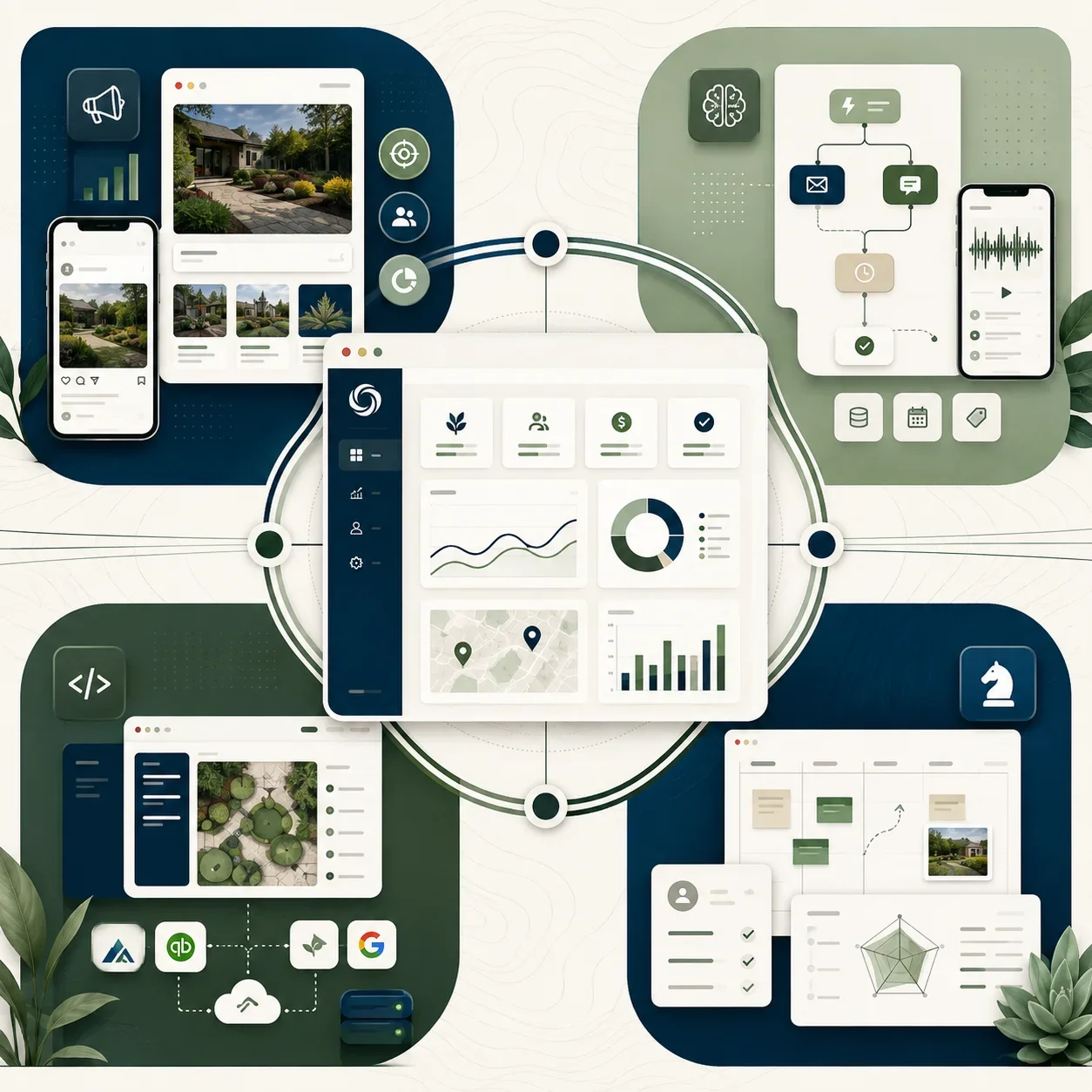
Custom software connects to everything around it. These categories share the same systems and the same data.