
Web Application Development For Landscaping Companies Built for Measurable Business Outcomes
Web application development for landscaping companies builds browser-based tools for estimating, operations, customer access, branch reporting, and workflows that off-the-shelf software cannot cover. The best use is a process that needs shared access, controlled data, and integration across the office. It improves leads, efficiency, and revenue by reducing handoffs, speeding decisions, and giving managers a current operating view without passing spreadsheets between branches.
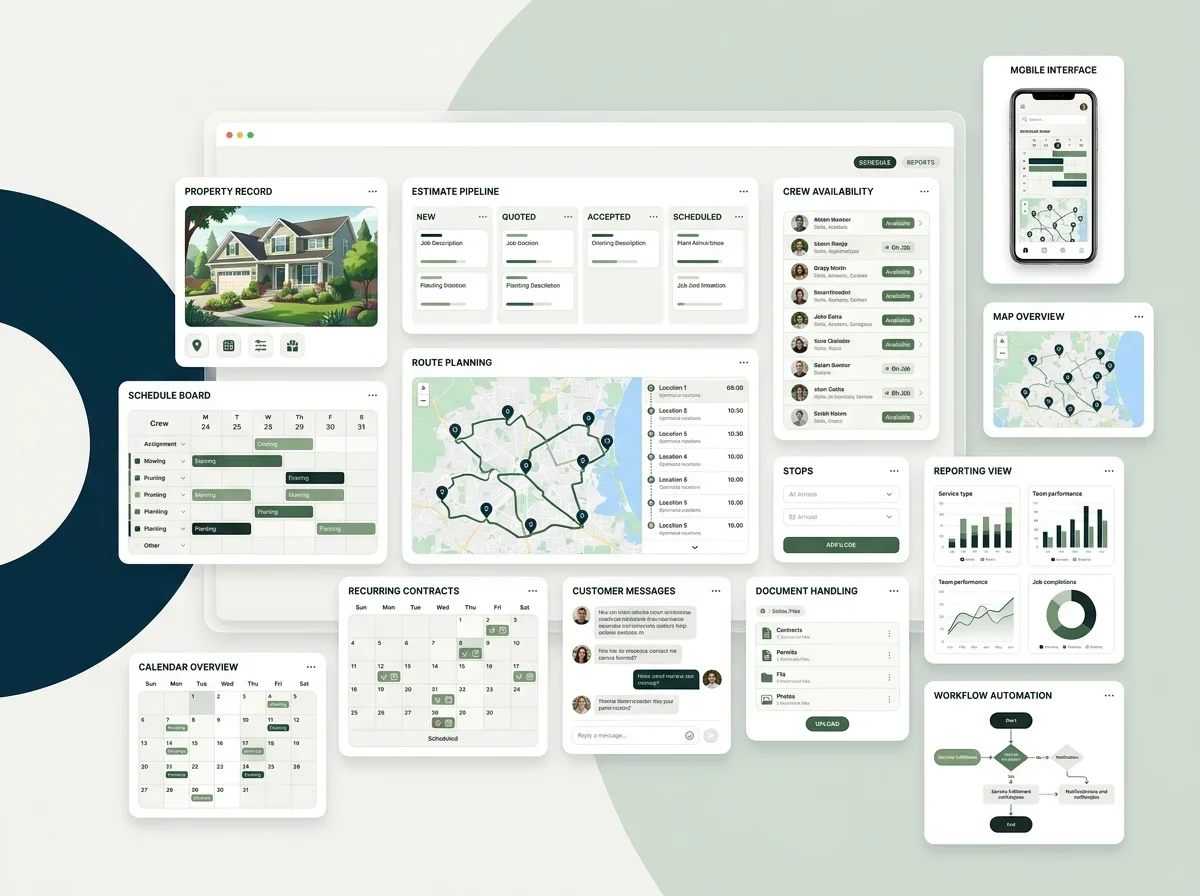
Web Application Development For Landscapers
This fits companies that need more control than a spreadsheet but do not need every user to install a mobile app. Common users include owners, office teams, estimators, branch managers, account managers, property managers, and administrators who need the same workflow from any modern browser.
Operations dashboards
See the fitEstimator tools
See the fitCustomer portals
See the fitBranch reporting
See the fitApproval workflows
See the fitAdministrative systems
See the fitLandscaping Web Application Development: Where the System Breaks
A browser tool becomes expensive when it is built as a collection of screens instead of an operating system for one process. The useful version has clear ownership, a small number of reliable records, role-based access, and integrations that stop staff from maintaining parallel truths.
"Each branch reports the same number differently."
- Approvals and updates move through spreadsheets and email.
"Shared records use one definition and owner"
- Workflows show status, exceptions, and next action.
Application before interface
We define records, decisions, owners, permissions, and integrations before polishing screens. The free growth audit maps the current process and identifies whether a web application is justified or a smaller change to existing software will solve the constraint.
Stop Funding Work the Operation Cannot Use
More Of Custom Software & Integrations, As Its Own Service
Web application development is one part of Custom Software & Integrations. The audit decides which related services to activate first based on the constraint costing you booked work today.
Custom software development
Built around your operation.
View serviceMobile app development
iOS and Android builds.
View serviceiOS & Android development
Native performance both platforms.
View serviceCustomer portal development
Clients self serve online.
View serviceCrew & field app development
Tools built for trucks.
View serviceEstimating & quoting software
Accurate pricing, faster quotes.
View serviceWeb Application Development For Landscaping Business: What the Managed Service Covers
Managed web application development for landscaping companies combines strategy, build control, implementation, and reporting around one defined operating outcome.
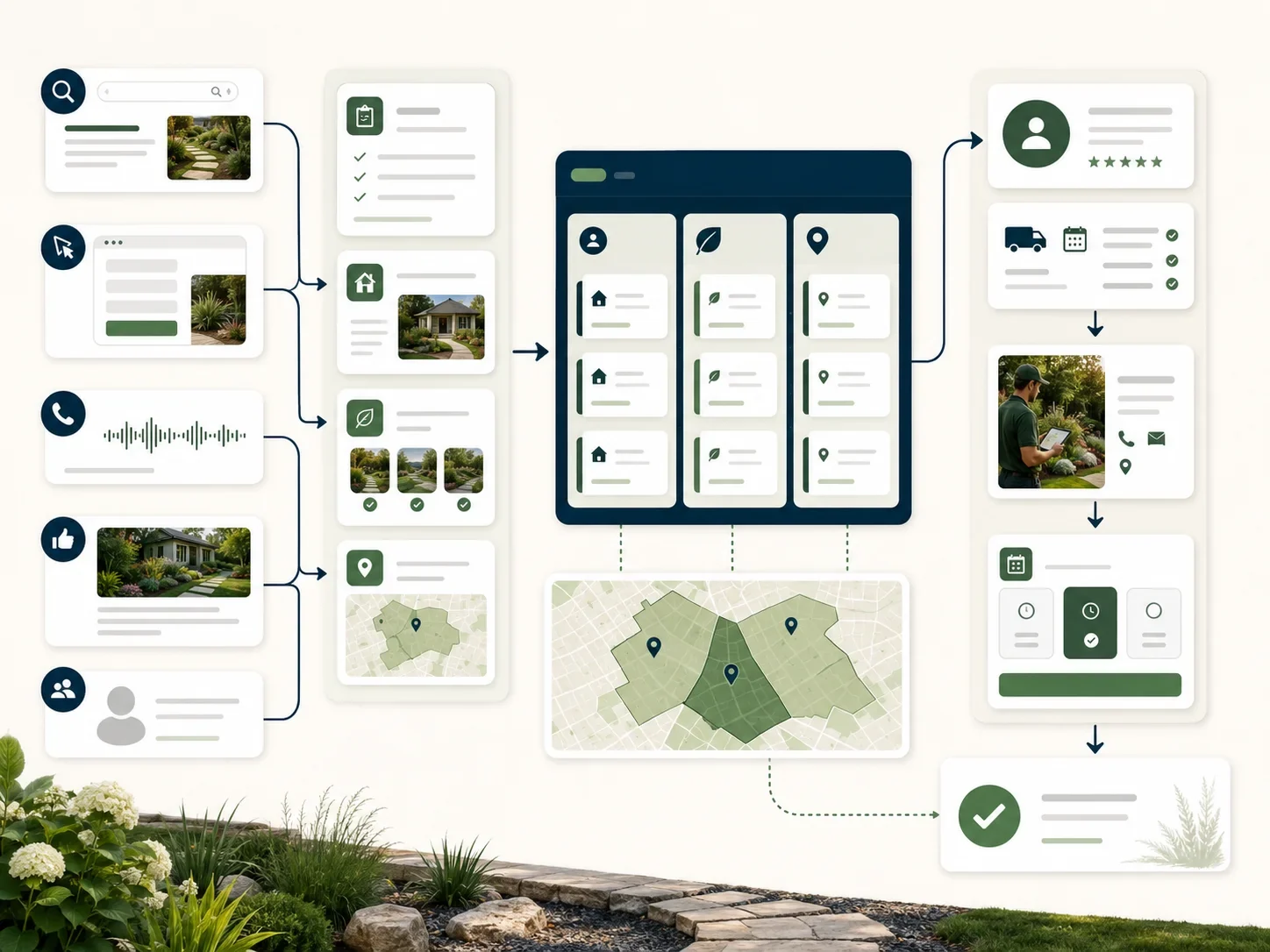
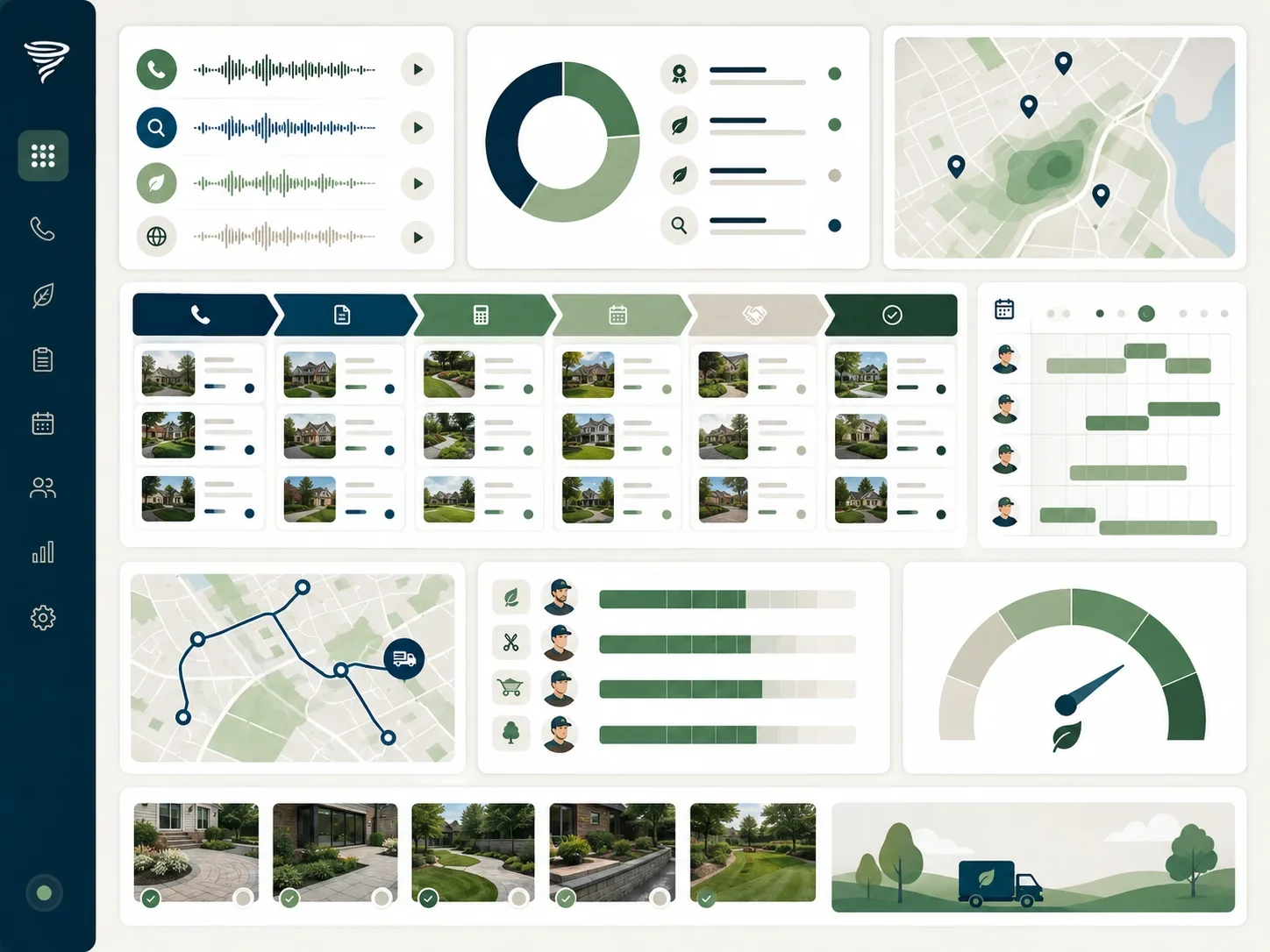
Combine workload, crew capacity, branch status, exceptions, and key commercial measures in one controlled view.
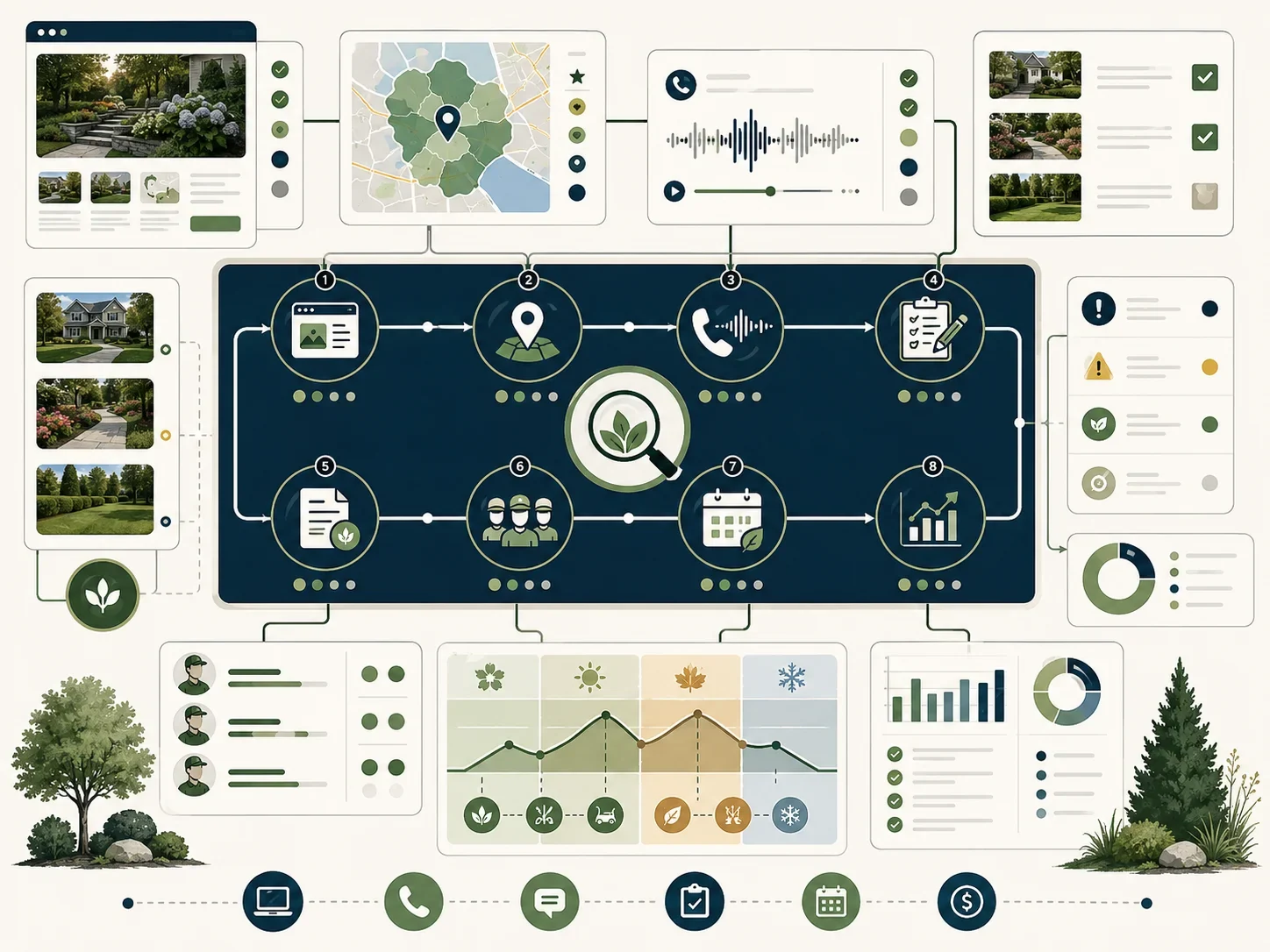
Manage property data, options, approvals, change history, and handoff from estimate to scheduled work.
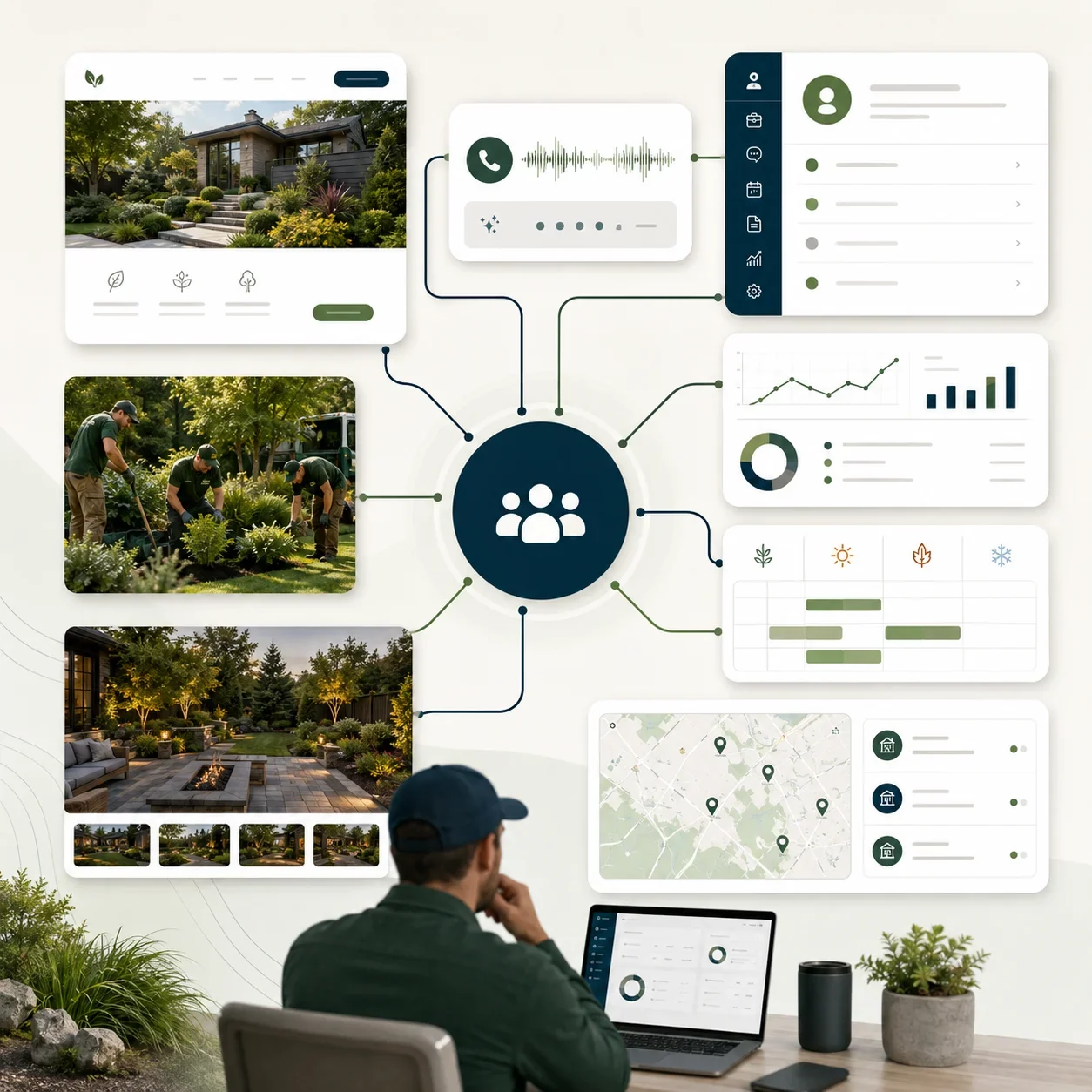
Give customers role-based access to requests, documents, approvals, invoices, and property-level status.
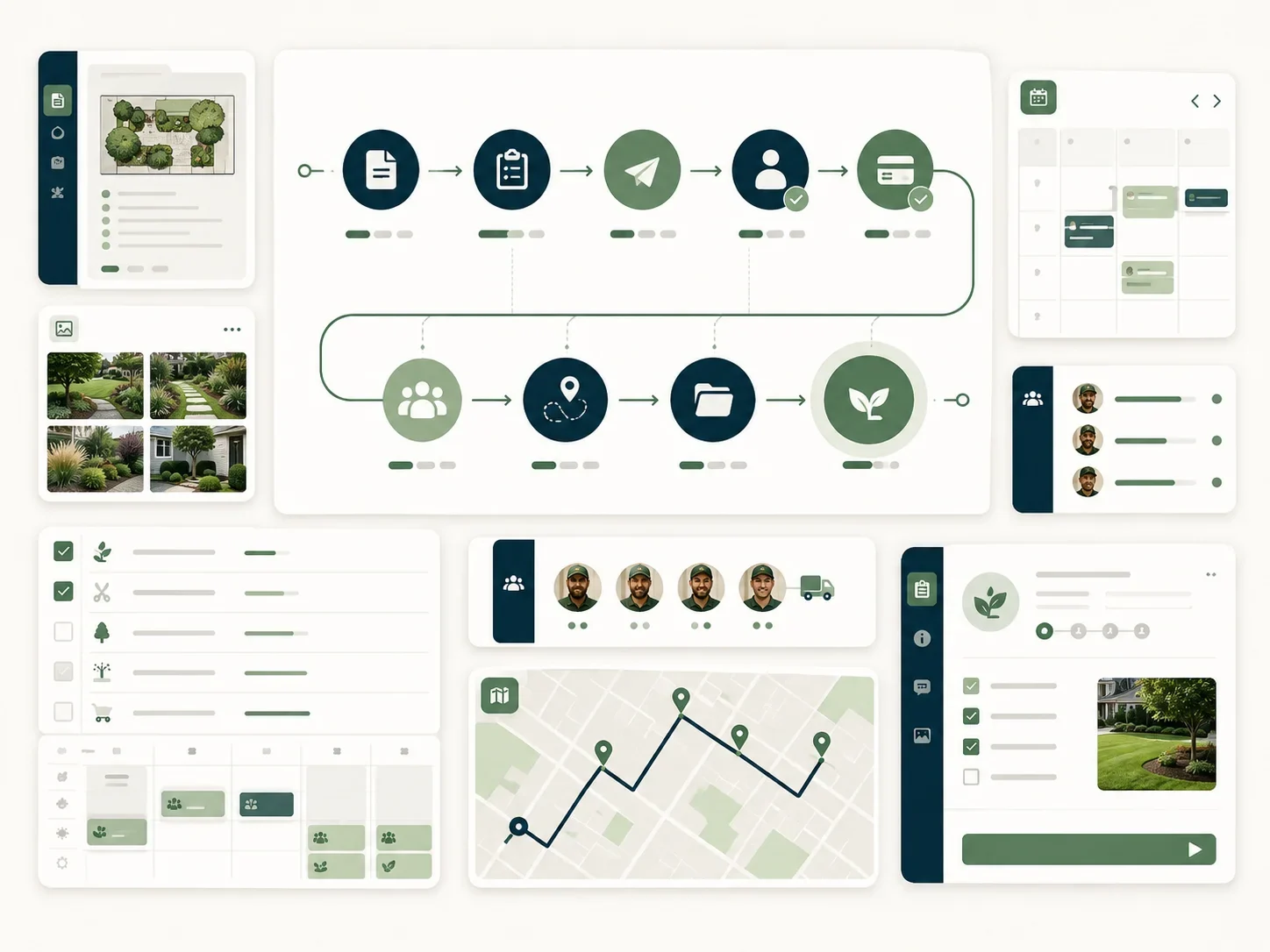
Apply shared definitions, permissions, templates, and reporting while preserving local ownership and service differences.
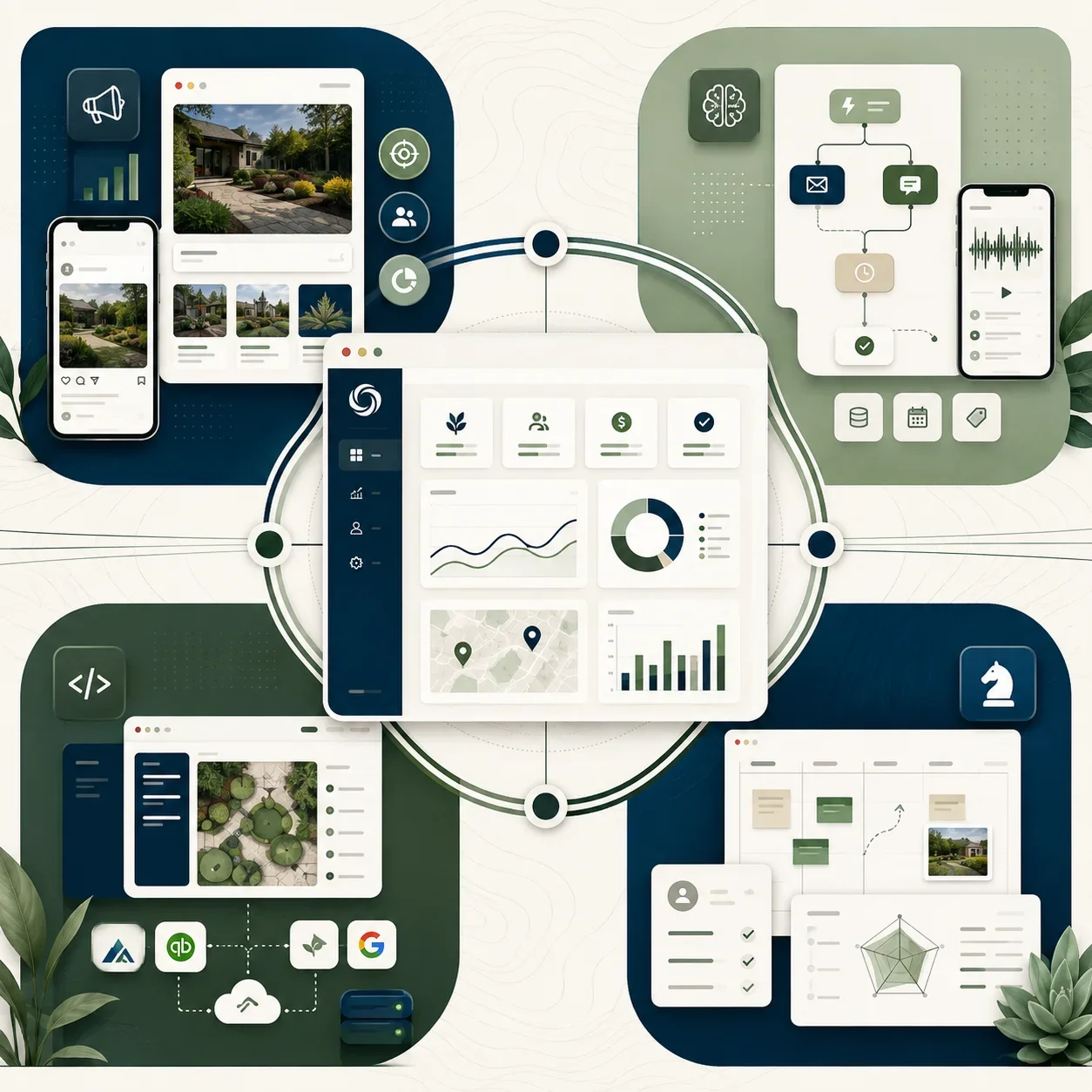
Connect field software, accounting, payments, communications, analytics, and databases through documented APIs and jobs.
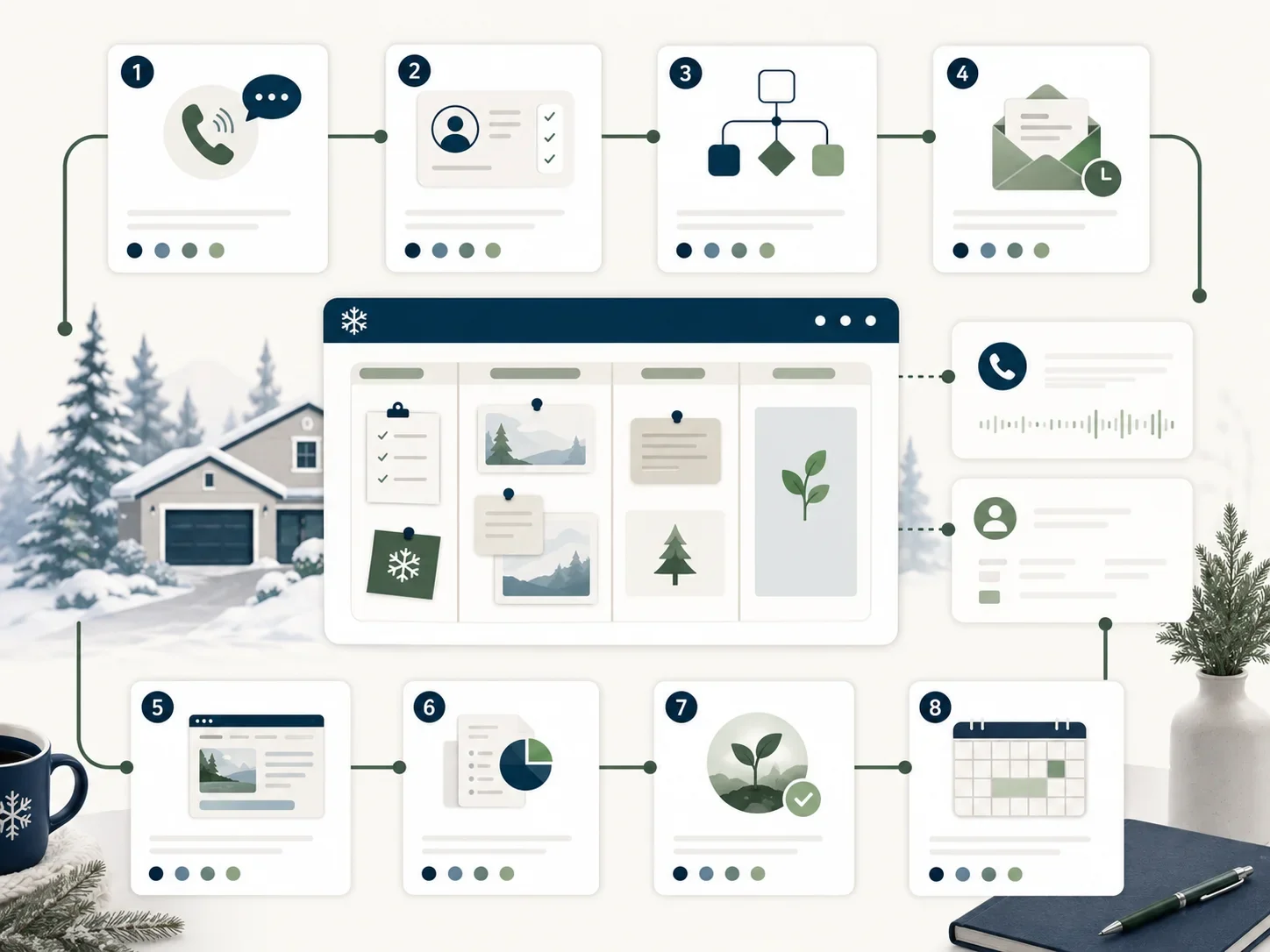
A Three-Step Operating Process, With Platforms and Owners Named
Map, test, build, and report against a commercial baseline.
Prototype the application, test permissions and workflow logic
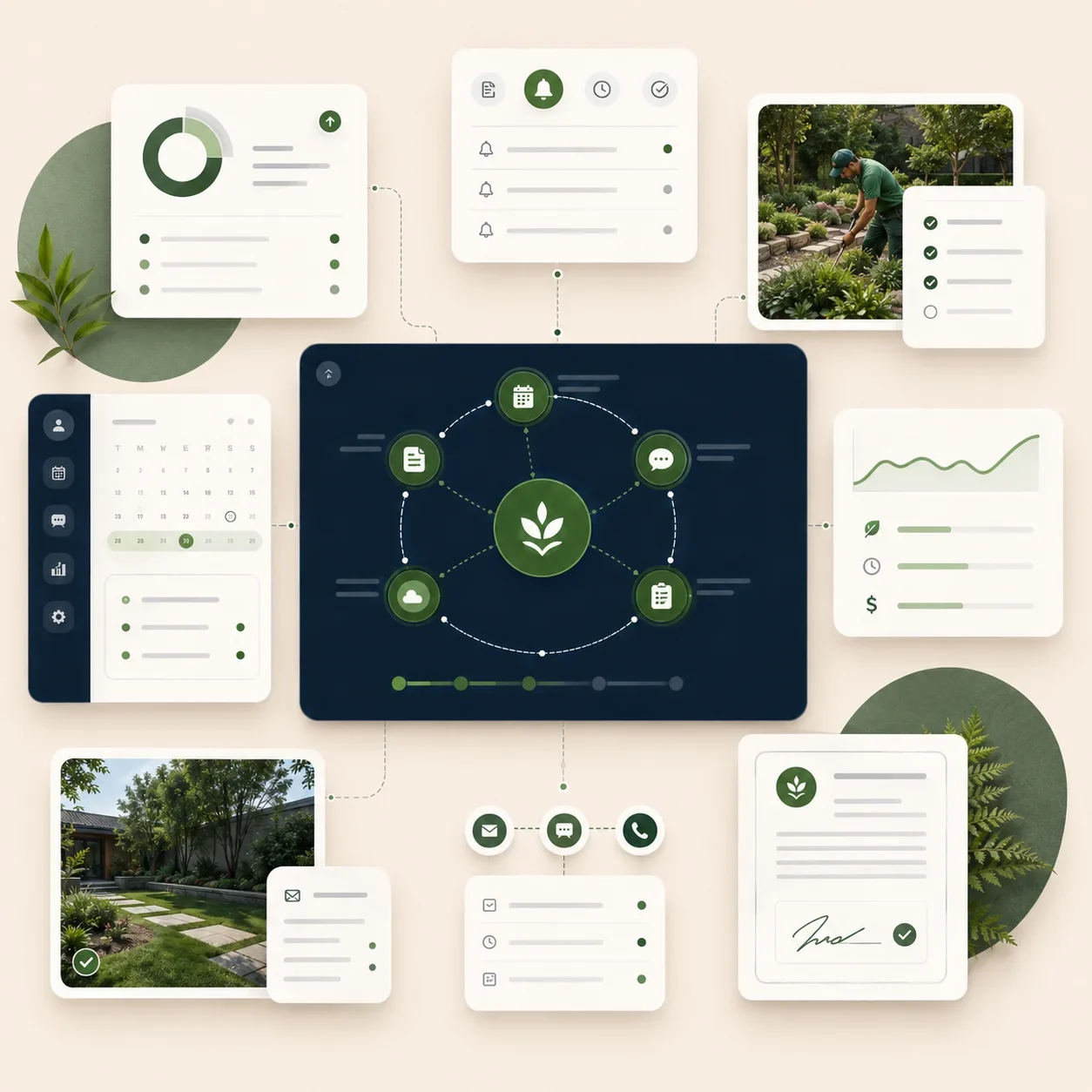
We build clickable screens and a working data model before full production. Real users test normal jobs, branch differences, cancellations, approvals, weather delays, and incomplete data while changes remain quick.
- Real workflows drive prototypes
- Permissions tested by role
- Edge cases enter acceptance tests
Develop in releases, monitor reliability and operating use
We build, integrate, deploy, and document in controlled releases using source control, cloud hosting, automated tests, and monitored jobs. Weekly delivery reviews and monthly outcome reports keep the backlog tied to adoption and business value.
- Client owns code and accounts
- Releases include rollback plans
- Usage guides the next build
Web Application Development Is One Part. We Run the Whole Thing.
One team runs marketing, AI, website work, and reporting. Scale fits coordinated multi-market execution.
One market, one service line, and focused execution for dependable growth.
See what's includedMulti-service growth with broader campaigns, website work, and stronger follow-up.
See what's includedMulti-branch execution with AI, automation, deeper reporting, and faster cadence.
See what's includedFranchise systems, complex integrations, and governance across markets and teams.
See what's includedFree Web application development Audit
Proof We Can Publish Today
We do not have a published case study for this service yet. Here is exactly how we run it, and here is what we measure.
“We stopped guessing which work paid. The web application development programme gave us one baseline, and the monthly review finally matched what the crews actually booked.”
“Everything sits in accounts we own, and every change is written down before it ships. That alone was worth the switch.”
more qualified enquiries in the first two quarters, measured against the pre-engagement baseline.
Every quote above is published with the client’s written approval, full name, role and company on file.
Questions Owners Ask Before Funding the Work
: 1. How does web application development help a landscaping company grow?
Web application development helps a landscaping company grow by giving teams a shared workflow and current data where generic software or spreadsheets create delays. It can speed estimating, approvals, branch decisions, customer service, and reporting. The application earns its cost when it removes a measurable constraint, not when it simply reproduces existing screens.
2. What does web application development include for landscaping businesses?
Web application development includes process mapping, requirements, user experience, data models, permissions, front-end and back-end development, APIs, testing, deployment, monitoring, documentation, training, and ongoing releases. It may connect field software, accounting, payments, communication tools, analytics, and existing databases while keeping ownership of each record explicit.
3. How much does web application development cost for a landscaping company?
Web application development pricing for landscaping businesses begins with planning and focused improvements inside Foundation at $2,000 per month. Full builds are quoted separately based on users, records, workflows, integrations, permissions, and reliability needs. Growth is $3,000, Scale is $5,000, Enterprise is custom, and ad spend is excluded.
4. When should a landscaping company invest in web application development?
A landscaping company should invest when several people need the same workflow and existing tools force duplicate entry, manual reporting, uncontrolled spreadsheets, or slow approvals. Outsourcing web application development for landscape contractors is useful when the company needs product planning, engineering, integrations, hosting, testing, documentation, and support under one team.
5. Can web application development support seasonal landscaping demand?
Yes. A web application can change dashboards, staffing views, service availability, approval queues, and reporting around spring demand, fall cleanup, snow events, and winter renewals. It can also route work by branch, licence, service area, and crew capacity while preserving one customer and property record across the year.
6. How is performance measured for web application development?
Performance is measured through adoption, task completion, cycle time, data accuracy, error reduction, system reliability, support demand, integration success, and business outcomes tied to the workflow. The monthly report compares the new application with the process it replaced. Page views and feature count matter less than completed work and recovered operating time.
Web Application Development Is One Part. We Run the Whole Thing.
Find the constraint, fund the right work, and review the commercial result every month.