
Local SEO12 min read
Tree Service SEO: Ranking for Emergency Removals and the Jobs Worth Having
Storm calls and planned pruning are two different businesses that arrive through the same website. Build for both on purpose, or the emergency work will quietly crowd out the work with the margin.
 By Umair SajidFounder & CEO · Landscaping marketing specialist
September 30, 2026

On this page
Quick answer
Tree service SEO has to serve two very different searches. Emergency removal searches spike after storms, are decided in one sitting, and reward whoever answers the phone with a page that proves you can turn up. Planned work, pruning plans, plant health care and commercial contracts, moves slowly, is searched calmly and rewards depth, credentials and evidence. Build a fast emergency page and a service page per planned service, keep the profile and reviews current so the map carries the storm weeks, then measure by job type rather than by traffic.
If your site currently treats both the same, the storm work will win, and it is usually the thinner half of the business. Here is how we work with tree care companies.
Key takeaways
- Emergency and planned work are two demand curves with different pages, different copy and different speed requirements.
- Storm weeks are won on the map and on how fast a human answers, not on a blog post published that morning.
- Planned work is where the margin sits, and it is won on evidence: certifications, method, photographs of finished pruning.
- Traffic is the wrong measure for a tree company. Measure inquiries by job type.
The two demand curves
Look at a year of inquiries for any established tree company and you see two patterns laid over each other. One is flat with seasonal bumps: pruning, cabling, plant health care, removals people have been putting off, commercial specifications. The other is spiky: one storm, three days, a month of revenue arriving at once.
| Emergency removal | Planned work | |
|---|---|---|
| What triggers it | Wind, ice, a failed limb | A season, an inspection, a property plan |
| How fast the buyer decides | Minutes | Days to weeks |
| What the buyer wants to see | That you can be there, insured, today | Method, credentials, finished examples |
| Margin | Variable, often thinner after overtime | Usually stronger and schedulable |
| What wins it online | Map presence, speed of answer, a page that loads and calls | Service pages with depth and proof |
That margin comparison is a rule of thumb, not a benchmark. Run it against your own job records before you act on it, which is the point of the last section. The wider order this sits inside is in organic growth for landscaping companies.
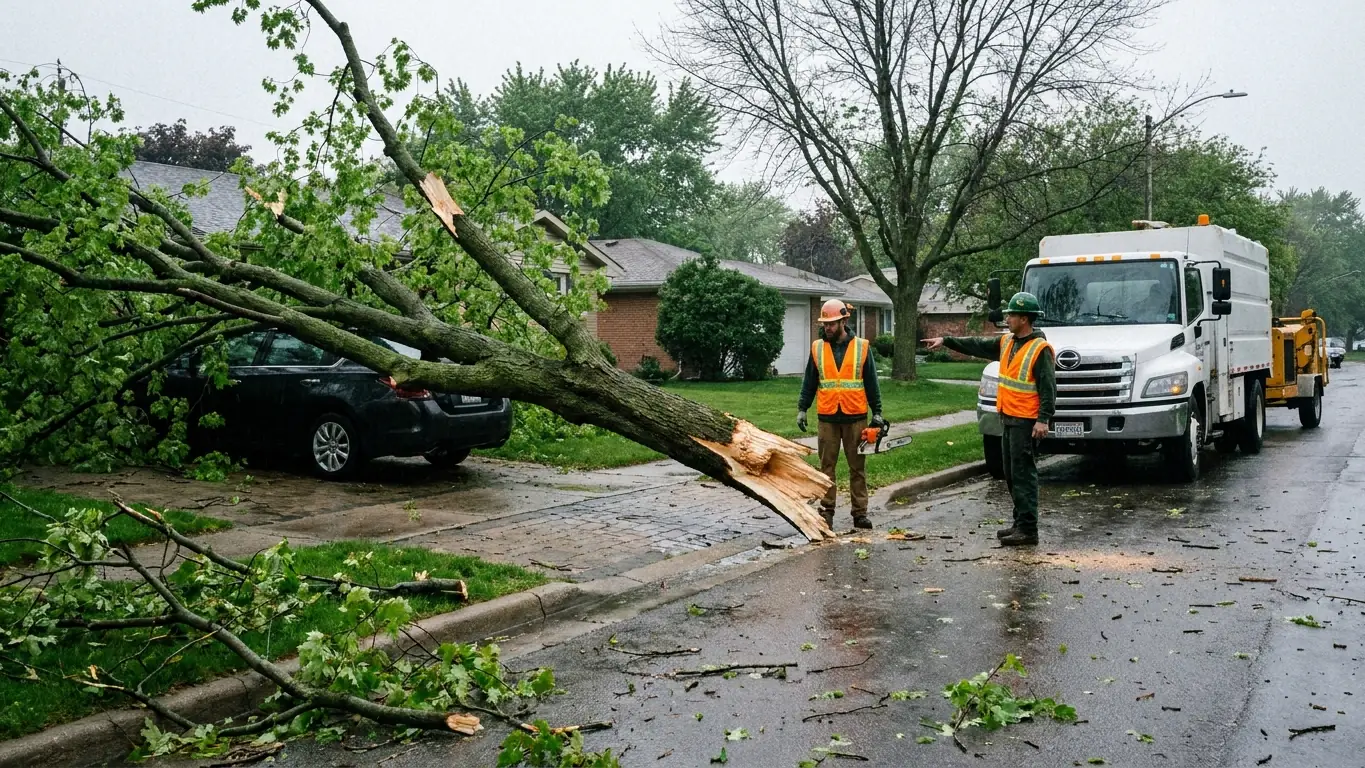
Most tree company websites are built for the second and then used for the first, or the reverse. Both fail in a way that only shows up in the schedule.
The pages a tree company site needs
Keep the structure small and specific. Every page here answers one search a buyer actually makes.
- Emergency tree service. One page, fast, built to be used on a phone in bad weather.
- Tree removal. The planned version: what it costs to decide, what access changes, what happens to the stump.
- Tree pruning and trimming. Method by tree type and season, because this is where expertise shows.
- Plant health care. Diagnosis, treatment programs, licensing where it applies.
- Stump grinding. Often searched separately by people who already had a tree removed.
- Commercial and property management. Written for a manager with a portfolio, not a homeowner.
- Storm damage. Insurance questions, what you document, what a claim needs. Document what you saw and what you did, and leave the claim itself to the homeowner and their adjuster.
Add territory pages only where you can say something real about the place: the species mix, the storm history, the access constraints, the crews who work it. A page that swaps a town name into the same paragraph is the fastest way to look like everybody else.
What the emergency page has to do in ten seconds
Assume a phone with one bar, a wet screen, a person standing in a driveway looking at a limb on a car. That page has one job.
| Element | What it must say | Where it goes |
|---|---|---|
| Phone number | Tappable, answered by a human during storm hours | Top of the screen, repeated at the end |
| Response promise | What you can honestly commit to, in plain hours | First line under the heading |
| Area | The towns you will actually drive to at 2am | Above the fold |
| Insurance and credentials | Cover held, qualifications, who is on site | Immediately after the promise |
| Proof | Photographs of real storm work, dated | Mid page |
| What to do now | Safety steps while they wait, lines to keep clear of | Mid page, useful even if they call someone else |
| Form | Three fields, address and photo upload | Secondary to the phone, never instead of it |
The page should carry no carousel, no video autoplay and no cookie wall that covers the number. Speed here is a business decision, not a technical one.
Ranking for the work with the margin
Planned work is searched by people with time. They compare. They read. They check whether you sound like someone who knows what they are looking at. This is where a tree company can beat a bigger competitor, because most tree service pages say the same five things in the same order. What wins is service pages with depth and proof.
- Write by species and problem, not by service alone. A page that explains what you do about a leaning oak, a storm damaged maple or an ash in decline reads like expertise because it is.
- Name credentials properly: ISA certification, state licensing for pesticide application, insurance levels. Only what you actually hold, and pesticide applicator licensing is set state by state, so name the license you hold in the state you work. Checked September 2026.
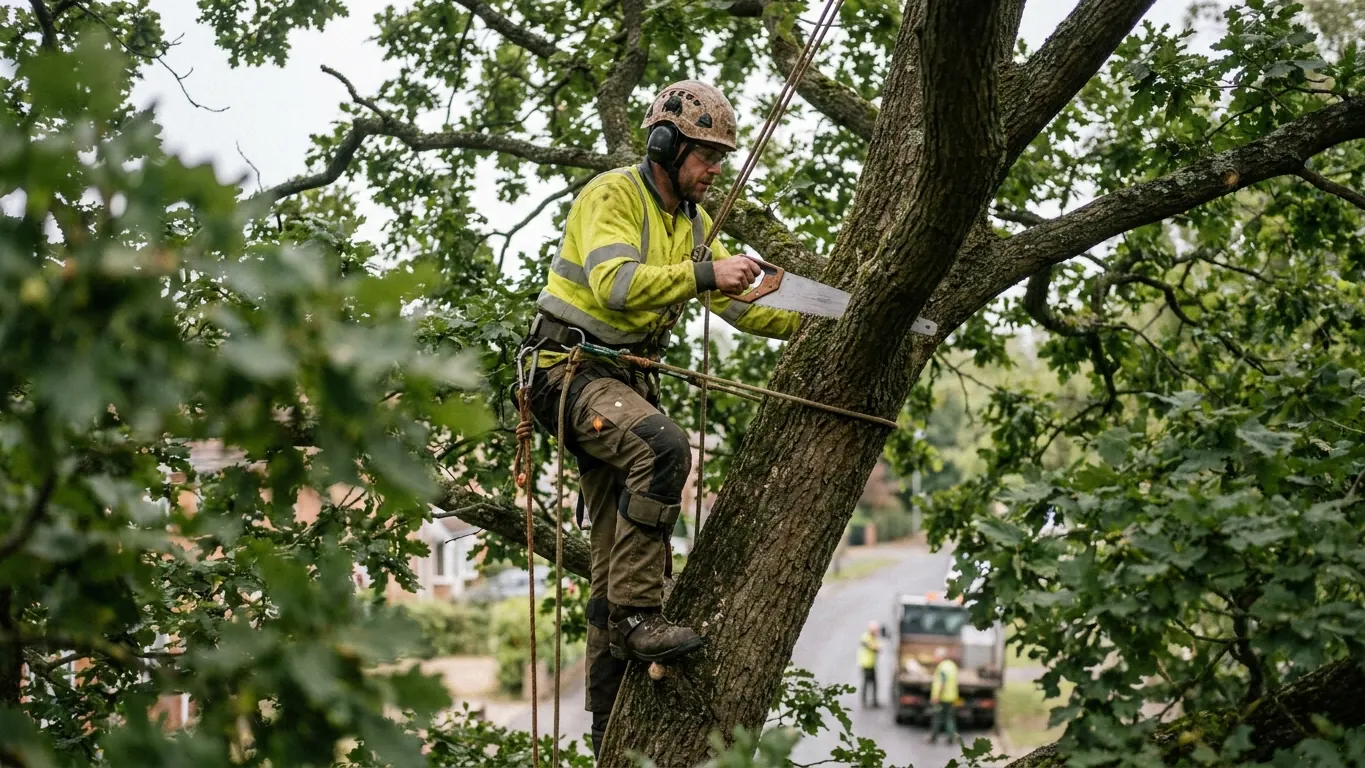
- Show finished pruning, not just removals. Removal photos are dramatic; pruning photos are what a property manager is buying.
- Explain the decision the buyer is making: remove or retain, prune now or after leaf fall, treat or replace. That is the question behind the search.
- Answer cost honestly in ranges with the factors that move them: access, proximity to structures, disposal, height, equipment needed.
Removal photos win attention. Pruning photos win contracts.
Storm weeks: what to change and what to leave
When the forecast turns, the temptation is to publish. Publishing is the slowest lever you have. These are the ones that work inside a day.
| Lever | Do this | Do not |
|---|---|---|
| Profile | Update hours, add a post about storm response, confirm the phone | Change your primary category |
| Answering | Put a human on the phone for the duration | Send storm calls to voicemail |
| Emergency page | Check it loads fast and the number is tappable | Redesign it mid storm |
| Paid | Turn on a small local campaign if you have crew capacity | Buy clicks you cannot service |
| After | Photograph the work, ask for reviews, log the towns | Let the week pass without collecting proof |
The week after the storm is worth more than the week of it. Every job produces a photograph, a review request and a note about which towns generated the calls. That record is what tells you where to put next year's effort.
Tree service SEO is measured by job type, not by traffic
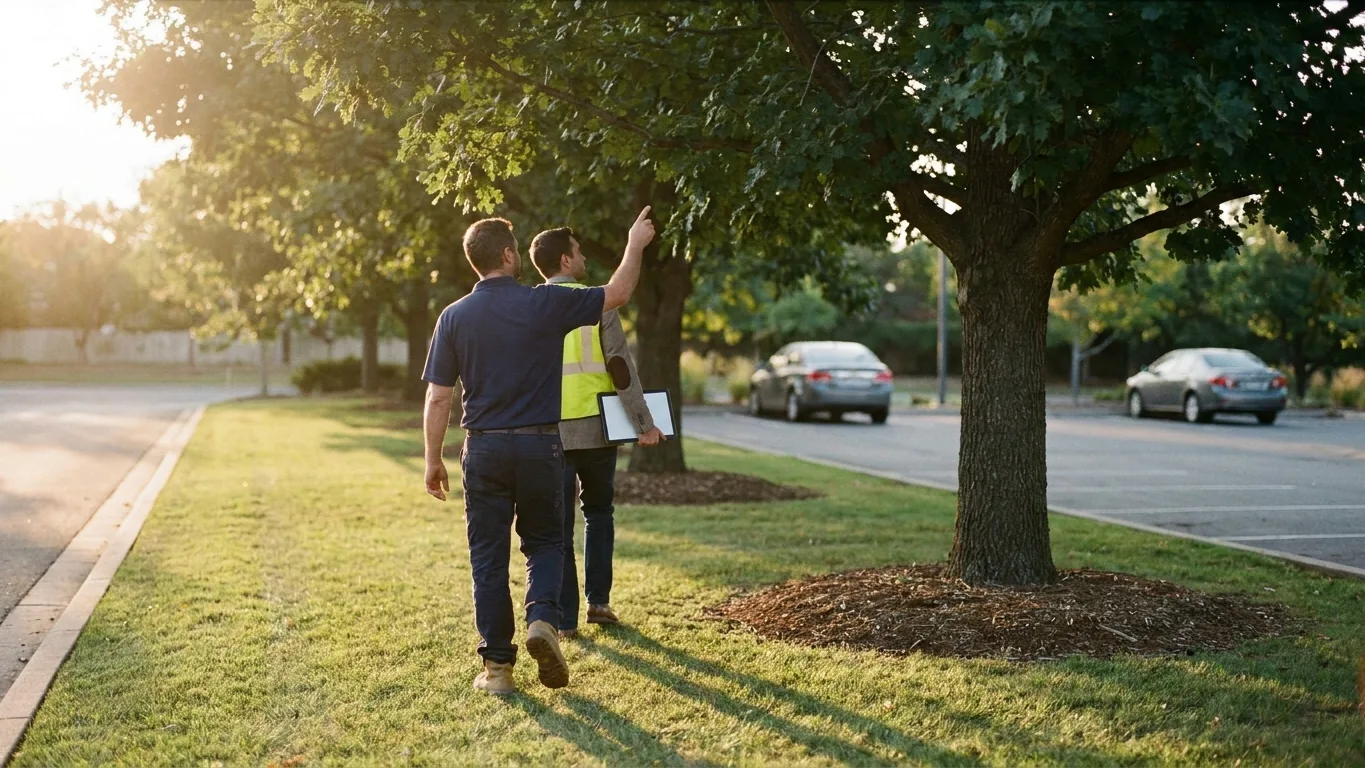
A tree company can double its traffic and lose margin, because emergency demand is loud and easy to attract. Split the numbers or you will optimize for the wrong half.
| Number | Why it matters | Where it comes from |
|---|---|---|
| Inquiries by job type | Tells you which half of the business search is feeding | Ask at intake, record on the job |
| Average value by job type | Storm work can be busy and thin | Your job records |
| Calls from the profile | The map carries storm weeks | Profile insights |
| Impressions on planned work terms | Moves before positions do | Search Console |
| Estimates to signed, by type | Planned work should close slower and higher | Your CRM or estimate log |
If the split is heavily toward emergency work in a normal month, the planned pages are not doing their job. That is a content and proof problem, not a ranking problem. The same discipline applies across the trades, which is why we build these clusters the way we do in organic growth for landscaping companies, and why the profile work in the Google Business Profile piece comes before anything else.
What to do next
- Open your emergency page on a phone and time how long it takes to reach a tappable number.
- Write down the response window you can hold in the worst week of the year, and put that on the page.
- Split last year's inquiries into emergency and planned, and compare average value.
- Give pruning and plant health care their own pages, with photographs of finished work.
- Set a storm routine: hours updated, human answering, photos and review requests collected after.
See how we work with tree care companies
Frequently asked questions
How long does tree service SEO take to work?
Profile and emergency page changes can affect calls within weeks because that demand is already searching. Planned service pages usually take one to three months to rank and longer to build the review and photo evidence that closes the work.
Should a tree company write blog posts about storms?
Only outside storm weeks. A post published during a storm will not rank in time. Write the storm damage and insurance documentation pages in the quiet season so they are already indexed when the wind arrives.
Do separate pages for removal, pruning and stump grinding really matter?
Yes. They are searched separately, priced differently and decided by different questions. One combined services page competes for none of them properly.
What is the biggest mistake tree companies make online?
Building the whole site around emergency removals because those calls feel urgent, then wondering why the schedule empties between storms. The planned work needs its own pages and its own proof.
Written by
Founder & CEO · Landscaping marketing specialist
Writes from the operating side of landscaping growth: demand, response, sales and the reporting that ties marketing spend to booked jobs.
Meet the team
AI Receptionists for Landscaping Companies: Rules Before Launch
Answering every call is useful only when the system knows the services, territory, schedule limits and exact moment a person takes over.

Google Ads for Landscapers: Budget Around Crew Capacity
The platform can spend faster than your crews can deliver. Pace the budget around the schedule, not around available clicks.

Google Business Profile for Landscaping Contractors: The Fields That Decide Who Gets Called
Most landscaping profiles are filled in once and never touched again. These are the fields that actually move you in the map, in the order a contractor should fix them, with what to do every month after that.
Want the research behind posts like this one?
One email a month: the numbers we check before each season, and the posts worth your time. Written for owners, not for inboxes.
One email a month. Practical, green industry only. Unsubscribe anytime.