
Paid Search12 min read
Google Ads for Landscapers: Budget Around Crew Capacity
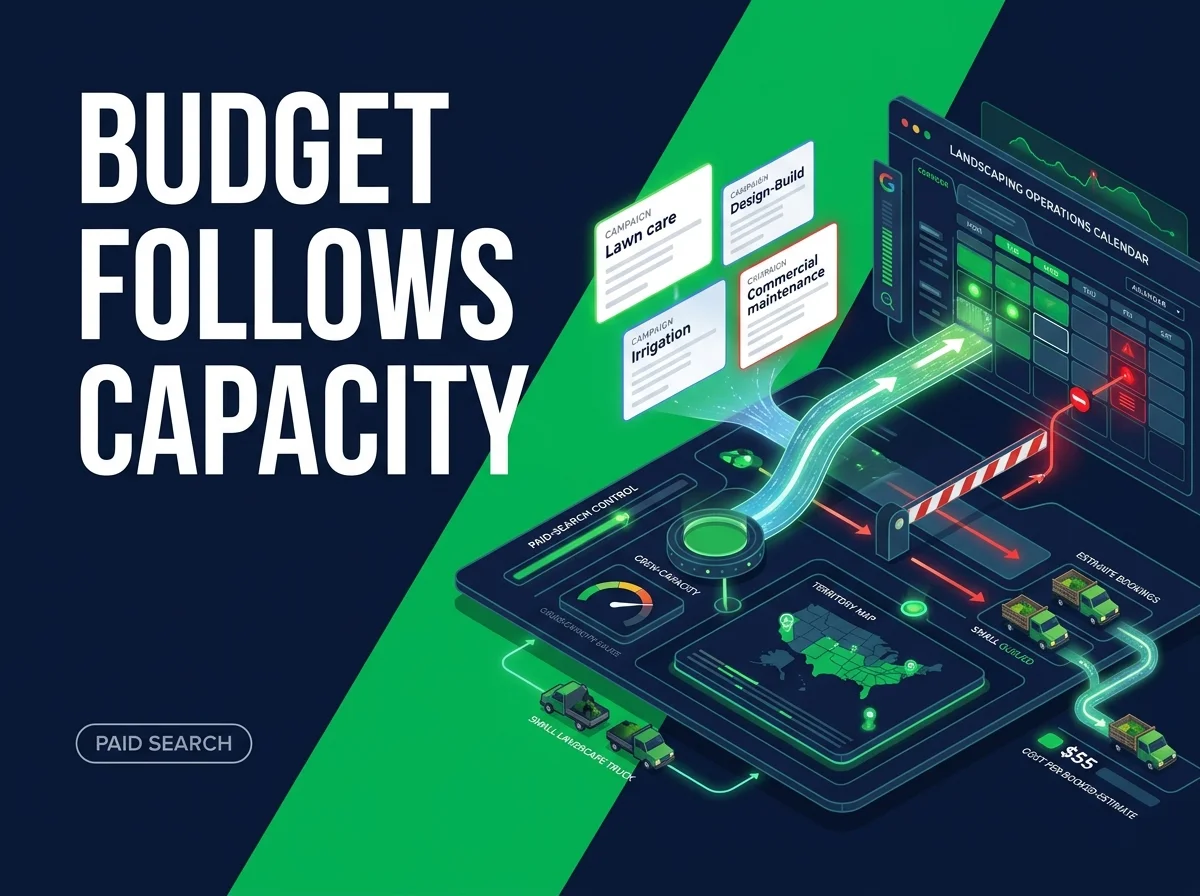
The platform can spend faster than your crews can deliver. Pace the budget around the schedule, not around available clicks.
On this page
Quick answer
Google Ads for landscapers should be budgeted by service capacity, territory and booked-work economics. Separate campaigns by the crews that deliver the work, send each one to a matching page, track qualified calls and booked estimates, then raise or reduce spend from backlog and response coverage. Ad spend is excluded from management fees and should remain visible.
Key takeaways
- The platform decides where it can spend. Your operation decides where it should spend.
Structure campaigns around delivery units
Separate campaigns by service, branch and territory when those areas have different crews, economics or ownership. A lawn care route, a design-build consultation and an emergency irrigation call should not share one budget rule.
This structure makes the weekly decision clearer. You can add demand where capacity exists without opening every service to the same pressure.
Use search intent to protect estimate time
Build keyword groups around the service the buyer is trying to hire. Review the actual search terms and remove research, employment, DIY, supplier and wrong-service traffic that cannot become a profitable job.
Figure 2. Weekly pacing rules. Illustrative framework, not client performance data.
| Signal | What it usually means | First fix | Measure next |
|---|---|---|---|
| Backlog below target, strong close rate | The service can absorb more demand | Increase budget in controlled steps | Cost per booked estimate |
| Backlog full, phones still ringing | Demand is ahead of delivery | Reduce spend or narrow territory | Backlog in crew days |
| Clicks rise, qualified calls fall | Search terms or ad promise are too broad | Add negatives and tighten service intent | Qualified enquiry rate |
| Leads qualify, estimates do not close | Page, offer, pricing or sales follow-up is weak | Review landing page and estimate process | Estimate-to-job rate |
Negative keywords are not a one-time list. Spring creates new variations quickly. Review them alongside the office's unqualified call reasons.
Match every campaign to a focused page
The page should repeat the service, property fit, territory, proof, process and next action. A visitor searching for commercial maintenance should not land on a homepage that gives equal weight to patios, mowing and careers.
Use one primary action. Track calls and forms separately, then connect both to qualification and estimate stages.
Set budgets from booked-job economics
Start with what a won job can support after close rate and delivery margin. Work backward through booked estimate rate and qualified lead rate. This produces a service-specific ceiling rather than a generic cost-per-click target.
Keep ad spend separate and direct. The owner should see media cost, management cost and booked outcomes without one being hidden inside the other.
Use backlog as a pacing signal
Review sellable crew days, estimator availability, response coverage and backlog each week. Increase budget where the operation wants work. Reduce or pause where slow response or overbooking would damage the buyer experience.
Do not wait for a monthly report if the spring calendar changes on Tuesday. Use agreed stop rules so the decision does not depend on who notices first.
Return offline outcomes to the campaign
Track qualified, estimate booked, won, lost and revenue where records are reliable. The platform sees clicks and calls. It needs confirmed outcomes to distinguish cheap noise from useful demand.
The internal operating report remains the financial source of truth. State attribution gaps instead of guessing at them.
What to do next
- Separate campaigns by service capacity.
- Review search terms with unqualified call reasons.
- Track booked estimates and won work.
- Keep ad spend visible and excluded from management fees.
Google Ads management for landscaping companies
Quick answers
How much should a landscaping company spend on Google Ads?
Set spend from service capacity, booked-job economics and the number of estimates the team can handle. There is no useful universal budget. Start at a controlled level, measure qualified booked estimates and raise spend only when the operation can absorb the work.
Should landscaping ads run all year?
Keep a year-round plan, but change the services, budget and objective by season. Spring may support installation and maintenance demand. Fall may focus on cleanups and renewals. Winter can support snow, design agreements, automation or next-season preparation.
What should Google Ads report?
Report spend, qualified calls and forms, booked estimates, close rate, won work and cost per booked estimate by service. Clicks and impressions help diagnose the campaign, but they do not show whether the company made money.

Written by
Founder & CEO · Landscaping marketing specialist
Writes from the operating side of landscaping growth: demand, response, sales and the reporting that ties marketing spend to booked jobs.
Meet the team
AI Receptionists for Landscaping Companies: Rules Before Launch
Answering every call is useful only when the system knows the services, territory, schedule limits and exact moment a person takes over.
How to Get Landscaping Leads Without Attracting Bad-Fit Work
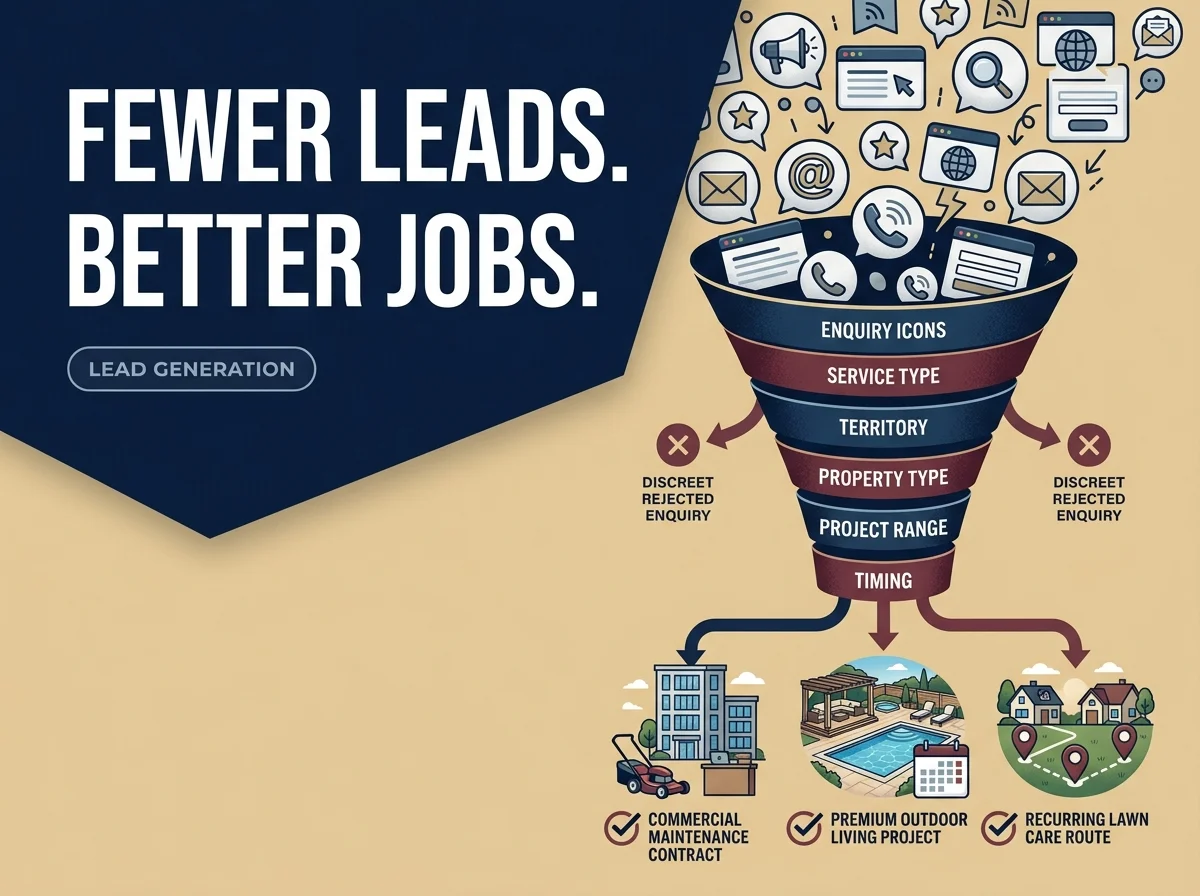
The cheapest landscaping lead can become the most expensive estimate on the calendar. Build the filter before you buy the traffic.
How to Grow a Landscaping Company Without Losing Margin
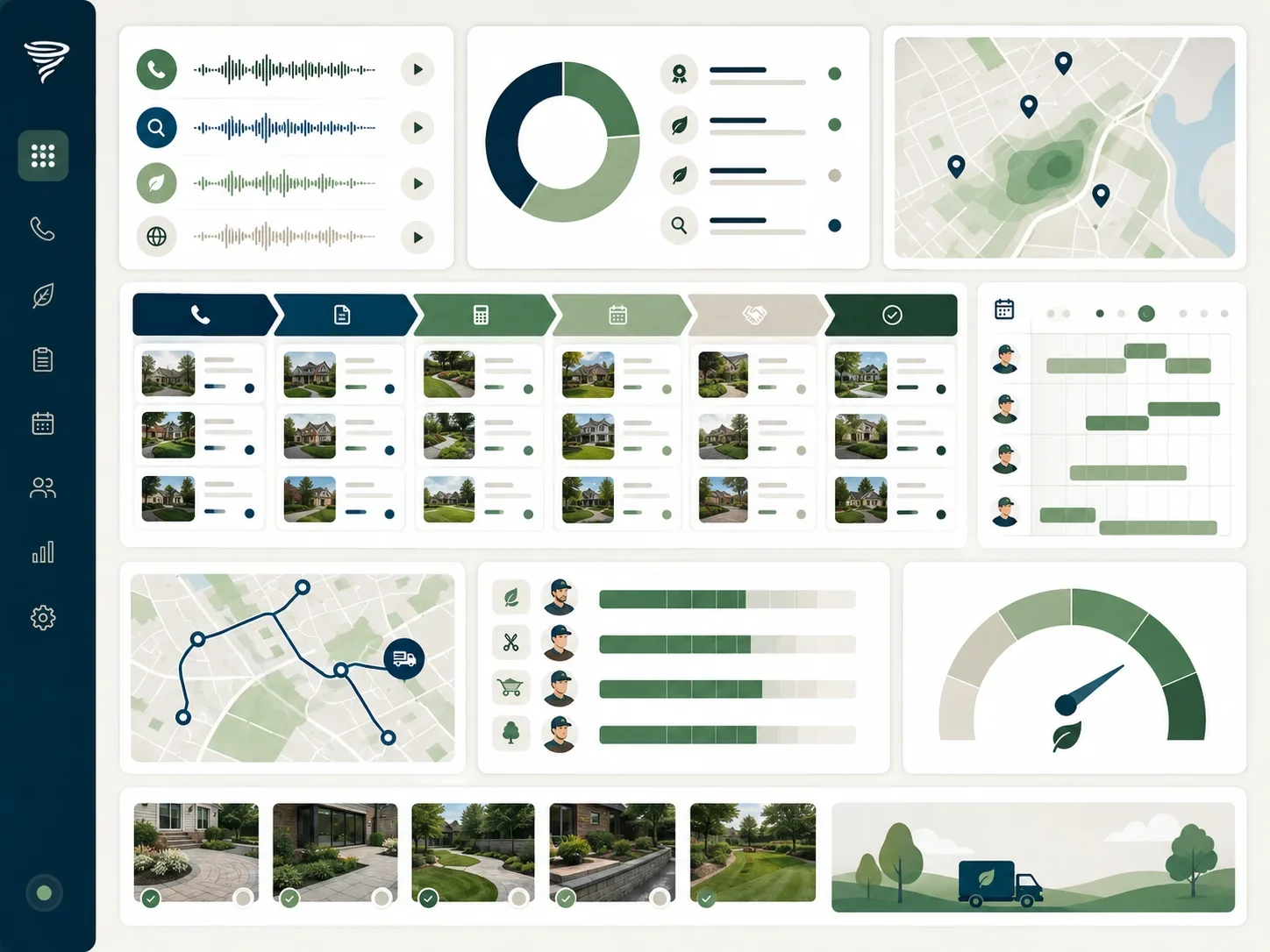
More leads rarely fix a growth problem. Before recommending a single campaign we run a four-part diagnostic, because most companies asking for more demand are actually constrained somewhere else entirely.
Want the research behind posts like this one?
One email a month: the numbers we check before each season, and the posts worth your time. Written for owners, not for inboxes.
One email a month. Practical, green industry only. Unsubscribe anytime.