
AI & Automation13 min read
AI Receptionists for Landscaping Companies: Rules Before Launch
Answering every call is useful only when the system knows the services, territory, schedule limits and exact moment a person takes over.
On this page
Quick answer
AI receptionists for landscaping companies need an approved call map before launch. Define what the system can answer, which services and territories it can qualify, what appointments it can book, and when it must escalate to a person. It should never invent pricing, availability, technical advice or service guarantees. Daily review comes before wider rollout.
Key takeaways
- The value is controlled coverage. The risk begins when the system answers beyond the information and authority the company approved.
Map every call reason first
List new estimates, existing customers, schedule changes, billing, service issues, emergencies, vendors and employment calls. Each call type needs a destination, information set and fallback.
Do not start by writing a friendly greeting. Start with the decisions the system must make and the decisions it must refuse.
Create an approved knowledge source
Use current services, territories, hours, branch ownership, appointment types, preparation instructions and escalation contacts. Keep pricing and technical guidance restricted unless the company has a controlled rule for them.
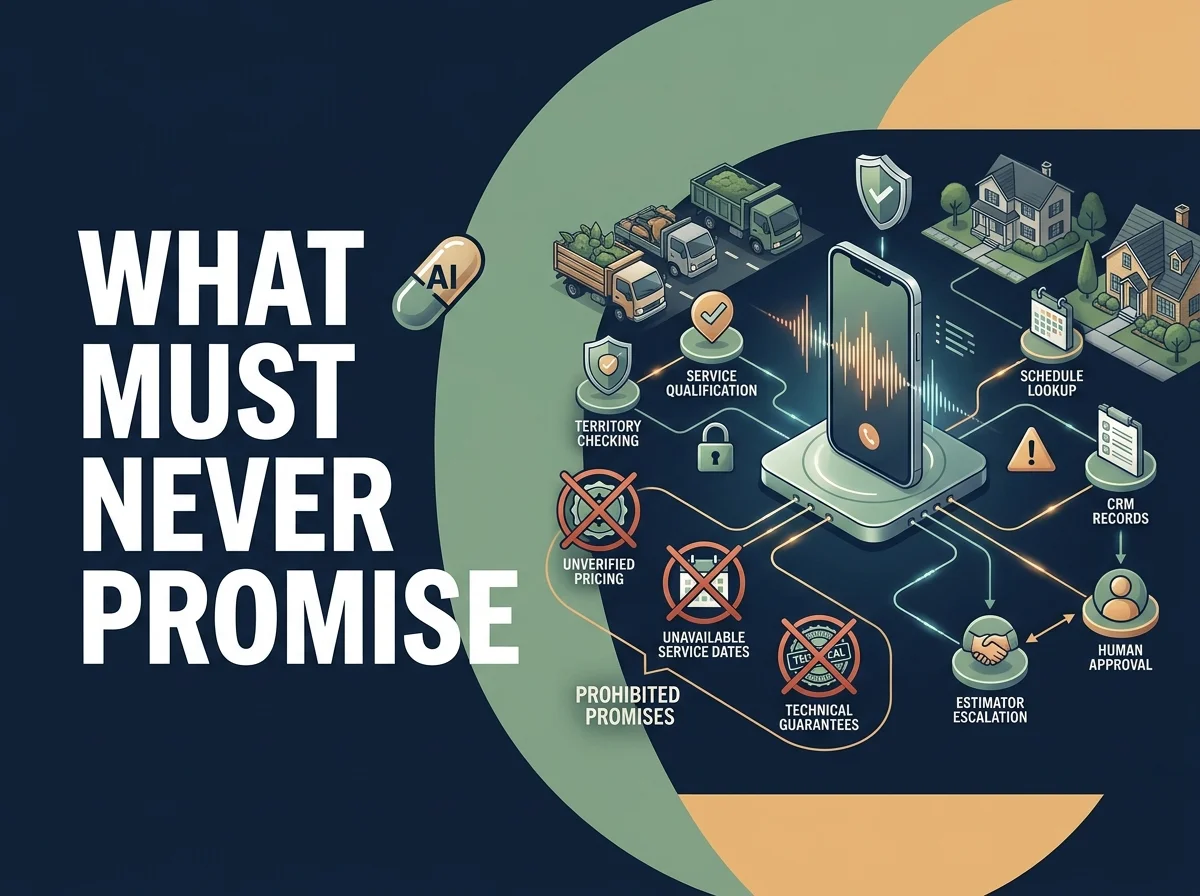
Figure 2. Allowed, escalated and prohibited responses. Illustrative framework, not client performance data.
| Signal | What it usually means | First fix | Measure next |
|---|---|---|---|
| Service and territory fit | Use approved service and coverage rules | Answer or qualify within the script | Correct qualification |
| Appointment availability | Use the approved calendar and buffers | Book only approved appointment types | Booking accuracy |
| Technical or safety question | The caller needs expert judgement | Escalate to a trained person | Escalation accuracy |
| Price or performance guarantee | The system lacks authority and context | Never invent or promise | Policy exceptions |
A website paragraph is not automatically safe call knowledge. Review every answer for accuracy and the consequence of being wrong.
Write qualification for a real phone conversation
Ask one question at a time. Confirm service, property location, customer status, timing and the details needed to route or book. Allow the caller to request a person at any point.
The system should recognise uncertainty instead of forcing every sentence into an intent. A confused caller is a reason to escalate, not an edge case to ignore.
Limit what the calendar can offer
Control appointment type, branch, territory, duration, travel buffer, working hours and blackout periods. The receptionist should never invent a slot or promise a crew arrival.
High-value projects may book a consultation. Urgent service may create a human task. Existing customers may need the account team rather than a new-sales calendar.
Build explicit human fallback
Move safety concerns, angry customers, complex technical questions, insurance issues, pricing disputes and unclear requests to a person. Define what happens during working hours and after hours.
Tell the caller what will happen next. A clean handoff is more trustworthy than an automated answer that sounds confident and is wrong.
Review calls before scaling coverage
Listen to the first calls daily. Check classification, tone, interruptions, facts, bookings, escalations and failed outcomes. Update the scripts and rules from the conversations the company actually receives.
Measure answer rate, qualification accuracy, bookings, human takeover, caller drop-off and complaints. Coverage is useful only when the outcomes remain controlled.
What to do next
- Approve a call-reason map before writing scripts.
- Restrict pricing, availability and technical promises.
- Let the caller request a human at any point.
- Review early calls daily and document every exception.
AI receptionist for landscaping companies
Quick answers
Can an AI receptionist book landscaping estimates?
Yes, when the company controls the appointment type, territory, duration, buffers and calendar access. Complex or high-value enquiries may still need human review before a site visit. The system should never invent availability.
Should an AI receptionist give prices?
Only when the company has approved a fixed rule that applies to the exact service and context. Most landscaping pricing depends on property, scope, access, materials and schedule. Route uncertain pricing questions to a person.
How quickly should the calls be reviewed after launch?
Review early calls daily until classification, booking and escalation remain stable. Continue weekly quality review after launch, with faster checks when services, hours, branches or seasonal demand change.

Written by
Founder & CEO · Landscaping marketing specialist
Writes from the operating side of landscaping growth: demand, response, sales and the reporting that ties marketing spend to booked jobs.
Meet the team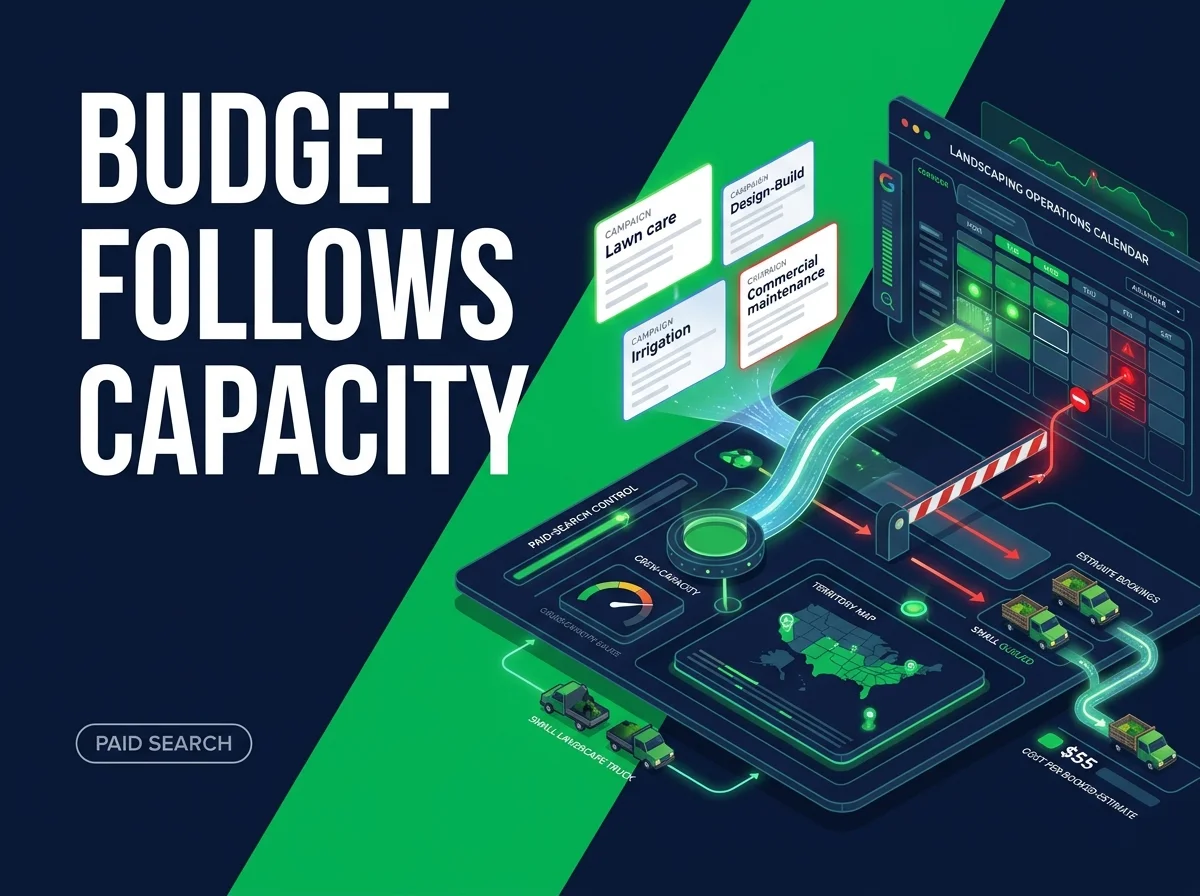
Google Ads for Landscapers: Budget Around Crew Capacity
The platform can spend faster than your crews can deliver. Pace the budget around the schedule, not around available clicks.
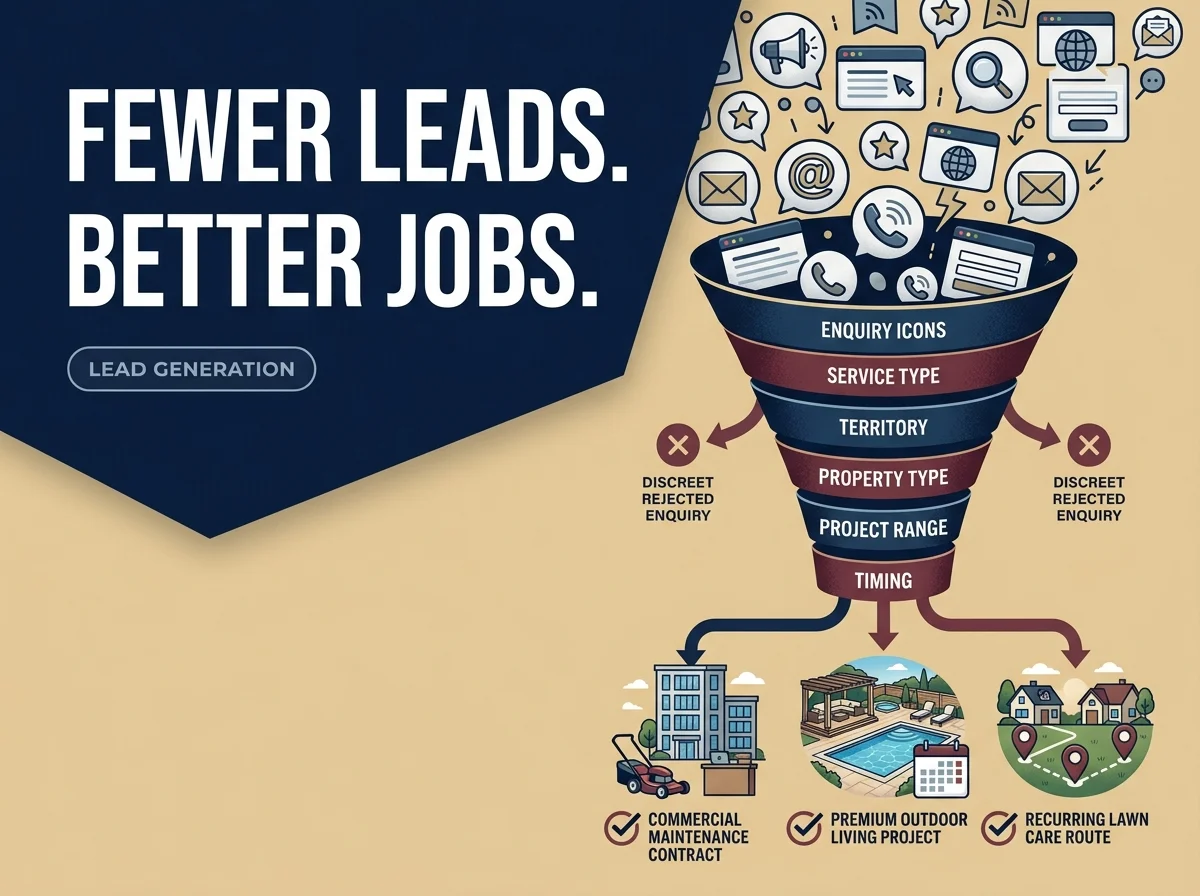
How to Get Landscaping Leads Without Attracting Bad-Fit Work
The cheapest landscaping lead can become the most expensive estimate on the calendar. Build the filter before you buy the traffic.
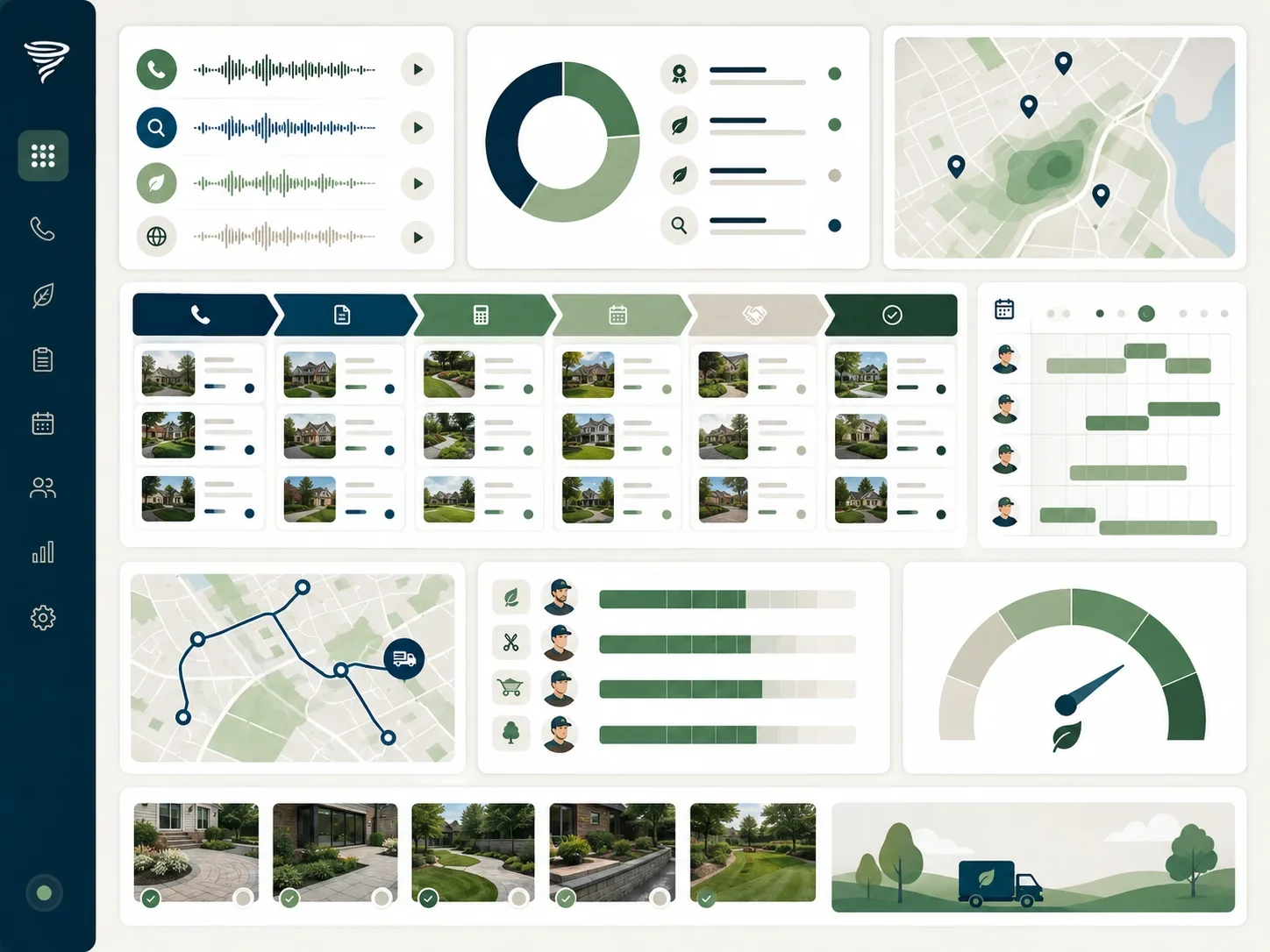
How to Grow a Landscaping Company Without Losing Margin
More leads rarely fix a growth problem. Before recommending a single campaign we run a four-part diagnostic, because most companies asking for more demand are actually constrained somewhere else entirely.
Want the research behind posts like this one?
One email a month: the numbers we check before each season, and the posts worth your time. Written for owners, not for inboxes.
One email a month. Practical, green industry only. Unsubscribe anytime.