
Social Media11 min read
Social Media Marketing for Landscaping Companies
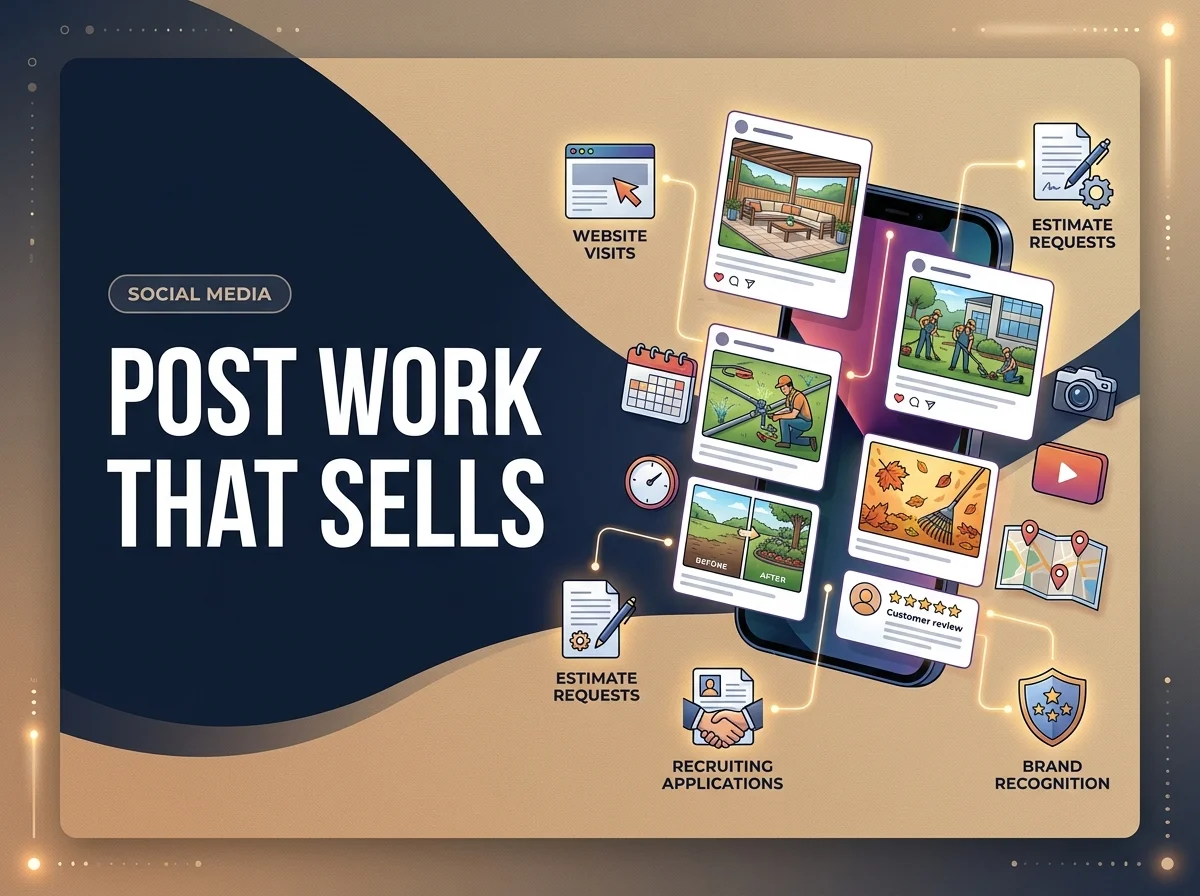
The strongest content already exists on the job. Capture it once, add context and reuse it across proof, recruiting, remarketing and sales.
On this page
Quick answer
Social media marketing for landscaping companies works when the content starts with real work: projects, crews, seasonal decisions, service explanations and customer questions. Give each channel a business job, use a field-capture routine crews can follow, and connect useful posts to service pages, recruiting or estimate requests. Posting frequency matters less than evidence and consistency.
Key takeaways
- Do not invent a content calendar in the office. Build it from the work crews and managers already perform.
Choose the job before the channel
Instagram may support visual proof. Facebook may help homeowner reach and remarketing. LinkedIn may strengthen commercial credibility and recruiting. YouTube may explain process and project decisions.
The company does not need the same posting plan on every channel. Assign one or two useful jobs to each platform and stop producing content with no next action.
Build content pillars from real operations
Use projects, people, process, seasonal guidance, customer questions and proof. These pillars are broad enough to stay consistent and specific enough to show the business.
A design-build firm can explain material choices and phased construction. A commercial maintenance operator can show site walks, reporting and seasonal planning. A lawn care company can document route standards and programme timing.
Figure 2. Give every content type a business job. Illustrative framework, not client performance data.
| Signal | What it usually means | First fix | Measure next |
|---|---|---|---|
| Finished project story | Build trust and explain project value | Show scope, decisions, process and result | Service-page visits |
| Crew and process post | Support recruiting and operating credibility | Show standards, equipment and ownership | Qualified applicants |
| Seasonal advice | Create timely relevance before demand changes | Name the service window and next action | Saves and enquiries |
| Customer question | Reduce sales friction | Answer directly with a real example | Assisted estimate requests |
Create a field capture routine
Give crews and managers a short shot list: wide property view, detail, work in progress, problem, completed result and one spoken note about the decision. Keep safety and customer privacy first.
The office should not ask crews to write captions. Capture evidence in the field, then let a content owner turn it into a useful story.
Write the context the image cannot show
A finished patio is attractive. The business value comes from explaining the drainage issue, access constraint, material decision, installation sequence or maintenance requirement. That context separates a project story from a gallery post.
Keep captions direct. Name the service, the buyer problem and what happened next. Avoid claims the customer has not approved.
Connect social activity to owned pages
Use social to distribute proof and useful explanations, then send interested buyers to a relevant service page, project story or estimate path. Do not rely on a platform profile to hold the entire sales argument.
Add tracking where practical and record when prospects mention a project, post or video during the sales process.
Measure proof usage, not vanity alone
Reach and engagement help compare formats. Business measures include profile actions, website visits, assisted enquiries, saved proof, recruiting applications and creative reused in paid campaigns.
A smaller audience of property managers or qualified homeowners can be more valuable than a large audience that will never buy the service.
What to do next
- Assign a business job to each channel.
- Use a six-shot field capture routine.
- Explain project decisions, not only finished appearance.
- Link useful content to a relevant service or estimate path.
social media marketing for landscaping companies
Quick answers
How often should a landscaping company post?
Post at a pace the company can maintain with real evidence. A consistent weekly rhythm can outperform daily generic content. Increase frequency during active project and seasonal windows only when the team can capture and approve useful material.
Which social platform is best for landscapers?
Choose the platform from the buyer and content job. Visual residential work may fit Instagram and Facebook. Commercial credibility and recruiting may fit LinkedIn. Process explanations can work on YouTube. The company may need two strong channels, not every channel.
Should crews appear in social content?
Yes, when employees approve and the content follows safety, privacy and brand standards. Crew stories can show operating credibility and support recruiting. Do not interrupt production or stage unsafe work for a post.

Written by
Founder & CEO · Landscaping marketing specialist
Writes from the operating side of landscaping growth: demand, response, sales and the reporting that ties marketing spend to booked jobs.
Meet the team
AI Receptionists for Landscaping Companies: Rules Before Launch
Answering every call is useful only when the system knows the services, territory, schedule limits and exact moment a person takes over.

Google Ads for Landscapers: Budget Around Crew Capacity
The platform can spend faster than your crews can deliver. Pace the budget around the schedule, not around available clicks.
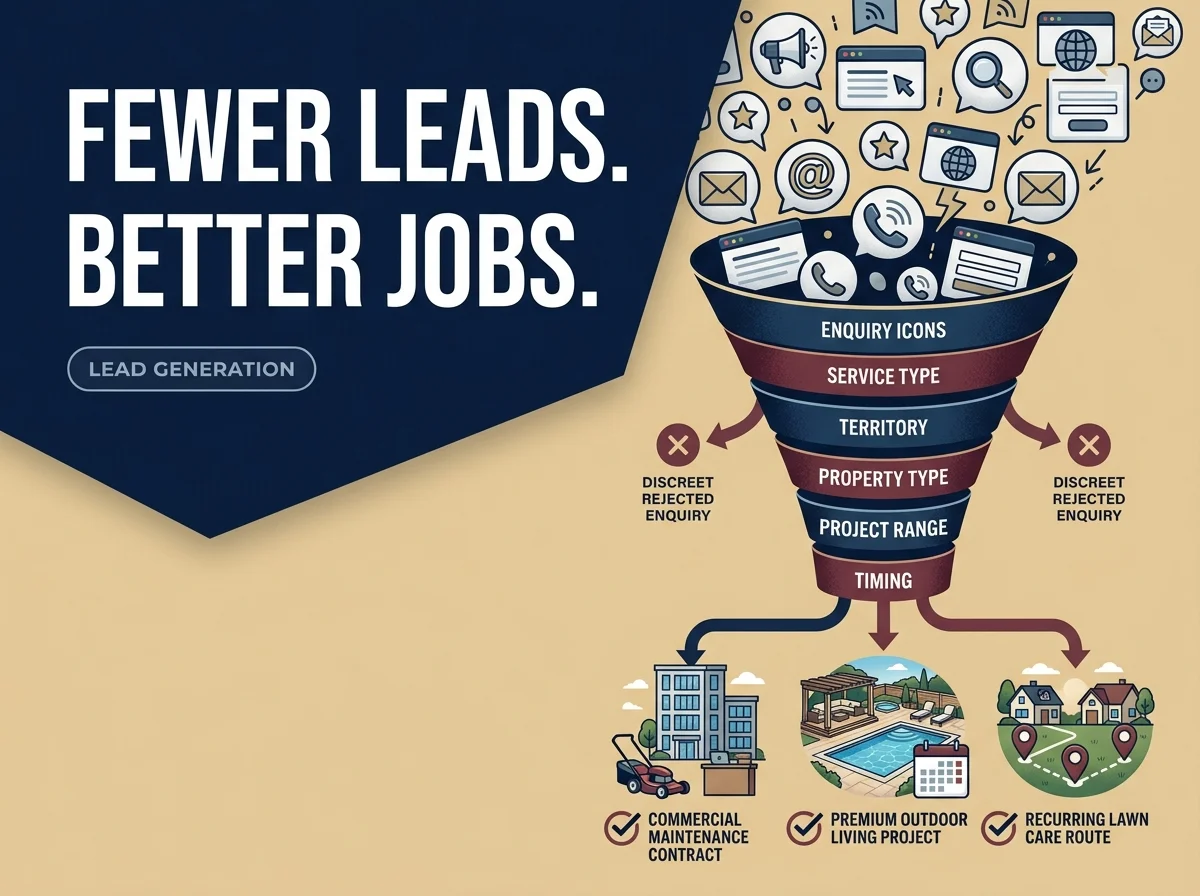
How to Get Landscaping Leads Without Attracting Bad-Fit Work
The cheapest landscaping lead can become the most expensive estimate on the calendar. Build the filter before you buy the traffic.
Want the research behind posts like this one?
One email a month: the numbers we check before each season, and the posts worth your time. Written for owners, not for inboxes.
One email a month. Practical, green industry only. Unsubscribe anytime.