
Website13 min read
Landscaping Website Design: Pages That Book Estimates
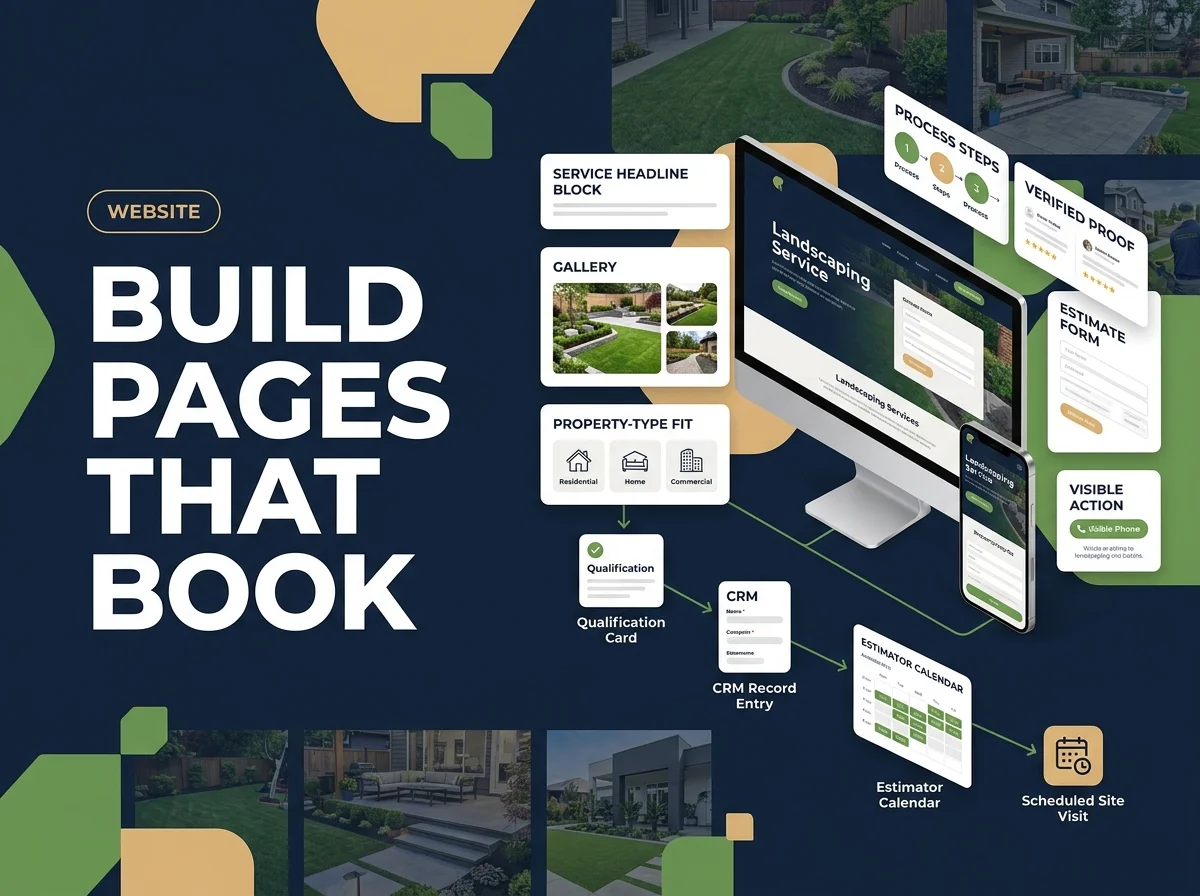
A landscaping website should answer fit, show proof and move the right visitor into a tracked response process. Design starts after that argument is clear.
On this page
Quick answer
Landscaping website design should organise the site around services, buyers, territories, proof and the estimate process. Each page needs a clear first screen, relevant project evidence, fit criteria, delivery steps and one primary action. Mobile calls and forms must connect to a named owner and booked-job reporting. A polished site without that operating path is still a brochure.
Key takeaways
- The page does not finish at the form. It finishes when the enquiry reaches the right person with the context needed to book the estimate.
Build the site hierarchy around buyer decisions
Organise the navigation around services, who the company serves, territories or branches, proof, packages and contact. A buyer should reach the relevant answer in two clicks without understanding the agency's internal taxonomy.
Keep deep service detail on focused pages and link related work naturally. A single services page cannot carry every search intent or sales objection.
Answer fit in the first screen
Name the service, buyer or property type, practical outcome and next step. Use a relevant project or crew image. Avoid a rotating banner that asks the visitor to wait for the right message.
A price signal, project range or contract fit can help when it prevents poor enquiries. State ad-spend exclusions and package prices where the commercial context requires them.
Figure 2. What each core page must accomplish. Illustrative framework, not client performance data.
| Signal | What it usually means | First fix | Measure next |
|---|---|---|---|
| Homepage | Explain the company model and route buyers | Clear services, proof and one primary CTA | Qualified paths started |
| Service page | Answer fit, scope, process and next step | Specific work, property types and proof | Qualified conversions |
| Branch or area page | Prove real coverage and local ownership | Team, services, projects and territory context | Booked estimates by area |
| Case study or project story | Reduce risk with approved evidence | Problem, work, process and measured outcome | Assisted conversions |
Use service pages to do sales work
Explain the problem, scope, process, timeline, inputs, limitations and what happens after the enquiry. Add internal links to related services, the category hub, useful guides and relevant proof.
SEO matters, but the page also needs to help the office and estimator. A prospect who understands the process asks better questions and reaches the estimate with clearer expectations.
Show proof the company can publish
Use approved project photographs, case studies, reviews, certifications and client results only when they are genuine and current. Where public proof is limited, show the delivery process, team ownership, checklists, sample outputs and what the company measures.
Invented proof creates a larger trust problem than having no case study. State the limitation and show the method.
Reduce mobile friction
Most owners and property managers will inspect the site on a phone between jobs or after hours. Keep the call action visible, forms short, text readable and pages fast. Test the navigation, phone number, calendar and confirmation message on real devices.
Do not make a visitor download a brochure to understand the service. Give the answer on the page.
Connect every action to response and reporting
Track calls and forms, preserve the page and source, attach qualification answers and route the record to one owner. Show the visitor what happens next and when the company responds.
Measure qualified conversion, booked estimates, show rate and won work. Website traffic is useful diagnostic data. It is not the final result.
What to do next
- Use one primary action per page.
- Match each service page to a specific buyer intent.
- Publish only approved proof and state limitations.
- Test mobile lead flow from page to booked estimate.
website design for landscaping companies
Quick answers
How many pages does a landscaping website need?
The number depends on services, branches, buyer types and useful proof. Create a page when it answers a distinct search or sales intent. Avoid many thin pages that repeat the same copy and add no operating detail.
What should a landscaping website homepage include?
Include a clear company proposition, priority services, buyer or segment paths, proof, process, package or price signal where relevant, and one primary action. The homepage should route visitors rather than explain every service in full.
How should website performance be measured?
Measure qualified calls and forms, booked estimates, mobile completion, source visibility and won work. Traffic, rankings and page speed help diagnose the site, but the operating result is the number and quality of opportunities that reach the sales process.

Written by
Founder & CEO · Landscaping marketing specialist
Writes from the operating side of landscaping growth: demand, response, sales and the reporting that ties marketing spend to booked jobs.
Meet the team
AI Receptionists for Landscaping Companies: Rules Before Launch
Answering every call is useful only when the system knows the services, territory, schedule limits and exact moment a person takes over.

Google Ads for Landscapers: Budget Around Crew Capacity
The platform can spend faster than your crews can deliver. Pace the budget around the schedule, not around available clicks.
How to Get Landscaping Leads Without Attracting Bad-Fit Work
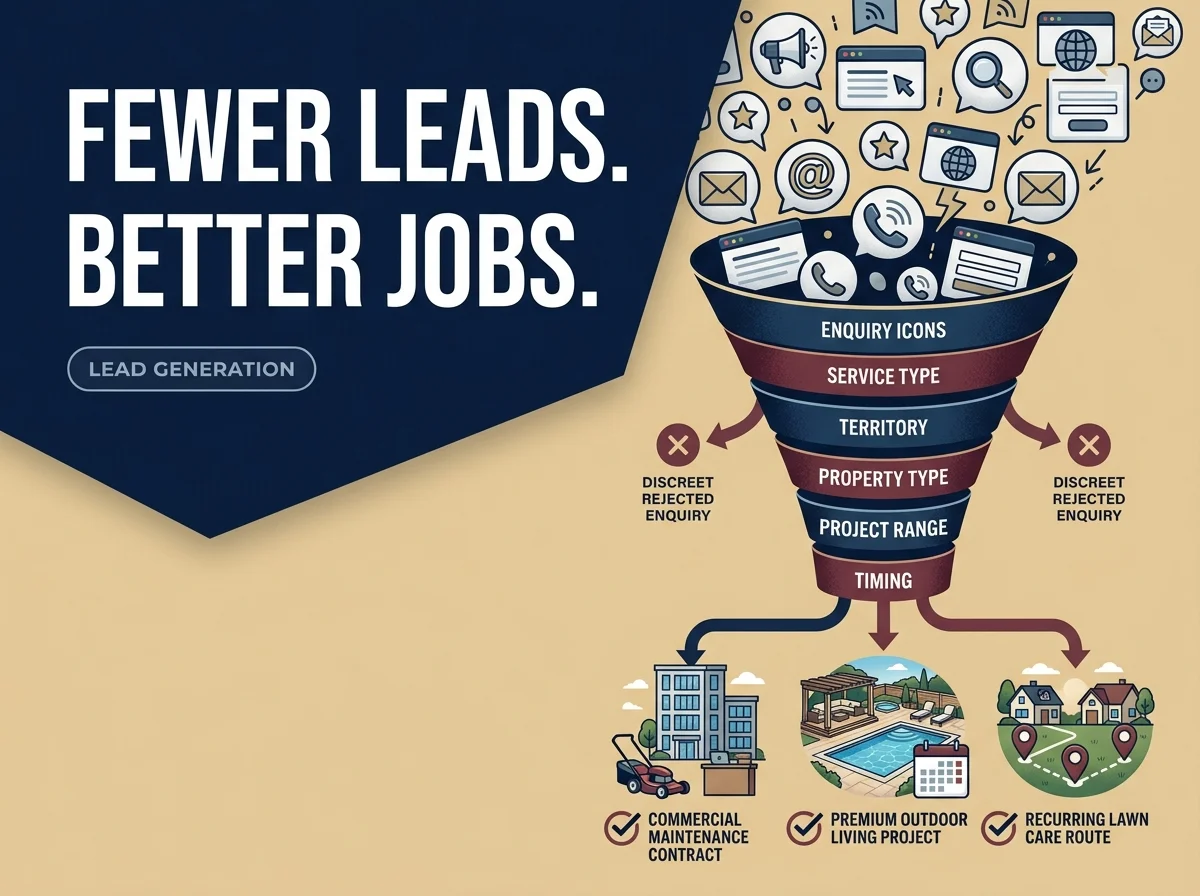
The cheapest landscaping lead can become the most expensive estimate on the calendar. Build the filter before you buy the traffic.
Want the research behind posts like this one?
One email a month: the numbers we check before each season, and the posts worth your time. Written for owners, not for inboxes.
One email a month. Practical, green industry only. Unsubscribe anytime.