
Operations12 min read
Landscaping CRM Software: Fix the Handoff Before the Platform
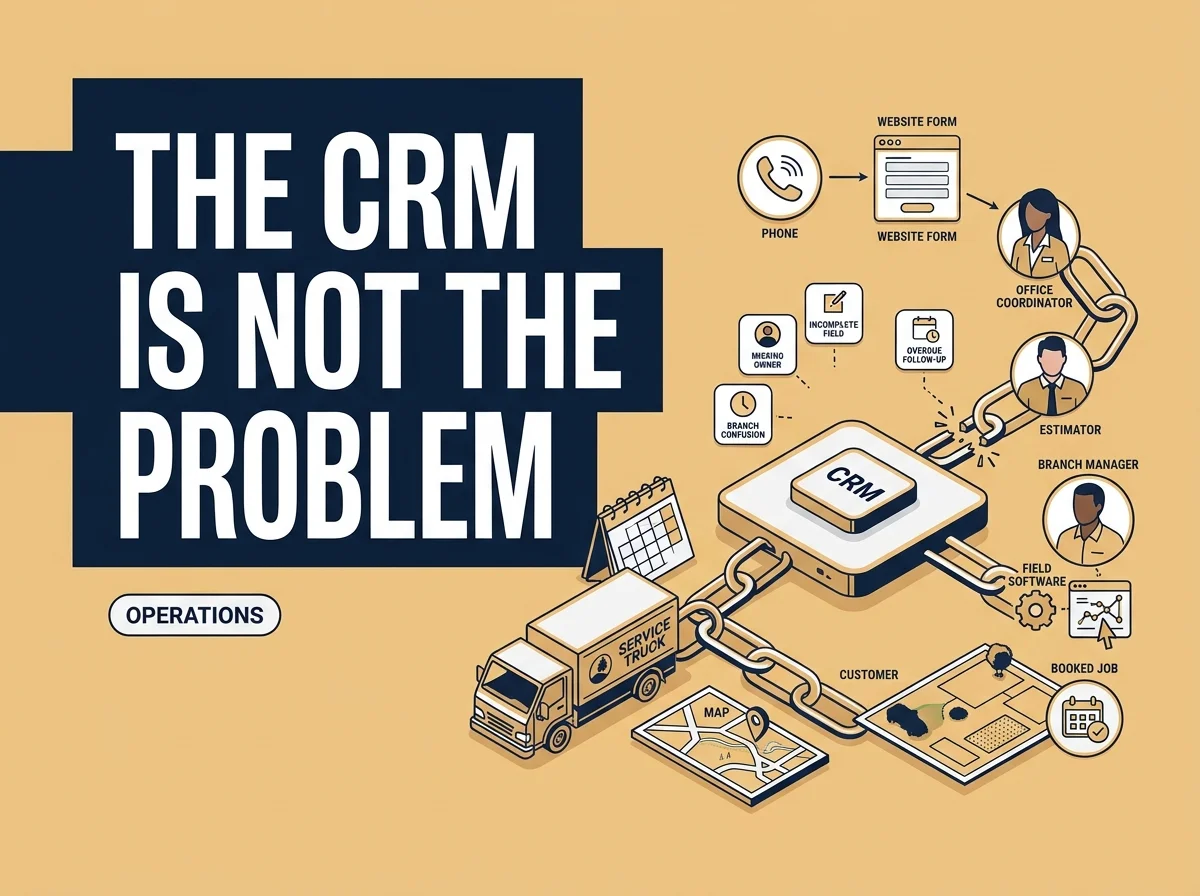
A new platform cannot fix a record with no owner, no stage and no agreed next action. Map the handoff before you migrate the data.
On this page
Quick answer
Landscaping CRM software works only when the company agrees on the record, owner, stage, required fields and next action. Map the lead and customer handoffs before selecting or replacing a platform. Then configure the CRM around the process, connect only the systems that need to share context, and train the team on the few actions reporting depends on.
Key takeaways
- Software exposes the process the company already has. Fix ownership and stage discipline before buying another platform.
Map the record before the software
Decide what counts as a lead, customer, property, opportunity, estimate and job. Landscaping companies often have one customer with several properties, one property with recurring work and multiple one-time enhancements. The data model should reflect that reality.
Do not start with every field a platform offers. Start with the records the team needs to sell, schedule, communicate and report.
Define one owner at every stage
New enquiries need an intake owner. Qualified opportunities need an estimator or salesperson. Won work needs an operations handoff. Active accounts need an account or service owner.
Figure 2. What common CRM complaints usually mean. Illustrative framework, not client performance data.
| Signal | What it usually means | First fix | Measure next |
|---|---|---|---|
| The CRM has bad data | The process allows duplicates, missing fields or unmanaged imports | Set record rules and clean ownership | Duplicate and incomplete rate |
| The team will not use it | The workflow asks for too much or gives no operating value | Reduce required actions and train by role | Adoption by critical action |
| Marketing and sales disagree | Stages and source definitions do not match | Create one shared lifecycle and outcome list | Unowned and disputed records |
| Reports are unreliable | The team does not close stages or reconcile jobs | Assign stage ownership and monthly checks | Stage and revenue coverage |
Shared queues are useful for visibility, but the record still needs one accountable person. Ownership changes should be explicit and visible.
Keep stages tied to real events
Use stages the team can recognise: new, contacted, qualified, estimate booked, estimate sent, decision, won, lost and nurture. Existing customer service requests should follow a separate path.
Avoid stages that describe feelings such as warm or likely. A stage should change when an event happens and create the next action.
Pass context instead of notifications
The handoff should include source, service, property, territory, timing, answers, call notes, estimate details and previous contact. A message that says 'new lead assigned' is not a useful handoff.
Connect phone, forms, advertising, field software and accounting only where the next user needs the context. More integrations can create more failure points without improving the work.
Configure for adoption, not possibility
Make the critical fields easy and the optional fields optional. Use role-based views so the office, estimator, branch manager and owner see the information they need.
Training should use real company scenarios: missed call, commercial walk-through, design consultation, lost estimate, renewal and service issue. Platform tours do not create adoption.
Clean and reconcile the reporting layer
Remove duplicates, archive stale records, standardise sources and document migration decisions before launch. After launch, reconcile qualified leads, estimates and won jobs with the field or financial system.
State where attribution is incomplete. A smaller reliable report is more useful than a large dashboard built on records nobody maintains.
What to do next
- Define the records and stages before selecting software.
- Give every active record one owner and next action.
- Integrate only where context must move.
- Train with real landscaping scenarios and audit adoption monthly.
CRM implementation for landscaping companies
growth packages from $2,000 per month
Quick answers
What CRM is best for a landscaping company?
The right platform depends on service mix, branches, sales process, field operations, reporting and existing software. Compare the operating requirements first. A popular platform configured around the wrong process will still fail.
Should the CRM replace field-service software?
Not necessarily. Some companies use one platform for sales and customer communication and another for estimating, scheduling or production. The important decision is which system owns each record and which context must pass between them.
How long does CRM implementation take?
The timeline depends on process decisions, data cleanup, integrations, configuration, testing and training. A simple rollout can move quickly. A multi-branch migration needs more control. Do not set the launch date before the data and ownership map are complete.

Written by
Founder & CEO · Landscaping marketing specialist
Writes from the operating side of landscaping growth: demand, response, sales and the reporting that ties marketing spend to booked jobs.
Meet the team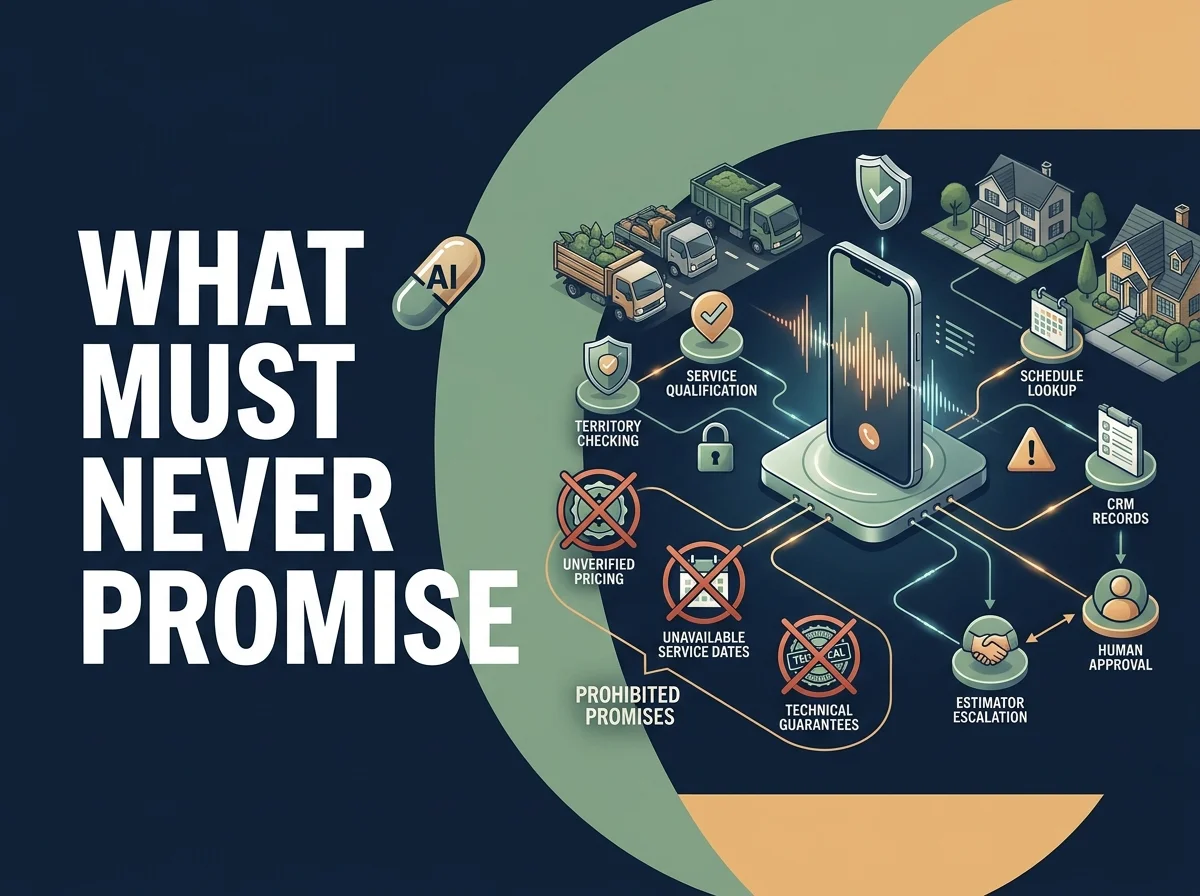
AI Receptionists for Landscaping Companies: Rules Before Launch
Answering every call is useful only when the system knows the services, territory, schedule limits and exact moment a person takes over.
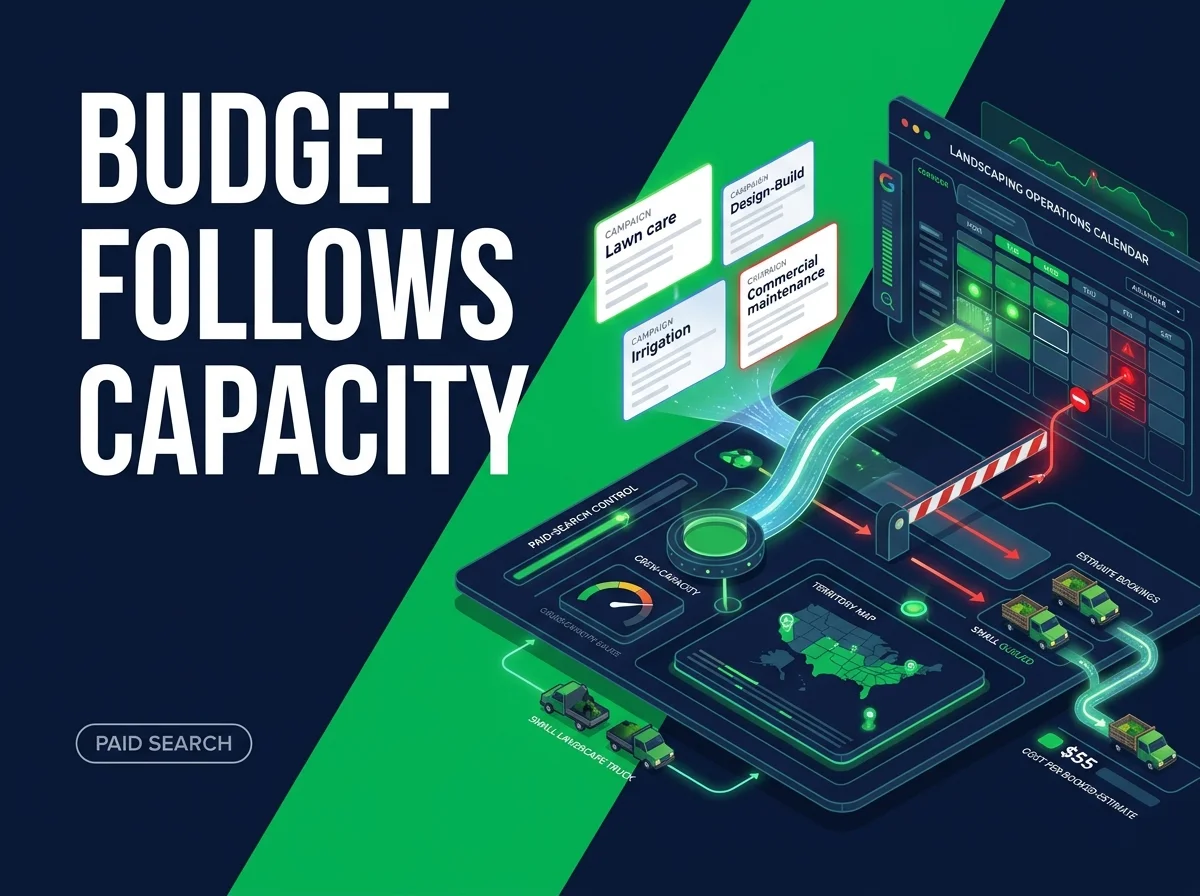
Google Ads for Landscapers: Budget Around Crew Capacity
The platform can spend faster than your crews can deliver. Pace the budget around the schedule, not around available clicks.
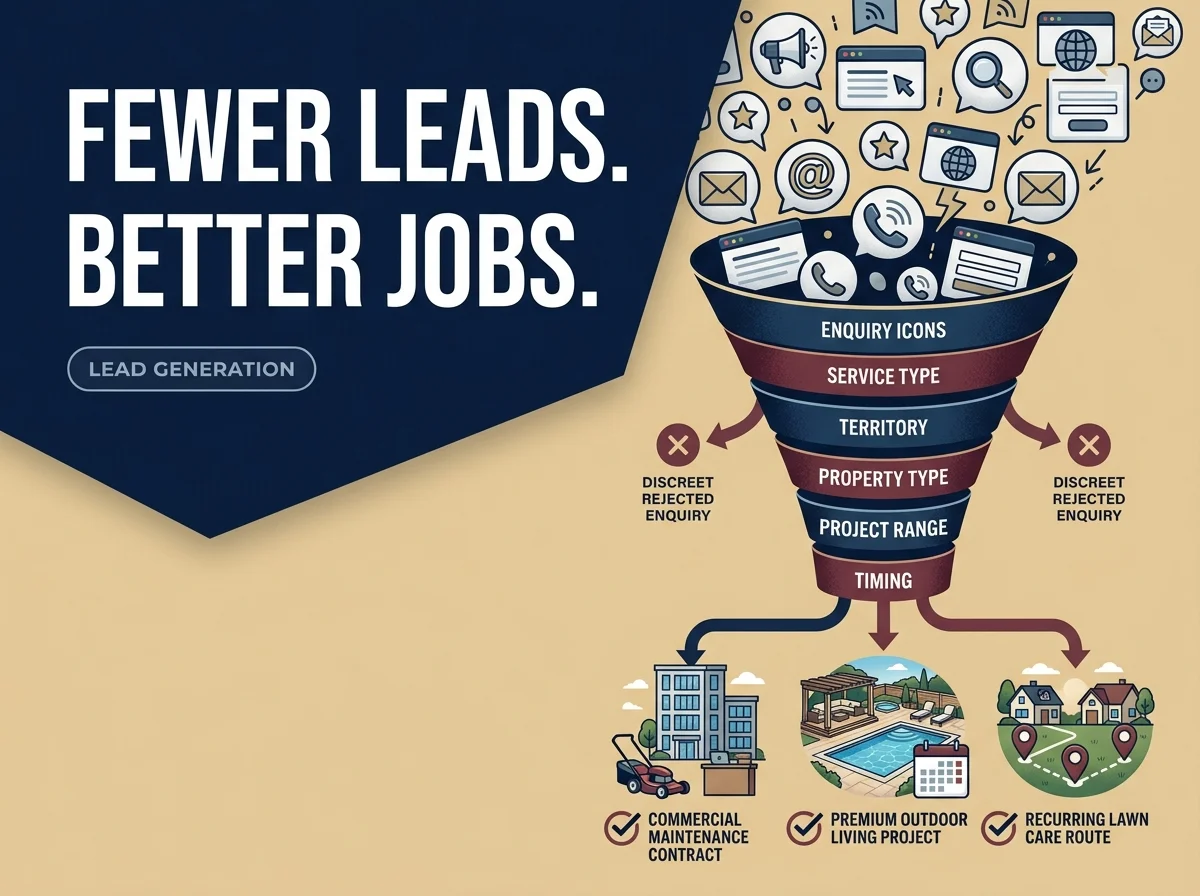
How to Get Landscaping Leads Without Attracting Bad-Fit Work
The cheapest landscaping lead can become the most expensive estimate on the calendar. Build the filter before you buy the traffic.
Want the research behind posts like this one?
One email a month: the numbers we check before each season, and the posts worth your time. Written for owners, not for inboxes.
One email a month. Practical, green industry only. Unsubscribe anytime.