
Lead Response10 min read
Missed-Call Text-Back for Landscaping Companies
A text message is not a recovered lead. Recovery happens when the caller reaches the right person or booking path with the context intact.
On this page
Quick answer
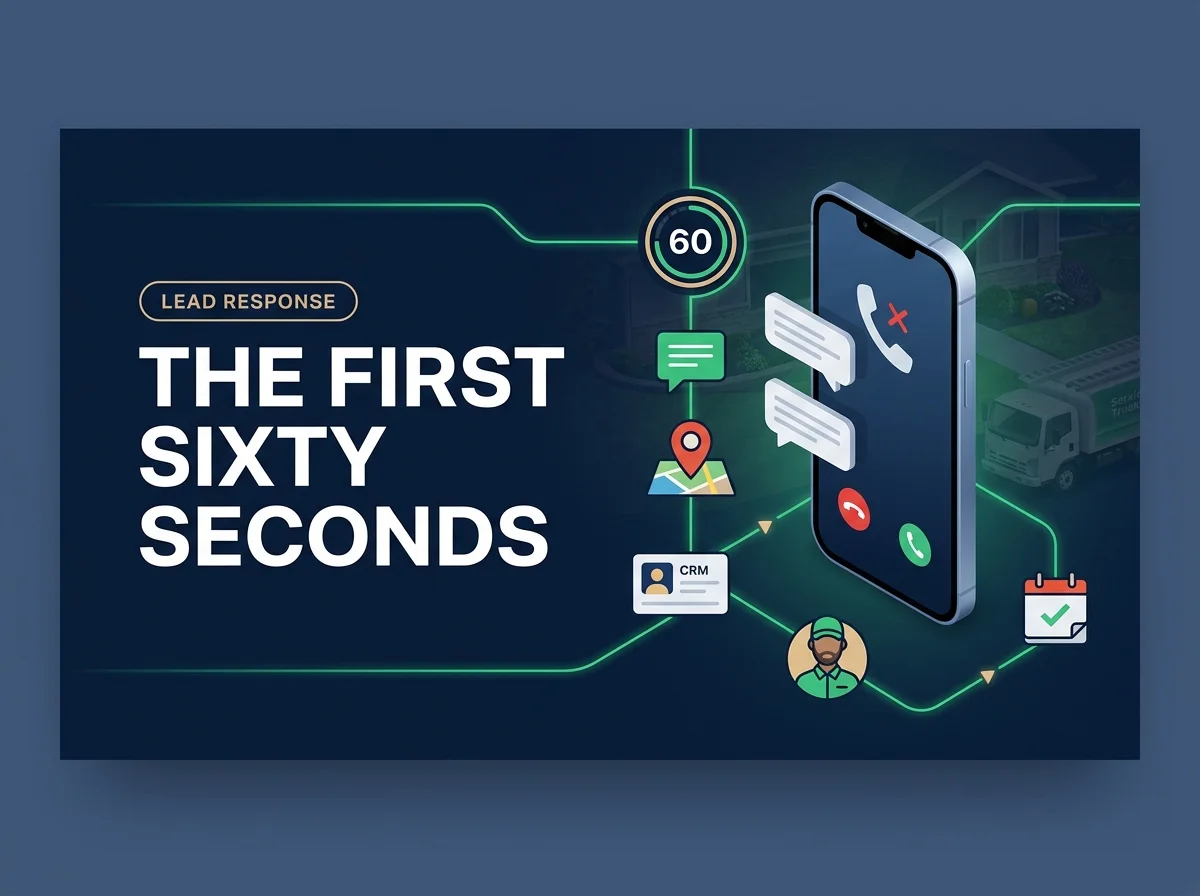
A missed-call text-back workflow should acknowledge the call within sixty seconds, ask one useful question, identify service and territory, then route the conversation to a named human owner. It must stop when the caller books, opts out, reaches staff or needs urgent service. Automation starts the recovery. A person owns the outcome.
Key takeaways
- The first message buys time. The operating result comes from qualification, routing, human follow-up and clean stop rules.
Start with the missed-call trigger
The workflow should start only when a real inbound call reaches the approved tracking or business number and is not answered. Test forwarding, voicemail, duplicate rings and branch routing before launch. A bad trigger can text someone who already spoke to the office or create two conversations for one call.
Record the call time, number, source and destination. That context should travel with the reply.
Write a first message that sounds useful
Identify the company, acknowledge the missed call and ask one clear question. For example: 'You reached Greenfield Landscaping. We missed your call. What service do you need help with?'
Do not pretend a person is typing when the message is automated. Do not ask five questions at once. The goal is to restart the conversation, not complete a full intake in the first text.
Figure 2. What the workflow should do by call type. Illustrative framework, not client performance data.
| Signal | What it usually means | First fix | Measure next |
|---|---|---|---|
| New estimate request | Confirm service and location | Route to the correct estimator or branch | Time to human response |
| Existing customer issue | Identify account and urgency | Send to service or account owner | Time to ownership |
| After-hours emergency | State limits and collect essentials | Escalate to approved emergency path | Escalation accuracy |
| Employment or vendor call | Classify without sales follow-up | Route to the correct inbox or form | Correct-route rate |
Qualify in short steps
After the service, ask for the property location or service area. Then collect timing and property type where those answers affect fit. Keep every message short enough to read in a truck or on a jobsite.
High-value design-build work may need a project-fit link or a human consultation. Recurring maintenance may route by territory and property type. Existing customer calls should leave the sales sequence immediately.
Route with the original context attached
The estimator or branch should receive the call source, timestamp, number, conversation and qualification answers. A plain notification that says 'new lead' forces the next person to rebuild the record.
Set one owner and one response deadline. Use overflow when the owner is unavailable. If the office cannot respond until morning, say so clearly instead of implying an immediate call.
Build human fallback and stop rules
Escalate safety concerns, service complaints, technical questions, pricing commitments and uncertain requests. The automation should know how to say it needs a person.
Stop on booking, human takeover, opt-out, explicit decline, wrong number, existing issue or the end of the approved sequence. Repeated texts after the problem is solved turn a useful system into spam.
Review conversations every week
Read the threads that failed, took too long or reached the wrong person. Look for unclear service names, territory gaps, broken links and questions callers misunderstand.
Measure response rate, qualified recovery rate, human response time, booked estimates and opt-outs. The objective is not the number of texts sent. It is the number of missed opportunities returned to a real process.
What to do next
- Acknowledge the call in one short message.
- Ask one question at a time.
- Route the complete conversation to one owner.
- Stop immediately when a human takes over or the caller opts out.
call tracking for landscaping companies
Quick answers
Should the first text include a booking link?
Include a booking link only when the appointment type, territory and availability are controlled. Many landscaping calls need service qualification first. A short question can prevent the caller from booking the wrong calendar or branch.
Can missed-call text-back replace an answering service?
No. It can recover some callers and collect useful context, but urgent issues, complex projects and customers who prefer the phone still need human coverage. Use text-back as part of the response system, not as the entire office.
How many follow-up texts should the workflow send?
Use a short approved sequence and stop as soon as the caller responds, books, opts out or reaches staff. The correct number depends on the call type and consent rules. More messages do not automatically create more recovered jobs.

Written by
Founder & CEO · Landscaping marketing specialist
Writes from the operating side of landscaping growth: demand, response, sales and the reporting that ties marketing spend to booked jobs.
Meet the team
AI Receptionists for Landscaping Companies: Rules Before Launch
Answering every call is useful only when the system knows the services, territory, schedule limits and exact moment a person takes over.
Google Ads for Landscapers: Budget Around Crew Capacity
The platform can spend faster than your crews can deliver. Pace the budget around the schedule, not around available clicks.
How to Get Landscaping Leads Without Attracting Bad-Fit Work
The cheapest landscaping lead can become the most expensive estimate on the calendar. Build the filter before you buy the traffic.
Want the research behind posts like this one?
One email a month: the numbers we check before each season, and the posts worth your time. Written for owners, not for inboxes.
One email a month. Practical, green industry only. Unsubscribe anytime.